Bundibugyo Ebola Virus Explained
History, Its Difference From the Zaire Strain, and Why It Took So Long to Get a Vaccine Candidate
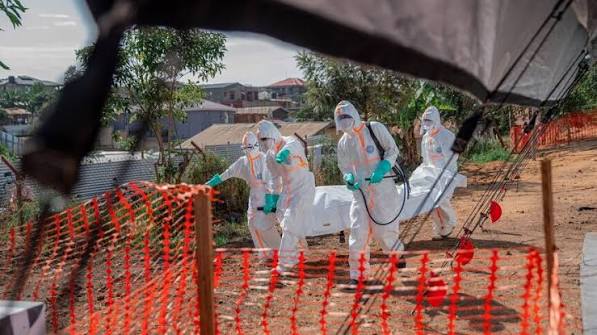
Confirmed Ebola cases in the Democratic Republic of Congo have passed 5,000, making the current outbreak the deadliest the country has ever recorded.
Behind that milestone sits a version of the Ebola virus that most of the world had barely heard of before this year: Bundibugyo virus.
It is a rarer species of the virus, with a shorter history, a different genetic makeup, and no licensed vaccine of its own.
What Is the Bundibugyo Strain of Ebola?
Ebola disease is not caused by a single virus. It is caused by a group of related viruses, now formally classified as orthoebolaviruses, of which four are known to cause illness in humans.
The most familiar is Zaire ebolavirus, responsible for the majority of major Ebola outbreaks recorded since the disease was first identified in 1976, including the 2014 to 2016 West Africa epidemic and the 2018 to 2020 outbreak in the Democratic Republic of Congo.
Bundibugyo virus is a separate, more rarely seen species within that same family.
The current outbreak in the Democratic Republic of Congo, along with a related outbreak in Uganda that has already ended, is caused by Bundibugyo virus.
It causes the same general illness as other Ebola species, including fever, severe weakness, vomiting, diarrhoea, and in more advanced cases, internal and external bleeding, but it is a genetically distinct virus that emerged from a separate outbreak investigation.
Where the Virus Got Its Name
Bundibugyo virus was discovered in November 2007, after a cluster of unexplained deaths in Bundibugyo District, a region in western Uganda that borders the Democratic Republic of Congo.
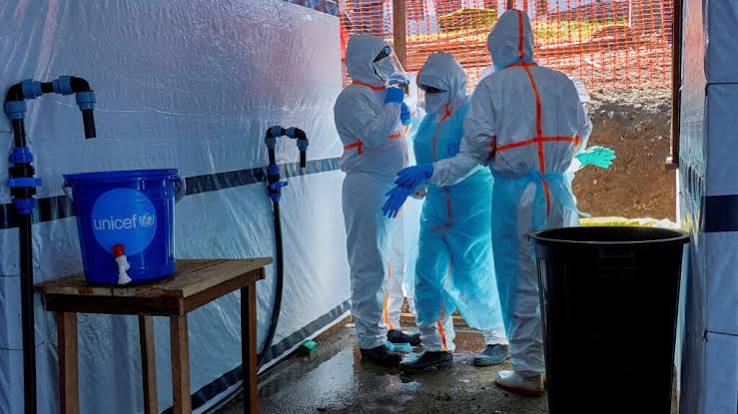
Blood samples sent to the United States Centers for Disease Control and Prevention were tested using standard Ebola diagnostic methods and came back negative for the known strains at the time.
Further genetic sequencing confirmed the cause was an entirely new species of the virus, later named Bundibugyo virus after the district where it was found.
That 2007 to 2008 outbreak infected 56 laboratory-confirmed patients, with 37 deaths recorded among all cases linked to the outbreak.
A second outbreak caused by the same species occurred in 2012 in Isiro, in the Democratic Republic of Congo, with 57 cases and 29 deaths. Until this year, those were the only two confirmed outbreaks of Bundibugyo virus ever recorded.
The current outbreak, which began in Ituri Province in May 2026, has already infected more people than both of those earlier outbreaks combined many times over, making it by far the largest Bundibugyo outbreak in history and the second largest Ebola outbreak of any species on record.
How Bundibugyo Differs From the Zaire Strain
Genetically, Bundibugyo virus is markedly different from Zaire ebolavirus, the species most people associate with Ebola.Research published shortly after its discovery found that Bundibugyo virus differs from other known Ebola species by more than 30 percent at the genome level, making it more genetically distinct from Zaire ebolavirus than Zaire ebolavirus is from some other Ebola species.
Scientists found it was more closely related, though still distantly, to Taï Forest virus, a rare species that has caused only a single known human case, in Côte d'Ivoire in 1994.
Clinically, the two strains cause similar symptoms, but historically they have differed in severity. Zaire ebolavirus outbreaks have recorded case fatality rates ranging from roughly 50 percent to 90 percent.
Create a free account
Join Joseph Mmwa Media Group and be the first to know the world's biggest health and medical stories as they happen
Bundibugyo virus has historically been less lethal, with the 2007 to 2008 Uganda outbreak recording a case fatality rate of about 25 percent among confirmed cases. Public health researchers have cautioned that this lower historical rate could partly reflect how outbreaks were tracked and treated at the time, rather than the virus itself being inherently milder.
In the current outbreak, the World Health Organization reported a case fatality rate of nearly 47 percent as of 12 August 2026, considerably higher than the rate seen in the smaller 2007 and 2012 outbreaks, though the reasons for that difference have not been officially established.
Why There Is Still No Vaccine
The world's only licensed Ebola vaccine, Ervebo, was developed and approved specifically against Zaire ebolavirus.
It works by training the immune system to recognise a surface protein unique to that species. Because Bundibugyo virus's equivalent surface protein differs substantially at the genetic level, it was not known whether Ervebo would offer any meaningful protection against it, and no vaccine has ever been developed or licensed specifically for Bundibugyo virus.
For most of this outbreak, the World Health Organization's own vaccine advisory experts held that position. In late May 2026, shortly after the outbreak began, the group concluded that evidence on whether Ervebo could cross-protect against Bundibugyo virus was too limited and inconclusive to justify its use outside of a clinical trial.
That caution was based partly on mixed animal studies.
Across several small trials in non-human primates, three out of four animals vaccinated with Ervebo survived exposure to Bundibugyo virus, compared with one out of four unvaccinated animals, a result suggestive of some protection but too small a sample to be conclusive.
As the outbreak grew through July and August, becoming the largest in the country's history, the position shifted.
New evidence, including a study published in the New England Journal of Medicine showing that people previously vaccinated against Zaire ebolavirus developed some antibody response against Bundibugyo virus, added weight to the case for testing Ervebo formally.
On 8 August 2026, World Health Organization vaccine experts recommended a full scale Phase 3 trial of Ervebo in the outbreak zone to determine whether it offers real world protection against Bundibugyo virus.
The experts were clear that this is a recommendation to test the vaccine, not confirmation that it works, and cautioned that even if a trial goes ahead, the vaccine may reduce deaths without necessarily preventing infection or transmission.
Beyond Ervebo, at least two vaccine candidates built specifically for Bundibugyo virus are in early stages of development.
One, developed by the non-profit organisation IAVI using the same technology platform as Ervebo, is still months away from having enough doses for a large trial.
Moderna has also started an early, first in human trial of an experimental mRNA vaccine for Bundibugyo virus, cleared by Health Canada, though such trials typically take years before a vaccine could be approved for wider use.
A Response Racing to Catch Up
The outbreak has spread from its origin in Ituri Province to six provinces and 55 health zones across the Democratic Republic of Congo, a country already dealing with insecurity and population displacement in parts of the affected region.
The World Health Organization has said the response is still struggling to catch up with a virus that had, in its words, a significant head start before international attention and resources scaled up.
Until a vaccine is proven effective and widely available, the response to Bundibugyo virus relies on the same tools used against Ebola outbreaks for decades: rapid case identification, contact tracing, isolation and supportive medical care, and community engagement to encourage safe burial practices and early reporting of symptoms.
Health authorities and international partners are continuing to expand those efforts as the outbreak's scale continues to grow. wording.

Joseph Mmwa is a health and medical journalist covering breaking health news, medical research, vaccines, infectious diseases, and public health developments around the world.