African Scientists Launch Major New Research to Uncover Genetic Drivers of Hypertension
Most genetic research on high blood pressure has relied on people of European ancestry. Researchers in Kenya and The Gambia are now turning to African populations to investigate whether genetic differences could help explain who develops hypertension and how it is treated
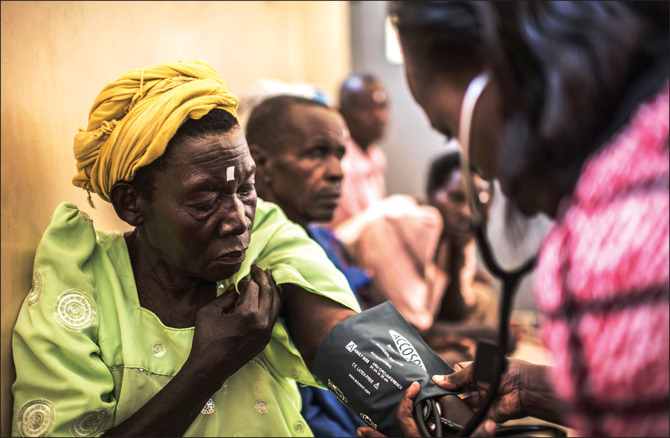
High blood pressure kills more people than any other single risk factor, yet almost everything science knows about its genetic roots has been learned from populations outside Africa.
A new research partnership is setting out to change that, using samples collected from villages in coastal Kenya and rural Gambia.
The Kenya Medical Research Institute-Wellcome Trust Research Programme, a joint research body based in Kilifi on Kenya's coast, has partnered with Roche, the Swiss pharmaceutical and diagnostics company, to examine the genetic factors behind hypertension in African populations.
The work will run through Roche's African Genomics Program, an initiative the company set up to expand genetic research on the continent. The partnership was reported by the Kenyan health news outlet Health Business.
The samples were already collected
The genetic material does not come from a new recruitment drive. It comes from IHCoR-Africa, short for Improving Hypertension Control in Rural sub-Saharan Africa, a study that has been running since 2022.
That study was designed to answer a practical question rather than a genetic one: how best to diagnose high blood pressure and judge who is at risk in rural communities where clinics are thin on the ground.
It is funded by Britain's National Institute for Health and Care Research and run jointly by the London School of Hygiene and Tropical Medicine, the Kenya Medical Research Institute-Wellcome Trust Research Programme, and the Medical Research Council Unit The Gambia.
According to the published study protocol, the work enrolled 1,250 adults, split evenly between Kilifi County in Kenya and Kiang West, a rural district in The Gambia sitting inland along the Gambia River. Roughly 1,200 of those samples are now set for genetic sequencing.
The continent missing from the data
Africa holds more genetic variation than any other region on earth, a consequence of it being where modern humans have lived longest.Populations elsewhere descend from smaller migrating groups and carry a narrower slice of that variation.
Global genetic databases do not reflect this.
The large studies that identified genes linked to blood pressure were built overwhelmingly on participants of European ancestry, which means the genetic markers doctors rely on were validated in people whose ancestry differs from most of the world's population.
The wider research imbalance is stark. Roche has reported that only 1.3 percent of global research and development spending takes place in Africa, and that just 2.5 percent of clinical trials are conducted there.
A disease carried unevenly
Hypertension is the leading risk factor for death worldwide. Researchers writing in the European Heart Journal have placed the toll at more than 10 million deaths a year.
Create a free account
Join Joseph Mmwa Media Group and be the first to know the world's biggest health and medical stories as they happen
Sub-Saharan Africa carries a particularly heavy share of that burden. Researchers behind the IHCoR-Africa project have described high blood pressure as the single leading risk factor for early death in the region, with prevalence high but awareness, treatment and control all low.
A person can carry dangerously raised blood pressure for years without symptoms, which is why it is often only detected once the heart, kidneys or eyes have already been damaged.
If genetic differences turn out to affect who develops hypertension in African populations, or how well particular medicines work in them, that could eventually shape risk scores and prescribing guidance.
That remains a hypothesis at this stage, not a finding. No results have been produced.
Where the data will live
Two details in the reported arrangement matter beyond the science itself.
The genetic data is to be stored and managed in Africa, under the Kenyan programme, rather than exported to laboratories abroad. Research partnerships on the continent have long been criticised for a pattern in which African participants supply samples while foreign institutions retain the data and publish the findings.
The partnership is also reported to fund training for two doctoral students and one postdoctoral researcher, which builds sequencing and analysis skills that stay in the region once the project ends.
What 1,200 samples can and cannot do
The scale here should be read carefully.Genetic studies that successfully pinpoint blood pressure genes have typically drawn on hundreds of thousands of participants, because the effect of any single genetic variant on blood pressure is small and only becomes visible in very large numbers.
Twelve hundred samples cannot deliver that.
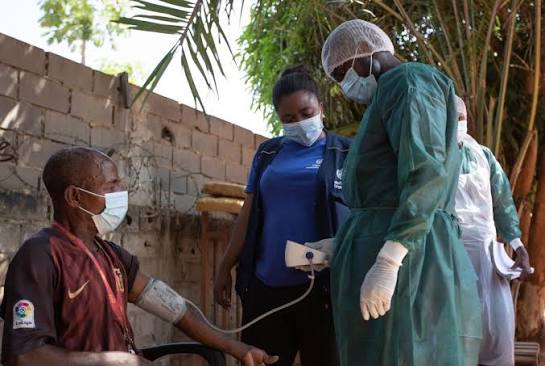
What a dataset this size can do is provide a starting reference for African genetic variation in a condition where almost none exists, and give African institutions a resource of their own to build on. Framing it as a first entry rather than an answer is the accurate reading.
It is also worth noting that IHCoR-Africa was not designed as a genetics study. The sequencing is an addition to samples gathered for a different purpose, which limits how far the genetic questions can be pushed.
Part of a larger sequencing push
The project sits inside a broader effort.Roche's African Genomics Program has set a target of sequencing 50,000 genomes from African samples, and the company has described related work including a large patient study in South Africa and a cohort in Côte d'Ivoire collecting data on hypertension, diabetes and metabolic syndrome.
Those efforts run alongside publicly funded initiatives such as the Human Heredity and Health in Africa consortium, backed by the Wellcome Trust and the United States National Institutes of Health, which has spent more than a decade building African genomic research capacity.
For African patients, none of this changes treatment today. What it changes is whose biology the next generation of hypertension research is built on, and who controls the data that comes out of it.

Joseph Mmwa is a health and medical journalist covering breaking health news, medical research, vaccines, infectious diseases, and public health developments around the world.