Artesunate Still Effective Against Drug-Resistant Malaria in African Children, Study Finds
Researchers in Uganda found that children infected with malaria parasites carrying resistance-linked mutations still had similar health outcomes after receiving standard artesunate treatment
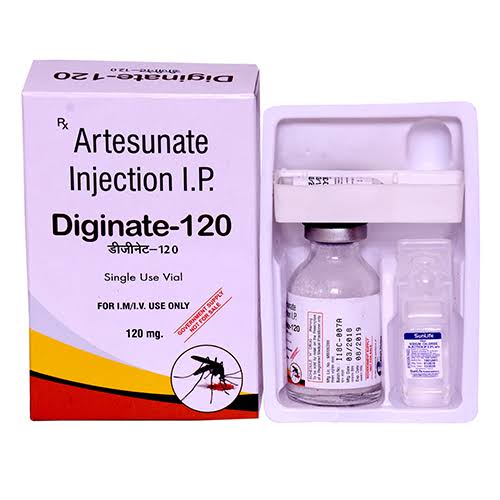
Artesunate, the frontline drug doctors reach for when a child arrives at hospital with severe malaria, is still working, even in parts of Africa where the parasite behind the disease is growing harder to kill.
That is the conclusion of a new clinical study published on 3 June 2026 in the New England Journal of Medicine, and it goes a long way toward easing a question that has been worrying malaria doctors for several years, even if it does not close the book entirely.
A Threat Doctors Have Been Watching Closely
Malaria kills an estimated 610,000 people every year worldwide, and about 580,000 of those deaths, roughly 95 percent, happen in Africa.Most of the victims are young children. For over a decade, the drug that has kept that number from climbing higher has been artesunate, given through an intravenous drip.
It replaced an older drug, quinine, as the standard treatment in 2012 after a major trial showed it cut deaths by 23 percent. Since then, artesunate is credited with saving more than 100,000 African children's lives every year.
That progress is now being tested by a genetic change in the malaria parasite itself.
Scientists have identified mutations in a parasite gene called Kelch 13, or PfK13 for short, that are linked to the parasite responding more slowly to artemisinin, the family of drugs that artesunate belongs to.
In parts of Southeast Asia, similar resistance mutations have already made older malaria drugs far less effective. Seeing PfK13 mutations spread in African parasites raised fears that the same could happen here, where the disease burden is far higher.
What Researchers Set Out To Check
In 2025, the World Health Organization responded to that fear by recommending that hospitals in areas with confirmed artemisinin resistance add quinine back into the treatment alongside artesunate, as a precaution.
Quinine is harder to administer safely and can cause serious side effects, so adding it back would make treatment more complicated and expensive across health systems that are often already stretched.
Before that recommendation became standard practice, a team led by Professor Kath Maitland, director of the Centre of African Research and Engagement at Imperial College London, wanted to check whether it was actually necessary.
Her team ran a study called SMAART-CHARISMA in northern and eastern Uganda between December 2022 and October 2024, following 465 hospitalised children between three months and 15 years old. Of those, 360 had severe malaria and the remaining 105 had milder illness, included for comparison.
Every child received the same standard treatment: at least three doses of intravenous artesunate, followed by three days of an oral combination drug called artemether-lumefantrine.
Create a free account
Join Joseph Mmwa Media Group and be the first to know the world's biggest health and medical stories as they happen
What The Testing Showed
Using genetic testing, the researchers checked which children were infected with parasites carrying the PfK13 mutations.
About half of the children were. Those children did take longer for the parasites to fully clear from their blood. But that slower clearance did not show up as worse health outcomes.
Death rates were low in both groups, and the researchers found no statistically significant difference between them.
There was also no real difference between the two groups in how long children stayed in hospital, whether they needed a blood transfusion, how quickly their bodies recovered from the illness, whether the malaria came back, or whether they ended up readmitted.
"The results of our study are reassuring and important for malaria treatment policy," said Professor Maitland.
"Artesunate remains highly effective at treating severe malaria in children in real-world clinical settings, so WHO recommendations to add quinine to the treatment protocol would be unnecessary, complex and costly."
Dr Maurice Okao, the study's principal investigator in Uganda, said the findings offer strong support for keeping artesunate as it is currently used, while acknowledging the concern has not disappeared entirely.
Professor Maitland added that larger studies are still needed to track how the PfK13 mutation behaves in bigger groups of patients and in other African countries where it is starting to appear.
Why This Matters Beyond Uganda
The study covered one region of one country, so its findings will need to be confirmed elsewhere as resistance mutations spread further across the continent.
But for now, it gives health ministries and hospitals across malaria-endemic Africa evidence that they do not need to rush into a more complicated and costlier treatment protocol.
For families in places where a hospital's nearest intravenous drug supply and staff resources are already stretched thin, that is a meaningful difference.
The study was funded by the Wellcome Trust and the United States National Institutes of Health's National Institute of Allergy and Infectious Diseases, with additional support from the Medical Research Council.
Source
Maitland K, Okao M, et al. Intravenous Artesunate and Artemisinin-Resistant Severe Malaria in Uganda. N Engl J Med. 2026 Jun 3. doi:10.1056/NEJMc2517274.
Joseph Mmwa is a health and medical journalist covering breaking health news, medical research, vaccines, infectious diseases, and public health developments around the world.