Australia Nears Virtual Elimination of HIV Transmission
HIV transmissions have fallen sharply in Australia, bringing the country closer than ever to virtually eliminating HIV transmission. New infections are increasingly concentrated among people born overseas and other communities facing barriers to testing, PrEP and treatment
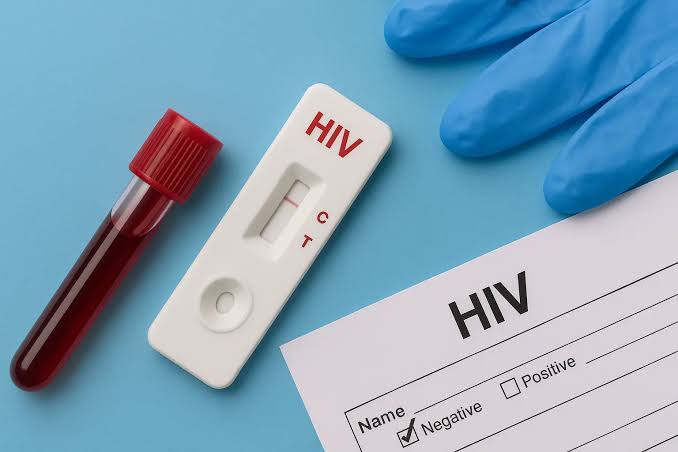
Australia is closer than ever to stopping HIV transmission altogether.
That is the picture painted by new ABC News reporting this week, from communities reporter Jeremy Story Carter, who spent time with HIV patients, clinicians and advocacy leaders across the country to mark a milestone anniversary.
Forty-five years since the first case of HIV/AIDS was ever reported, in the United States in 1981, and more than 40 million deaths later, Australia now sits within reach of what experts call "virtual elimination" of HIV transmission.
What "virtual elimination" actually means
Virtual elimination does not mean HIV disappears. It has a precise definition: a 90 per cent reduction in new HIV diagnoses compared with 2010, when Australia recorded 913 notifications in a year.
Reaching that target means getting new diagnoses under roughly 91 a year, a level low enough that the virus effectively stops spreading.
Australia is closer to that point than almost anywhere else in the world.
Data from the Kirby Institute, the University of New South Wales research body that tracks the country's HIV cases, and cited in the ABC's reporting, shows that of the roughly 30,000 people in Australia living with HIV, 97 per cent are on antiretroviral therapy, daily medication that keeps the virus suppressed.
Almost all of them have an undetectable viral load, which means the virus is at levels so low it cannot be passed on to anyone else.
That single fact, undetectable equals untransmittable, is the foundation of the entire elimination strategy.
Combined with pre-exposure prophylaxis (PrEP), a daily pill that prevents HIV infection in people who do not have the virus, it has turned a disease that once had no treatment into one that can be stopped from spreading at all.
From a death sentence to a managed condition
That was not always the case.David Menadue, one of the first Australians diagnosed with HIV, in 1984, told the ABC he remembers a support group of 33 people that met through the late 1980s. Only four are still alive.
"I live with the scars even today," he said.
Stephen Borg, diagnosed in 2007, said he was warned early on that HIV was a diagnosis some partners would not accept. Decades on, stigma remains one of the biggest barriers to testing and treatment, even as the science has moved on dramatically.
PrEP was added to Australia's Pharmaceutical Benefits Scheme (PBS), the government programme that subsidises the cost of medicines, in 2018.
Access has since been expanded to people without a Medicare card, closing a gap that had left non-citizens more exposed to infection.
Chad Hughes, chief executive of Thorne Harbour Health, a Melbourne-based HIV and LGBTQIA+ health organisation, told the ABC the change reflected a wider principle behind the entire strategy.
"You can't leave anybody behind in that situation," he said.
A faster, longer-acting tool is now entering the picture
Daily pills are not the only prevention option any more.This publication has previously reported on lenacapavir, a twice-yearly injectable form of PrEP that clinical trials found prevented HIV infection in more than 99 per cent of participants.
The World Health Organization recommended it globally in 2025, and it is now being rolled out in dozens of countries, including several in sub-Saharan Africa, specifically because missed doses of daily pills have been one of the biggest reasons prevention programmes fail.
The ABC's reporting on Australia does not mention lenacapavir directly, but the adherence problem it is designed to solve is the same one Australian clinicians describe among newly arrived and young patients who are not consistently using daily PrEP or condoms.
Create a free account
Join Joseph Mmwa Media Group and be the first to know the world's biggest health and medical stories as they happen
A prevention option that requires two visits a year instead of a daily habit could matter for exactly the population Australia is currently struggling to reach.
The targets Australia keeps missing
Despite the medical progress, the political targets have slipped repeatedly.Australia first aimed to reach virtual elimination by 2020. That was pushed to 2022 under the previous federal health minister. That deadline was also missed, and a national HIV taskforce set a new target of 2030.
Dr Skye McGregor, an epidemiologist at the Kirby Institute, told the ABC the country is currently behind where it needs to be.
"We're not on track," she said.
The gap is not spread evenly.
Cases among Australian-born gay and bisexual men, sex workers and people who inject drugs continue to fall in line with the elimination goal.
But roughly 30 per cent of new HIV diagnoses now involve people born overseas, many of them young international students and new arrivals from South-East Asia and South America who may not have grown up with the same access to sexual health education, condoms or PrEP.
This publication reported last month on Zimbabweans returning home from South Africa amid anti-migrant unrest, who struggled to restart HIV treatment after crossing the border.
The two stories describe different journeys, but the same underlying problem: HIV treatment and prevention depend on continuity, and people who are moving between countries are the ones most likely to fall through the cracks.
Australia's advocacy groups are now pushing for testing, PrEP access and health messaging to be better targeted at newly arrived communities, including through peer-support programmes run by and for people from the same cultural backgrounds.
A warning from outside Australia's borders
Australia's own numbers are a small fraction of a much larger global picture, one that is currently moving in the wrong direction.A UNAIDS report released last month at the World AIDS Conference in Rio de Janeiro recorded 1.2 million new HIV infections worldwide in 2025, including 280,000 in the Asia-Pacific region that surrounds Australia.
Beatriz Grinsztejn, president of the International AIDS Society, told delegates at that conference that global funding for HIV programmes had collapsed at an unprecedented rate.
"Never has donor funding fallen so far, so fast," she said.
Much of that collapse traces back to the Trump administration's cuts to USAID, the US government's foreign aid agency, which had funded HIV treatment and prevention programmes across dozens of countries.
The United Nations has warned that without that funding, the world risks a resurgence of an epidemic many governments had assumed was under control.
The stakes of that warning are highest in sub-Saharan Africa, where the World Health Organization estimates roughly two-thirds of the world's 40.8 million people living with HIV are located, and where donor-funded treatment and prevention programmes have been central to keeping transmission down.
Dash Heath-Paynter, chief executive of Health Equity Matters, the national federation representing Australia's HIV organisations, told the ABC that the danger of easing off now is that even Australia's own gains could reverse.
"We can't get there with just a business-as-usual approach," he said.
Still here
For David Menadue, now in his seventies, the story is measured less in targets and more in survival.
"I'm still here," he said.
Australia's path to virtual elimination of HIV transmission remains open, but it depends on sustained funding, political will and outreach to the communities currently being left behind, both at home and in the countries whose HIV programmes now hang on decisions made far from Australia.
Source
Story Carter J. Australia's fight against HIV is not over as new challenges disrupt progress. ABC News. 2026 Aug 15.
Joseph Mmwa is a health and medical journalist covering breaking health news, medical research, vaccines, infectious diseases, and public health developments around the world.