Chad's Cholera Outbreak Has Moved Into the Capital, and Into a Younger Group of Patients
More than 5% of patients have died, far above the WHO benchmark of 1%, while half of those infected are aged 10 or younger
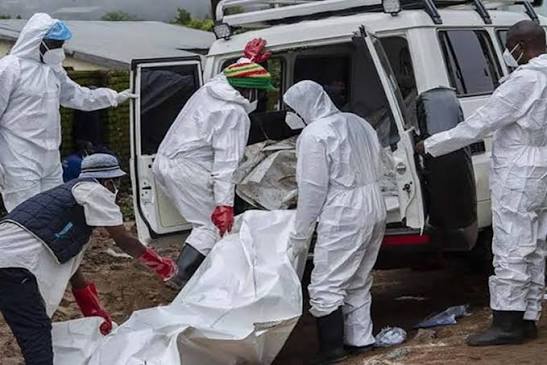
Cholera has established itself in N'Djamena, the capital of Chad, and the patients arriving at the city's treatment sites are considerably younger than those the country was treating a year ago.
The Ministry of Public Health and Prevention recorded 239 cases and 13 deaths nationwide in its situation report covering 2 and 3 August 2026, the twenty-ninth of the outbreak.
Chad is a landlocked country of roughly 21 million people in central Africa, and two of its provinces are affected: Hadjer Lamis, which surrounds the capital to the north and where the outbreak started, and N'Djamena itself. Eleven cases and one death were added over that 48 hour period.
Where the Capital Stands
The first three suspected cases in N'Djamena were reported on 19 July, in the Farcha neighbourhood of the city. By 6 August, Health Minister Dr Abdelmadjid Abderahim Mahamat told a meeting with the city's mayors that the capital had recorded 81 cases and eight deaths across nine neighbourhoods.
The outbreak began earlier and elsewhere.
Two suspected cases were reported on 13 June in Karal, a rural district in Hadjer Lamis province north of the capital, and the first deaths date from that month. Chad declared a national epidemic on 24 July.
The Age Line
The median age of patients in this outbreak is 10 years old, meaning half of everyone infected is a child of 10 or younger.That is the clearest difference between this outbreak and the last one. Ministry situation reports from September 2025 put the median patient age in the eastern epidemic at 25.
The disease has moved into a different population, and the youngest children are the group least able to withstand fluid loss before reaching care.
Dying Before Reaching Care
The national fatality rate stands at 5.4 percent.The World Health Organization treats a cholera fatality rate above 1 percent as evidence that a response is not reaching people in time, and Chad's ministry flagged the figure in its own report.
Two further numbers indicate where the deaths are occurring. Five of the 13 people who died, or 38.5 percent, died in the community rather than in a health facility. Around 78 percent of patients arrived at a health centre already moderately or severely dehydrated, which the ministry attributes to late consultation.
Create a free account
Join Joseph Mmwa Media Group and be the first to know the world's biggest health and medical stories as they happen
A Different Map From Last Year
Chad declared the end of its previous cholera epidemic on 23 December 2025, after 28 consecutive days without a confirmed case, the standard set by the World Health Organization and the Global Task Force on Cholera Control.,That outbreak began in July 2025 in Chokoyane, a district in Ouaddaï province in the far east of the country near the Sudanese border. It spread across five provinces and produced 2,979 cases and 167 deaths by 7 December.
Geography separates the two events. The 2025 epidemic ran through those eastern provinces hosting Sudanese refugees, with more than 870,000 people having crossed into Chad since April 2023 into camps where water supply and latrine ratios fell below emergency standards.
The 2026 outbreak began in the west, north of N'Djamena, and has moved south into the capital rather than west from the Sudanese border. That makes it an urban outbreak rather than a continuation of the refugee-linked emergency in the east.
Supply Recovered, Coverage Thin
A reactive vaccination campaign is running in the northern health district of N'Djamena, targeting 160,922 people. As of the 3 August report, 50,799 people had received a dose, a coverage of 31.57 percent.The wider vaccine picture has improved considerably since Chad's last epidemic. Global supply of oral cholera vaccine roughly doubled from 35 million doses in 2022 to close to 70 million in 2025, and in February 2026 Gavi, the Vaccine Alliance, UNICEF and the World Health Organization announced that supplies had recovered sufficiently to restart preventive campaigns, suspended since 2022 because every available dose was going to active outbreaks.
Mozambique was the first country to resume preventive vaccination. For Chad, the constraint now is the pace of delivery rather than the availability of doses.
Five health facilities are treating patients.
Twenty-eight health workers have been trained in cholera case management and 63 other providers briefed on treatment protocols, and infection control teams have disinfected 847 households.
The response is coordinated by Chad's public health emergency operations committee, known by its French acronym COUSP, with support from the World Health Organization, UNICEF, Médecins Sans Frontières and the Chad Red Cross.
One Outbreak Among Many
Between 22 June and 27 July 2026, the European Centre for Disease Prevention and Control counted 8,247 new cholera cases and 326 new deaths worldwide across 16 countries.The Democratic Republic of the Congo reported the most cases at 3,841, followed by Sudan with 1,502, Somalia with 962, the Central African Republic with 445 and Malawi with 383. Chad sits well down that list.
Chad's rainy season continues over the coming weeks, and the country's previous epidemic took five months to bring to a close.
At 239 cases in a nation of roughly 21 million people, the current outbreak remains small in absolute terms, and the figure that will determine how it is judged is not the caseload but the share of patients who reach treatment in time.

Joseph Mmwa is a health and medical journalist covering breaking health news, medical research, vaccines, infectious diseases, and public health developments around the world.