Congo's Ebola Outbreak Is Now on Track to Become the Deadliest in History, WHO Warns
New figures from Congo's Ministry of Health, relayed by the World Health Organization, show the country's Ebola outbreak has passed 4,300 confirmed cases and 2,000 deaths in under three months, putting it on pace to overtake the 2014 to 2016 West African epidemic as the worst Ebola outbreak ever recorded
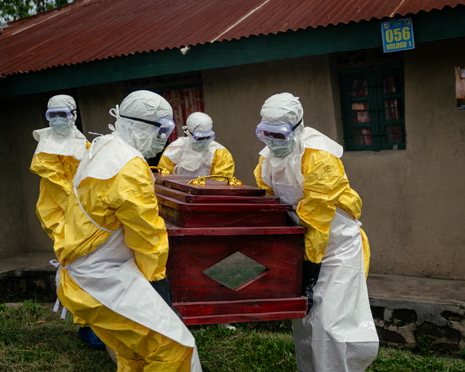
Congo's Ebola outbreak has just been given a grim new distinction: it is now on track to become the deadliest the world has ever recorded.
Speaking to reporters in Geneva on Wednesday, 12 August 2026, Dr Tedros Adhanom Ghebreyesus, Director-General of the World Health Organization (WHO), said the outbreak in the Democratic Republic of Congo (DRC) is spreading fast enough to overtake the 2014 to 2016 Ebola epidemic in West Africa, which killed more than 11,000 people out of over 28,000 cases and remains the worst on record.
According to Congo's Ministry of Health, as of Tuesday, 11 August, the country had confirmed 4,381 cases and 2,011 deaths.
About 1,000 of those deaths have occurred in just the past three weeks.
That is a death toll the 2014 to 2016 outbreak took roughly two years to reach. This one has reached it in about three months.
A rare strain with no vaccine or cure
The current outbreak is caused by the Bundibugyo virus, one of the rarer species of Ebola. Before this year, it had only caused two known outbreaks in history, in Uganda in 2007 and in the DRC in 2012, with death rates in those earlier outbreaks of 30 percent and 50 percent.
This time, close to 46 percent of confirmed patients have died, a figure known as the case fatality rate, meaning the share of confirmed patients who do not survive.
Because Bundibugyo is so rare, early lab tests in this outbreak initially screened for the more common Ebola virus species instead, contributing to a delay in identifying what was actually spreading.
WHO said this week that the virus had likely been circulating since February 2026, three months before the outbreak was officially declared on 15 May.
There is currently no approved vaccine or treatment for this strain.
Why the response keeps falling behind
"We are chasing the virus, the virus is ahead of us," said Dr Mohamed Yakub Janabi, WHO's Regional Director for Africa, this week.Health authorities say between 60 and 70 percent of new cases are being found among people who were not already on a monitored contacts list, meaning chains of transmission are frequently discovered only after they have already spread further.
Combined with the head start the virus had before the outbreak was declared, that has made it difficult for response teams to get ahead of it.
Conflict, distrust, and unpaid health workers
The outbreak is unfolding in a part of eastern Congo already shaped by years of armed conflict.Five provinces are affected, all bordering or near South Sudan, Uganda and Rwanda, and health officials are watching closely for signs the virus could reach larger, more mobile populations in the region.
Part of the outbreak zone includes Goma, a major humanitarian hub that has been under the control of Rwanda-backed M23 rebels for more than a year, complicating access for response teams.
Create a free account
Join Joseph Mmwa Media Group and be the first to know the world's biggest health and medical stories as they happen
Health workers have reported attacks on treatment centres, shortages of protective equipment, and misinformation in some communities claiming the disease is not real.
Traditional burial practices, in which families wash and prepare the bodies of loved ones, have had to be restricted for safety, a change that has fuelled resentment toward outside health workers in some areas.
Meanwhile, some local Ebola responders, including case investigators, drivers and gravediggers, have gone on strike over unpaid wages, though many later agreed to return to work. Displaced families in the region are also struggling to find clean water for basic handwashing.
Where the outbreak stands right now
As of WHO's last full outbreak report on 30 July, the virus had spread across five provinces, Ituri, North Kivu, South Kivu, Haut-Uélé and Tshopo, reaching 49 health zones.Ituri remains by far the hardest hit, accounting for 88 percent of confirmed cases and roughly 83 percent of deaths at that point. At least 151 health workers had been infected and 44 had died.
This is already the largest Ebola outbreak ever recorded in the DRC, surpassing the previous record of 3,317 confirmed cases set during an outbreak in North Kivu and Ituri between 2018 and 2020.
What this means beyond Congo's borders
Confirmed cases linked to this outbreak have also been treated in France and Germany, both patients having recovered with no further spread detected.
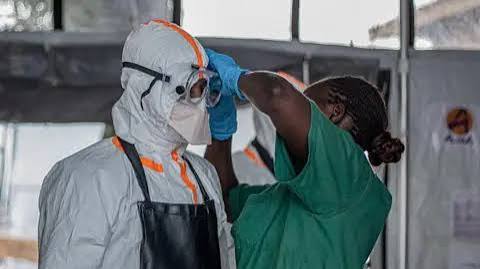
Israel's health ministry said this week it was testing a person who had recently returned from the DRC after developing a fever, with results expected within a day.
WHO has advised against any restrictions on travel or trade with affected countries, and assesses the risk to the rest of Africa and the wider world as low.
The risk is rated very high inside the DRC itself and high for Uganda and countries sharing a border with the DRC, given ongoing population movement and cross-border trade.
A trial for treatments has just begun
Researchers have started enrolling patients at a treatment centre in Ituri Province in a study testing two experimental treatments: remdesivir, an antiviral made by Gilead Sciences that is already used against COVID-19, and MBP134, an antibody treatment developed by Mapp Biopharmaceutical.Patients are being randomly assigned to receive standard care alone, one of the two drugs, both, or neither, so researchers can compare outcomes.
WHO has said it could take months, and enrollment of as many as 1,000 participants, before there is a clear answer on whether either treatment works.
How bad this could still get
Dr Abdirahman Mahamud, WHO's Director for Health Emergency Alert and Response Operations, said this week that the agency expects the outbreak to reach its peak within about six months, but cautioned that this is only the "moderate" scenario among those the agency is planning for.
WHO and Congolese authorities say a significant increase in funding, staff and supplies is still needed to slow the outbreak's spread.
Until that scale-up happens, officials say, the gap between the virus and the response it is racing against is likely to remain.
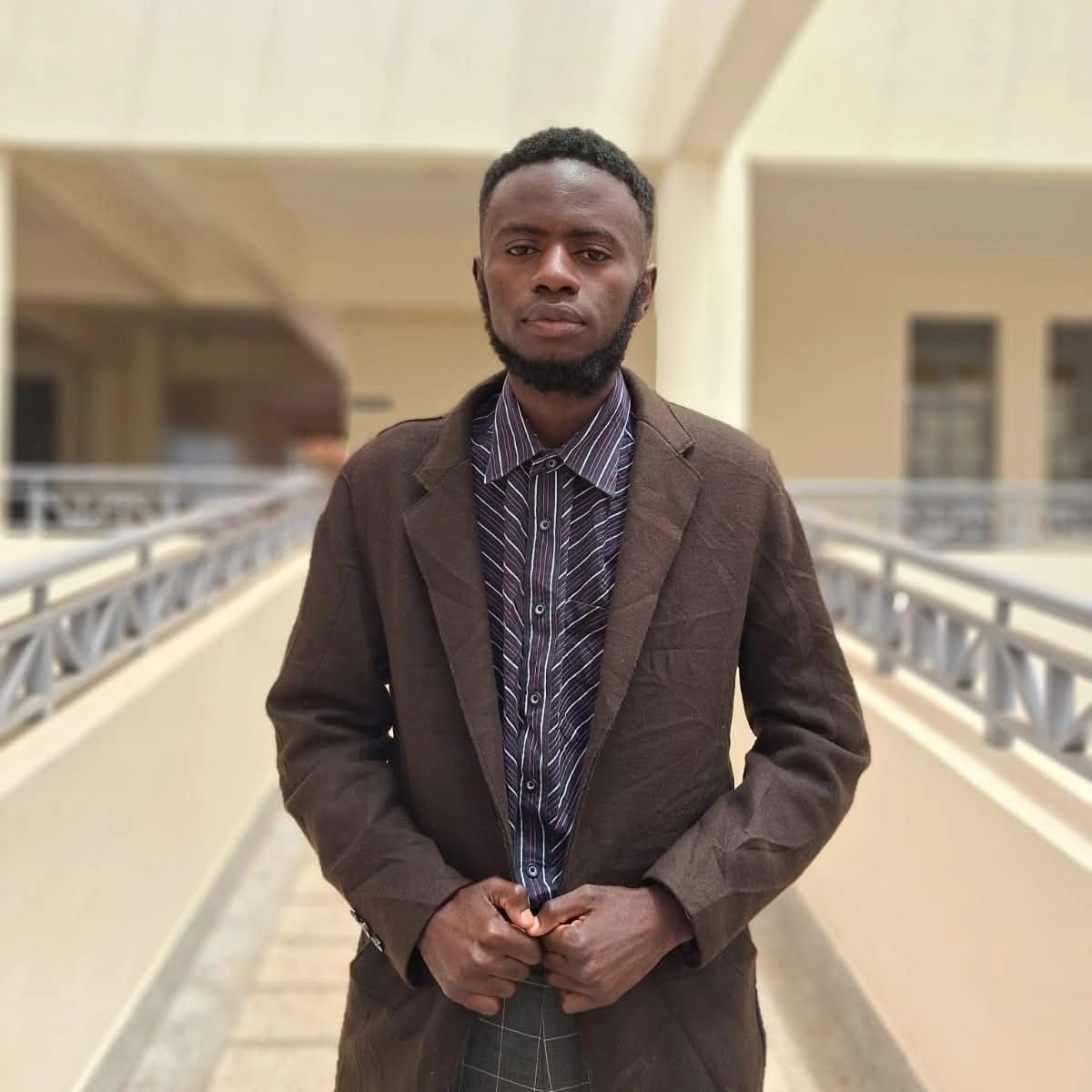
Joseph Mmwa is a health and medical journalist covering breaking health news, medical research, vaccines, infectious diseases, and public health developments around the world.