COVID Vaccination Linked to Nearly 40% Lower Risk of Heart Attacks and Cardiac Death in Million-Patient Study
New research following more than one million United States veterans has found that receiving a 2024-2025 COVID-19 vaccine was associated with a 37.7% lower risk of COVID-related major cardiac events, including a 57.9% reduction in cardiovascular death and a 38.5% reduction in heart attacks, offering some of the strongest evidence to date that protecting against infection may also protect the heart
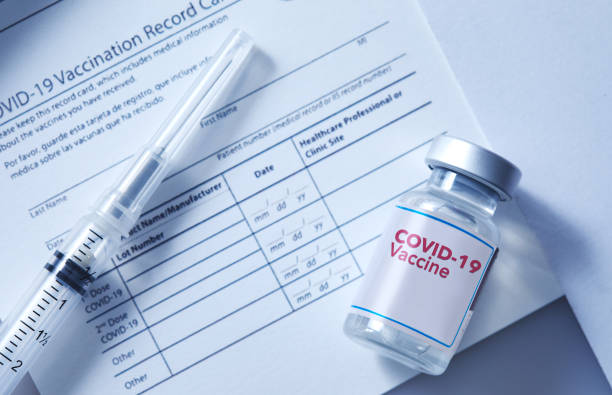
COVID Vaccination Linked to Nearly 40% Lower Risk of Heart Attacks and Cardiac Death in Million-Patient Study
New research following more than one million United States veterans has found that receiving a 2024-2025 COVID-19 vaccine was associated with a 37.7% lower risk of COVID-related major cardiac events, including a 57.9% reduction in cardiovascular death and a 38.5% reduction in heart attacks, offering some of the strongest evidence to date that protecting against infection may also protect the heart.
A Million Records, One Answer
Few questions have dogged the COVID-19 vaccine rollout more stubbornly than the one about the heart.Patients have raised it in clinics from Nairobi to New York, and clinicians have often been left answering with caution rather than data.
A large American study has now supplied an unusually direct answer, and it points in the opposite direction to the fear.
Researchers Miao Cai, Yan Xie and Ziyad Al-Aly, based at the Veterans Affairs St. Louis Health Care System, tracked 1,039,659 United States veterans and found that vaccination was associated with substantially fewer serious cardiac events over the following eight months.
The findings were published in JAMA Internal Medicine in mid-June 2026.
The study design deserves attention, because it addresses a problem that has weakened much earlier vaccine research.
All the veterans studied had already received an influenza vaccine in the autumn of 2024. Roughly one third also took the COVID-19 vaccine at the same visit. The remaining two thirds took only the flu shot.
Comparing vaccinated people with unvaccinated people usually risks measuring lifestyle rather than medicine, since people who accept vaccines tend to differ in other health behaviours.
Restricting both groups to people who had already accepted one vaccine narrows that gap considerably.
Numbers Behind the Headline
Across the eight months of follow up, COVID-19 vaccination was associated with a 37.7% reduction in COVID-related major adverse cardiac events, a combined measure covering cardiovascular death, heart attack, stroke and hospitalisation for heart failure.
Broken down, the reductions were 57.9% for cardiovascular death linked to COVID-19, 38.5% for heart attack and 41.9% for hospitalisation with heart failure, while the estimate for stroke trended lower but did not reach statistical significance.
The benefit was concentrated where the burden is heaviest. It was largest among people aged 75 and older and among those living with chronic kidney disease, chronic lung disease, diabetes or existing cardiovascular disease.
One result surprised the investigators. Vaccination was also associated with a reduction of nearly 24% in cardiac events from all causes, not only those recorded as COVID-related.
The authors suggested this may reflect protection extending to infections that were never diagnosed, since a large share of COVID-19 cases are never tested or recorded.
Small for One Person, Large for a Population
Relative percentages can mislead without absolute figures, and this study provides them.
The absolute risk difference was approximately two fewer major cardiac events per 10,000 people vaccinated.
For any individual, that is a small number. Across a national vaccination programme covering millions of older adults, it becomes thousands of prevented heart attacks, strokes and deaths.
Both readings of the same figure are correct, and reporting only one of them distorts the picture.
The Other Study on the Table
A separate American analysis approached the same question from the opposite end, by measuring what infection does rather than what vaccination prevents.
Researchers from Georgia Southern University used the National Institutes of Health 'All of Us' Research Program to build two parallel comparisons covering 2020 to 2022, involving 70,282 people in the infection analysis and 37,800 in the vaccination analysis.
Within 90 days of infection, the odds of heart attack were roughly 4.8 times higher, with a confidence interval of 2.9 to 8.0. In that preliminary analysis, vaccination overall was not significantly associated with heart attack risk.

That analysis reported one finding worth stating plainly. Additional booster doses were associated with modestly raised odds of heart attack, at 1.60, with a confidence interval of 1.05 to 2.42.
Because the interval only narrowly excludes the point of no effect, and because the analysis was observational and vulnerable to confounding, that result should be treated as a signal awaiting replication rather than evidence of harm.
Create a free account
Join Joseph Mmwa Media Group and be the first to know the world's biggest health and medical stories as they happen
These findings were presented at an American Heart Association scientific meeting in March 2026 and have not yet completed journal peer review, which places them well below the JAMA Internal Medicine study in evidential weight.
What the Vaccine Does Carry
Honest reporting requires stating the vaccine risks that are real.
Messenger RNA vaccines carry a rare and temporary risk of myocarditis and pericarditis, inflammation of the heart muscle and of the sac around it, occurring mainly in young males within one to two weeks of a dose.
A nationwide Swedish study of more than eight million adults, published in the European Heart Journal, confirmed that risk while also finding reduced risks of most serious cardiovascular outcomes after vaccination, with hazard ratios after a third dose ranging from 0.69 to 0.81.
Myocarditis and heart attack are different conditions with different causes and different outcomes. Evidence showing no increase in heart attacks does not erase the myocarditis signal, and the myocarditis signal does not overturn the heart attack findings.
Why the Virus Reaches the Heart
The biological reasoning is straightforward. SARS-CoV-2, the virus that causes COVID-19, can damage heart tissue directly and through the inflammation the body mounts against it, promoting injury to blood vessel linings, clotting and instability in existing arterial plaque.
Imaging research supports this. A retrospective study of 803 patients undergoing coronary computed tomography scans, published in the journal Radiology, found faster growth of arterial plaque among those previously infected, at 0.90% per year compared with 0.62%.
Population data align. A study of 649,320 people in British Columbia, Canada, found that infection was associated with a 34% higher risk of major cardiac events, rising sharply among those hospitalised or admitted to intensive care.
In absolute terms, events occurred in 0.54% of infected people compared with 0.34% of the uninfected. Infection accounted for approximately 7% of all new cardiovascular events in that population.
Protection Where It Is Least Available
The implications land unevenly.
Among countries reporting data to the World Health Organization, roughly 13% of older adults and 6% of health workers received a COVID-19 vaccine dose during 2024, with the majority of those doses administered in high income countries.
That distribution matters most in Africa, Asia and Latin America, where cardiovascular disease is rising while access to cardiac catheterisation, emergency cardiology and long term medication remains limited. In systems where a heart attack is far more likely to prove fatal, preventing the infection that triggers it carries weight beyond cardiology.
A separate European analysis published the same week, funded by the European Centre for Disease Prevention and Control, found the 2025-2026 vaccines were approximately 55% effective against symptomatic COVID-19 in adults aged 60 and above during the two months after vaccination, while uptake across the region continued to fall.
Reading the Evidence Honestly
Several limitations apply. The JAMA Internal Medicine study is observational, meaning it establishes association rather than proof of cause.
Its population consisted of United States veterans, who are disproportionately older and male, so the findings cannot be assumed to transfer evenly to younger people or to other regions.
Follow up extended eight months, which does not address longer term outcomes.
The American College of Cardiology's 2025 guidance on adult immunisation already listed reduced risk of heart attack, stroke, atrial fibrillation and long COVID among documented vaccination benefits, and this study strengthens rather than establishes that position.
The weight of current evidence indicates that for older adults and people with existing cardiovascular risk factors, avoiding serious COVID-19 infection functions as a form of cardiac protection, though individual decisions should be made in consultation with a treating clinician.
Source
Cai M, Xie Y, Al-Aly Z. 2024-2025 COVID-19 vaccine and major adverse cardiovascular events among US veterans. JAMA Intern Med. Published online June 15, 2026. doi:10.1001/jamainternmed.2026.1929
Xu Y, Li H, Santosa A, et al. Cardiovascular events following coronavirus disease 2019 vaccination in adults: a nationwide Swedish study. Eur Heart J. 2025;46(2):147-157. doi:10.1093/eurheartj/ehae639
Velásquez García HA, Wong S, Jeong D, et al. Risk of major adverse cardiovascular events after SARS-CoV-2 infection in British Columbia: a population-based study. Am J Med. 2025;138(3):524-531. doi:10.1016/j.amjmed.2024.04.010
Dai N, Tang X, Hu Y, et al. SARS-CoV-2 infection association with atherosclerotic plaque progression at coronary CT angiography and adverse cardiovascular events. Radiology. 2025;314(2):e240876. doi:10.1148/radiol.240876
Heidenreich PA, Bhatt A, Nazir NT, Schaffner W, Vardeny O. 2025 concise clinical guidance: an ACC expert consensus statement on adult immunizations as part of cardiovascular care. J Am Coll Cardiol. 2025;86(21):2085-2098. doi:10.1016/j.jacc.2025.07.003
Tome J, Cowan L, Fung IC, Sullivan K, Schwind JS. Acute myocardial infarction risk following COVID-19 infection and vaccination in the United States. Presented at: American Heart Association EPI|Lifestyle Scientific Sessions 2026; March 18, 2026; Boston, MA.

Joseph Mmwa is a health and medical journalist covering breaking health news, medical research, vaccines, infectious diseases, and public health developments around the world.