Diabetes Overtakes HIV and TB to Become South Africa's Leading Natural Cause of Death
New mortality data from Statistics South Africa shows diabetes killed 27,692 people in 2023, making it the country's leading natural cause of death for the second year running and pushing it ahead of both HIV and tuberculosis, with health experts warning that an ageing population and an unhealthy food environment are driving the toll
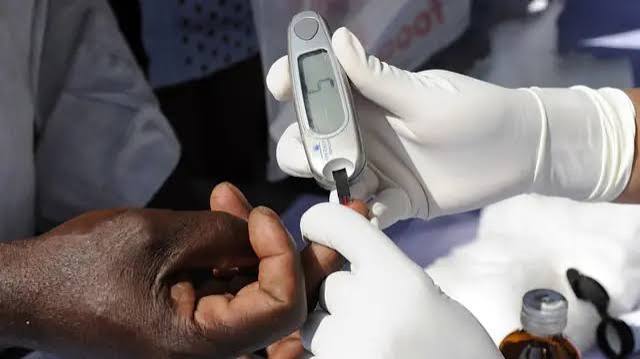
Diabetes has overtaken HIV and tuberculosis to become South Africa's leading natural cause of death, meaning deaths from disease and illness rather than accidents or violence, according to new mortality data released by Statistics South Africa.
The figures show the disease was responsible for 27,692 deaths in 2023, making it the single biggest killer in the country for the second consecutive year.
It is a shift that marks a broader change in how South Africans are dying, reflecting the growing share of deaths attributed to non-communicable diseases such as diabetes, stroke and high blood pressure, rather than infectious diseases like HIV and tuberculosis.
What the Numbers Show
Diabetes mellitus accounted for 5.8% of all 476,751 deaths recorded in South Africa in 2023.Cerebrovascular disease, the medical term for stroke and related conditions, came second at 5.4% of deaths.
Hypertensive disease, caused by long-term high blood pressure, was third, linked to 25,018 deaths, or 5.2%.
Together, these three conditions were the leading causes of death in the country that year, and all three are classified as non-communicable diseases, meaning they are not caused by infection and cannot be passed from person to person.
Statistics South Africa reported that non-communicable diseases accounted for close to 60% of all deaths in 2023, while infectious diseases such as HIV and tuberculosis accounted for about 27%.
Statistics South Africa also flagged a limit in its own data.
Close to one in five deaths recorded in 2023, 18.8%, were assigned to ill-defined causes on death notification forms, figures the agency says can obscure the true leading causes of death in some cases.
Tuberculosis remained the leading single cause of death among men, responsible for 5.1% of male deaths.
Diabetes was the leading cause of death among women, responsible for 7.5% of female deaths, a position it has held since 2018 according to the Desmond Tutu Health Foundation, a Cape Town based public health organisation.
A Trend Two Decades in the Making
Dr Nomathemba Chandiwana, chief scientific officer at the Desmond Tutu Health Foundation, said the shift did not happen overnight.Speaking to Eyewitness News, she said the rise has been building for around two decades, driven by South Africans living longer and by a food environment that has moved toward cheap, processed and sugar heavy products.
She linked the longer life expectancy in part to the country's progress against HIV, noting that as more people survive HIV and live into older age, they become more exposed to the age related conditions that come with it, including type 2 diabetes.
Create a free account
Join Joseph Mmwa Media Group and be the first to know the world's biggest health and medical stories as they happen
Chandiwana said it is "a systems failure, not just a clinical one" that roughly half of South Africans living with diabetes do not know they have the condition, pointing to gaps in routine screening and unreliable population data on how many people are affected.
The Detection Gap
That gap matters because diabetes can develop quietly for years before it is diagnosed, often only becoming visible once it has already caused complications such as kidney damage, vision loss or nerve damage.Health professionals describe diabetes and hypertension as silent conditions for this reason, since they tend to have no obvious early symptoms.
Durban based physician Dr Preeti Ramlachan told the South African Broadcasting Corporation that this pattern of late diagnosis is a central difficulty in managing both diseases, since many patients are only identified once complications have already set in.
Pressure on an Already Stretched Health System
The South African Medical Association has described the shift as a major concern for a health system that is already under strain.Mvuyisi Mzukwa, the association's chairperson, said diabetes cannot be blamed on individual choices alone, pointing instead to rising obesity, physical inactivity, unhealthy diets and high consumption of sugary drinks and processed food as structural drivers.
He called for chronic disease management to be strengthened at the primary healthcare level, the point where South Africans first come into contact with the health system, so that diabetes is caught and managed before it develops into costly, life threatening complications requiring hospital care.
A Regional and Global Pattern
South Africa's experience mirrors a wider pattern seen across the continent and beyond.The World Health Organization has for several years flagged non-communicable diseases such as diabetes, stroke and heart disease as a rising share of deaths in African countries that have historically been shaped by infectious disease, including HIV and tuberculosis.
Some governments have responded with taxes on sugary drinks aimed at reducing consumption. South Africa's Health Promotion Levy on sugary beverages took effect in April 2018. Mex and Chile have introduced similar taxes in Latin America, and studies in Mexico have found its 2014 tax associated with reductions in the purchase of sugary drinks in the years that followed.
What the Projections Show
The scale of the challenge is expected to grow.
The International Diabetes Federation estimates that 2.3 million South African adults aged 20 to 79 were living with diabetes in 2024, a figure it projects could rise to about 3.9 million by 2050 if current trends continue.
Civil society groups have already begun organising around the issue.
Following a diabetes summit held in Johannesburg in November 2025, 24 organisations, including the Diabetes Alliance, Doctors Without Borders and the Desmond Tutu Health Foundation, endorsed the Johannesburg Declaration for Accelerated Action on Diabetes in South Africa, calling for coordinated national action on the disease.
The latest Statistics South Africa figures confirm that diabetes has now held the top position among the country's natural causes of death for two years running, a milestone that public health officials say reflects both an ageing population and a food environment that has not yet been brought under control.
Source
Statistics South Africa. Mortality and Causes of Death in South Africa, 2023: Findings from Death Notification. Pretoria: Stats SA; 2026.
Joseph Mmwa is a health and medical journalist covering breaking health news, medical research, vaccines, infectious diseases, and public health developments around the world.