DR Congo Receives 70,000 Vaccine Doses to Stop Deadly Ebola Virus
New emergency doses of the Ervebo Ebola vaccine are heading to the Democratic Republic of Congo for an outbreak that has already killed more than 2,300 people, but the vaccine has never been proven to work against the form of Ebola causing it
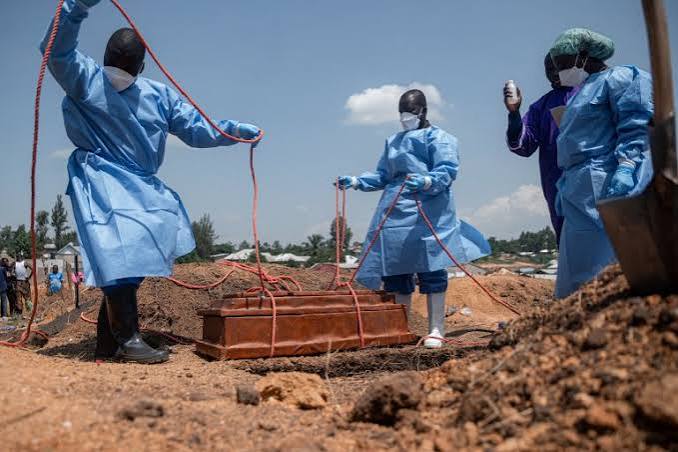
Seventy thousand doses of an Ebola vaccine are being sent to the Democratic Republic of Congo for an outbreak that no vaccine has ever been approved to stop.
The doses were released by the International Coordinating Group on Vaccine Provision, known as the ICG, the body that manages the world's emergency vaccine stockpiles.
The World Health Organization and the Africa Centres for Disease Control and Prevention, the African Union's public health agency, backed the decision in a joint statement issued from Geneva and Addis Ababa on Thursday, 20 August 2026.
The Congolese government had requested the doses the week before.
The vaccine is Ervebo, made by the pharmaceutical company Merck. It has been used in Congo before. It has never been tested against the virus now killing people there.
Not one Ebola, but several
Ebola disease is caused by more than one virus. The outbreak in eastern Congo is being driven by Bundibugyo virus, the rarer of the two forms that have caused large epidemics in Africa.
Ervebo is licensed against the other one, Ebola virus, previously called Zaire ebolavirus.
That is the virus behind the West African epidemic of 2014 to 2016, which killed more than 11,000 people and remains the deadliest Ebola outbreak recorded anywhere.
Nothing is approved anywhere in the world for Bundibugyo. No vaccine, no treatment. WHO states directly that it is not known whether Ervebo protects people against it.
Laboratory work and studies in animals have suggested it may offer some protection, which is early evidence rather than proof, and it is the reason a trial is being run at all.
Where the doses go
Twenty thousand doses are set aside for a Phase 3 clinical trial that will measure whether Ervebo works against Bundibugyo.Phase 3 is the late stage of vaccine testing, done in large numbers of people, and it is normally the stage that decides whether a vaccine is approved.
The other 50,000 doses go to frontline and health workers, following the advice of the WHO Strategic Advisory Group of Experts on Immunization, the panel that sets WHO's vaccine recommendations.
That split means some people will receive the vaccine outside the trial without knowing whether it will protect them.
WHO has said that everyone offered a dose, in the trial or outside it, must be given information on the risks, the possible benefits and the limits of current knowledge, and must be able to give informed consent. Serious side effects from Ervebo have been very rare in the clinical testing done so far.
The toll behind the request
WHO said on Monday, 17 August, that this had become the deadliest Ebola outbreak in Congo's history, with 2,325 deaths. Case data released two days later put the total at 5,021 confirmed infections.
The outbreak was declared on 15 May and has spread across six provinces in the east of the country.
Create a free account
Join Joseph Mmwa Media Group and be the first to know the world's biggest health and medical stories as they happen
Health workers have been among the hardest hit.
Julien Harneis, the United Nations Senior Ebola Coordinator, said on Thursday that more than 160 health workers had been infected and 40 had died.
That is a direct reason the larger share of doses is being pointed at them rather than at the general population.
Why this one has been so hard to contain
Eastern Congo is where the country's armed conflict is concentrated.
Fighting between government forces and the M23 armed group, alongside several other groups, has kept medical teams out of some areas, closed or destroyed health facilities and forced large numbers of people from their homes.
That matters for Ebola in a specific way.
Containing the virus depends on two tasks that are routine in peacetime and close to impossible in a conflict zone: tracing everyone an infected person has been in contact with, and burying the dead safely. Both require reaching communities and being trusted by them.
What an answer would be worth
Bundibugyo has surfaced before, in Uganda in 2007 and in Congo in 2012, but never at this scale. That is part of why no vaccine exists for it. Previous outbreaks were too small and ended too quickly for any trial to produce a usable answer.
If the trial shows Ervebo protects against Bundibugyo, African governments and the stockpile system would gain something they have never had for this virus: a vaccine to deploy at the start of an outbreak rather than isolation and supportive care alone.
If it shows no protection, that finding also carries weight, because it would close off the assumption that the current stockpile covers this strain and shift attention towards developing a vaccine built for it.
The stockpile is itself a recent piece of health infrastructure. The ICG has managed the emergency Ebola vaccine reserve since January 2021, funded by Gavi, the Vaccine Alliance, and run with the International Federation of Red Cross and Red Crescent Societies, Médecins Sans Frontières and UNICEF.
Between 2021 and July 2026 it released just over 56,000 doses for Ebola outbreaks in Congo.
Another 167,000 doses went into preventive campaigns for health and frontline workers in Congo, Guinea-Bissau, Kenya, Sierra Leone and Uganda, which is how the system reaches countries with no outbreak underway.
Harneis said the allocation gives hope to people in the affected areas and to frontline health workers in particular.
WHO Director-General Tedros Adhanom Ghebreyesus described the release as an example of global solidarity in action.
The doses are moving now.
Whether they will do anything against this particular virus is a question the trial is being set up to answer, and until it reports, the 50,000 doses going to health workers rest on early animal and laboratory evidence rather than proof.
Joseph Mmwa is a health and medical journalist covering breaking health news, medical research, vaccines, infectious diseases, and public health developments around the world.