Ebola Deaths Surpass 2,000 in Congo as the Outbreak Outpaces the Response
New government figures put the Ebola death toll in the Democratic Republic of Congo at 2,011 from 4,381 confirmed cases, with roughly half of those deaths recorded in just three weeks
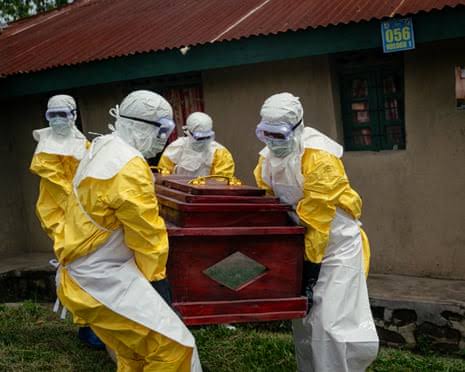
More than 2,000 people have now died in the Ebola outbreak in the Democratic Republic of Congo, and at least half of those deaths were recorded in the past three weeks alone.
The Institut National de Santé Publique, Congo's national public health institute, put the toll at 2,011 deaths from 4,381 confirmed cases on Tuesday, in data reported by the news agency Reuters.
The infections are spread across five provinces of a country the size of Western Europe, with the centre of the outbreak in Ituri, a province in the far north east bordering Uganda.
The outbreak was officially declared on 15 May 2026 and is Congo's seventeenth.
A Toll That Doubled Inside a Month
The number itself matters less than how quickly it was reached. Congo's previous Ebola outbreak, which ran from 2018 to 2020, took a little over twelve months to reach 2,000 deaths.This one has done it in under three. Deaths climbed from 1,000 to 2,000 in less than a month.
The comparison that puts this in perspective is the West Africa epidemic of 2014 to 2016, still the largest Ebola outbreak ever recorded, which killed 11,310 people across Guinea, Liberia and Sierra Leone.
That outbreak took nearly five months from its declaration to reach 1,000 deaths. Congo's current one passed that mark in roughly two.
By case numbers, this is already the largest Ebola outbreak Congo has ever recorded, and the World Health Organization has described it as the second largest in history.
Sania Nishtar, chief executive of Gavi, the global vaccine alliance that funds immunisation in lower-income countries, has warned it could yet become the largest.
The Virus Had a Four-Month Head Start
On Monday, at a news conference in Bunia, the main city of Ituri province, the World Health Organization revealed why the response has been playing catch-up from the beginning.Genetic sequencing of the virus indicates the outbreak actually began in February, around the town of Mongbwalu, three months before anyone declared it.
Dr Mohamed Yakub Janabi, the World Health Organization's Regional Director for Africa, said early cases had been wrongly recorded as malaria or typhoid, both common in the region and both capable of producing fever and severe illness. "So we are chasing the virus.
The virus is ahead of us," he said.
Late declarations are not unique to this outbreak. The West Africa epidemic was declared in March 2014, but the first human case was later traced back to December 2013.
What made the delay costlier here is that when testing did begin, samples were initially screened for the more common form of Ebola rather than the one actually circulating.
Why This Strain Changed the Rules
The virus behind this outbreak is Bundibugyo, one of the rarer members of the Ebola family. It has caused only two previous outbreaks, in Uganda in 2007 and in Congo in 2012.Every tool the world built after the West Africa epidemic was built against a different member of that family, the Zaire strain.
That distinction is not academic. Ervebo, the only licensed Ebola vaccine, is approved against Zaire.
So are the two monoclonal antibody treatments that transformed survival rates during Congo's 2018 outbreak.
Create a free account
Join Joseph Mmwa Media Group and be the first to know the world's biggest health and medical stories as they happen
Against Bundibugyo, there is no approved vaccine and no approved treatment, only supportive care, which means keeping patients hydrated and stable while their bodies fight the infection.
The case fatality rate reflects that gap. Congolese health authorities estimate that roughly 46 in every 100 confirmed patients have died, close to double the rate achieved in 2018 once effective drugs were in use.
Two efforts are under way to close it. On Friday 7 August, World Health Organization vaccine advisers recommended a full-scale human trial of Ervebo in Congo, after early laboratory data suggested it may offer some cross-protection against Bundibugyo.
Separately, a clinical trial called PARTNERS, supported by Médecins Sans Frontières and other medical organisations, is testing the antiviral remdesivir and an experimental antibody treatment known as MBP134 in patients at treatment centres in Ituri.
Chasing Cases Nobody Was Watching
The clearest sign that the response is behind sits in a single statistic.Congolese health authorities have said that between 60 and 70 percent of new cases are being found among people who were never on any contact-tracing list.
Contact tracing is the backbone of every Ebola response. When someone tests positive, teams find everyone that person met and watch them for symptoms.
When most new patients were never identified in advance, it means chains of transmission are running unseen in the community.
Dr Janabi also said many patients in Bunia are dying because they arrive too late. Villages outside the town largely have no treatment services, so people must travel to reach care, and by the time they do, the window in which supportive treatment helps most has often closed.
A Response Working Against the Conditions
Ituri and neighbouring North Kivu have endured years of armed conflict, and health teams are operating on remote unpaved roads with reported shortages of protective equipment.The Associated Press has counted more than twelve attacks on health facilities and health workers since the outbreak began.
Some health workers have gone on strike over wages unpaid since May. Misinformation claiming Ebola is not real has circulated in affected communities.
Dr Steve Ahuka, Congo's national Ebola incident manager, has said the single biggest obstacle is reaching communities and explaining what is happening, because a population that understands the disease cooperates with the response.
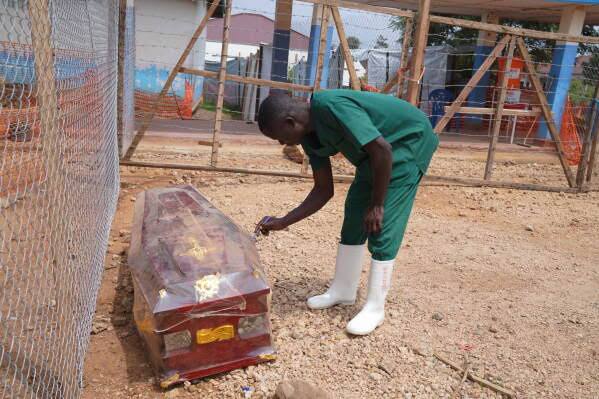
That thinking now shapes strategy. At a crisis meeting in Kinshasa, the capital, on 5 August, Africa Centres for Disease Control and Prevention and the Congolese government agreed to shift towards a village-level response rather than one run from provincial hubs.
There is one genuine success in this outbreak. Uganda, where twenty cases and two deaths were recorded after the virus crossed the border into the capital Kampala, discharged its last patient on 16 July and declared its outbreak over on 28 July.What the Region Has Shown Is Possible
Preparation is spreading outward.
In early August, Médecins Sans Frontières ran Ebola simulation training for regional responders at a purpose-built practice treatment centre in Kajiado County, near Nairobi in Kenya, preparing staff who may be deployed to reinforce the response.
Uganda's containment shows the outbreak is stoppable where cases are found early and care is close by.
In Congo, neither of those conditions has yet been met, and until treatment reaches the villages rather than waiting for the villages to reach treatment, the case numbers are likely to keep arriving faster than the response can absorb them.

Joseph Mmwa is a health and medical journalist covering breaking health news, medical research, vaccines, infectious diseases, and public health developments around the world.