England moves closer to eliminating hepatitis C
More than 100,000 people in England have been treated and cured of hepatitis C since 2015, helping cut deaths by 36 per cent and reduce the number of people living with long-term infection by 61 per cent
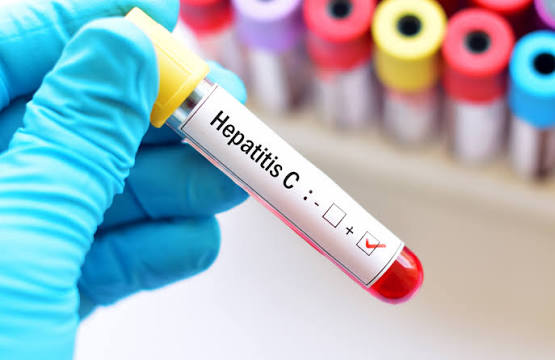
More than 100,000 people in England have now been found and cured of hepatitis C, a virus that can sit quietly in the liver for decades before it does visible harm.
England is now closer than almost any other country to being rid of it.
The figures were published on 11 August by NHS England, the organisation that runs the health service in England.
They cover the ten years since 2015, when a new kind of medicine arrived and changed what a hepatitis C diagnosis meant.
Hepatitis C spreads through contact with infected blood, and it attacks the liver. Left alone for long enough it can cause scarring, liver failure or liver cancer.
The difficulty has never really been the treatment. It has been finding the people who are carrying it, because most of them feel perfectly well.
A cure that fits in a tablet
The medicines behind the change are called direct acting antivirals.They are taken as tablets for eight to twelve weeks, and according to the World Health Organization they cure more than 95 out of every 100 people who take them. There is still no vaccine against hepatitis C, so treatment is the only tool available.
The other half of the story is price.
In 2019 the NHS struck a bulk deal with the drug companies Gilead Sciences, MSD and AbbVie, which allowed it to treat people at a scale that would otherwise have been unaffordable.
That deal, more than any single scientific advance, is what turned a good drug into a national programme.
Hunting for people who feel fine
Because hepatitis C hides, England went looking for it in places where sick people do not usually present themselves.Since 2022 the NHS has been testing patients who are already having a blood test in many accident and emergency departments, and that programme alone has picked up around 1,900 infections nobody knew about.
New patients registering with a family doctor are now asked whether they had a blood transfusion before 1996, a question aimed at people caught up in the contaminated blood scandal.
There is also a free home testing service, running for more than three years, for people who would rather not raise the subject with a doctor at all.
Paul Eatwell, 65, from Blackburn in north west England, was one of those found by accident. Routine liver tests after he changed doctors looked abnormal, and a follow up test came back positive.
His reaction, he told NHS England, was disbelief: "Are you sure? Surely there's been some mistake." He had never felt ill.
What ten years did to the numbers
The UK Health Security Agency, the government body that tracks infectious disease, estimates that about 50,200 adults in England were living with long term hepatitis C in 2024. That is a fall of 61 per cent since 2015.Deaths have followed the same direction, down 36 per cent over the decade according to NHS England. The death rate now sits well below the level the World Health Organization set as its threshold for saying a country has the virus under control.
Create a free account
Join Joseph Mmwa Media Group and be the first to know the world's biggest health and medical stories as they happen
The shift is clearest among people who inject drugs, the group most affected. Nearly half of them had cleared the virus by 2024, compared with under a quarter in 2015. NHS England says the country is one of only a handful worldwide to have passed the World Health Organization's mark of treating 80 per cent of known cases.
The part England has not fixed
Curing someone does not make them immune, and new infections are still happening faster than the target allows.Provisional UK Health Security Agency estimates put new infections among people who inject drugs at around 4.4 per 100 people each year in 2024, roughly double the level the World Health Organization wants to see by 2030.
That gap points away from medicine and towards everything around it: clean needles, drug treatment services, housing, prisons.
Rachel Halford, chief executive of the charity The Hepatitis C Trust, welcomed the milestone but warned that the programme needs renewed long term funding to keep reaching people who have been overlooked. The remaining cases, she said, are concentrated among the most marginalised communities.
Two viruses, one finish line
There is also a definitional catch worth understanding. Internationally, elimination is judged across viral hepatitis as a whole, meaning hepatitis B as well as C.England is world leading on C and behind on B, where too few people are diagnosed and linked to care. A national patient tracking system planned for 2026 and 2027 is meant to show where that stands.
So England is close, but the finish line is further off than the hepatitis C figures alone suggest.
The world is nowhere near
Globally the picture is far bleaker.
The World Health Organization estimates that about 47 million people are living with long term hepatitis C, and that roughly 239,000 died of it in 2024, mostly from cirrhosis and liver cancer. Of those who have actually been diagnosed, only around one in five had been treated by the end of 2024.
New infections are barely moving. The agency's 2026 global hepatitis report found they had fallen only 8 per cent since 2015, against a target of 80 per cent by 2030.
Harm reduction is a large part of the reason, with an average of 35 needles and syringes distributed per person each year worldwide, far short of the 300 the World Health Organization considers adequate.
The burden is not evenly spread.
The Eastern Mediterranean region carries the heaviest load with around 12 million infections, followed by South East Asia and Europe with around 9 million each, and the African region with around 8 million.
Nigeria and South Africa are among ten countries that together account for well over half of the world's hepatitis C deaths.
But the same report names Egypt, Georgia, Rwanda and the United Kingdom as proof that elimination is achievable, and two of those are not wealthy countries.
What they share is not a better drug. It is a decision to buy the drug cheaply, test people at scale, and keep paying for it.
England's own experience suggests the last stretch is the hardest and the most expensive, because the people still carrying the virus are the ones the health system has always found hardest to reach.

Joseph Mmwa is a health and medical journalist covering breaking health news, medical research, vaccines, infectious diseases, and public health developments around the world.