Experimental Stem Cell Therapy Shows Promise in Repairing Damaged Heart Muscle in Heart Failure Patients
New trial results published in Nature Medicine show that patients who received stem cell-derived heart muscle cells during bypass surgery walked further and had better blood flow to the heart a year later than those who had bypass surgery alone
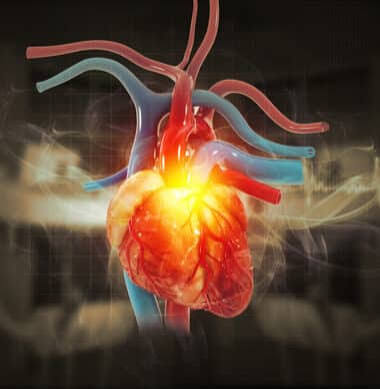
A Chinese hospital has published results showing that heart muscle cells grown from stem cells helped patients walk further and improved blood flow to the heart muscle after bypass surgery, but the same therapy triggered abnormal heart rhythms in every patient who received it, according to a trial published this week.
Nanjing Drum Tower Hospital, affiliated with Nanjing University in the eastern Chinese city of Nanjing, published the 12-month results of its HEAL-CHF trial in the journal Nature Medicine, a peer-reviewed research journal.
The trial tested an experimental therapy called HiCM-188 in patients with advanced heart failure caused by coronary artery disease, in which the arteries that supply the heart become narrowed or blocked.
What the researchers tested
Heart failure happens when the heart muscle can no longer pump blood efficiently enough for the body's needs.In advanced cases, patients may become breathless with little activity, struggle to lie flat, and require repeated hospital care.
A heart transplant is a potentially life-saving option for some patients, but donor hearts are in short supply worldwide, leaving many patients dependent on medication and other treatments.
The trial enrolled 20 patients who already needed coronary artery bypass grafting, a surgery that reroutes blood flow around blocked arteries.
Ten patients had the bypass surgery alone.
The other ten had the same surgery, plus an injection of heart muscle cells grown from induced pluripotent stem cells.
These are ordinary adult cells that scientists reprogram in the lab back into an early, unspecialised state, from which they can then be grown into particular cell types, including heart muscle. The injected cells came from a donor, not the patient's own body.
Where the treatment showed a measurable benefit
At 12 months, patients who received the cell injection showed significantly greater improvement than the surgery-only group in three measures: how far they could walk in six minutes, blood flow to the heart muscle on imaging scans, and the thickening of heart muscle tissue during each heartbeat, a sign of muscle activity.Where it made no measurable difference
The trial found no significant difference between the two groups in left ventricular ejection fraction, the standard measure of how much blood the heart pumps with each beat, or in heart chamber size, scar tissue size, or heart failure symptom scores.
Nine of the ten patients who received the cell injection were classified in a less severe heart failure category (New York Heart Association Class II) at 12 months, compared with six of the ten surgery-only patients.
That is a real difference in raw numbers, but the study's own analysis found it was not statistically significant, meaning it could plausibly have occurred by chance in a trial this small.
The heart rhythm problem
The trial's main goal was checking safety, not proving the therapy works.
Researchers set two specific safety tests in advance: whether patients developed sustained ventricular tachycardia, a dangerously fast heartbeat from the heart's lower chambers, between one and six months after surgery, and whether any new tumours grew over 12 months.
Create a free account
Join Joseph Mmwa Media Group and be the first to know the world's biggest health and medical stories as they happen
Neither of those two specific outcomes occurred in either group. That does not mean no abnormal heart rhythms occurred.
All ten patients who received the cell injection developed a heart rhythm disturbance called accelerated idioventricular rhythm, typically appearing five to seven days after the procedure.
Two of the ten also developed clinically significant ventricular tachycardia, a fast heartbeat above 140 beats per minute, peaking two to three weeks after the injection and requiring an electrical procedure called cardioversion to correct.
The paper reports these rhythm problems resolved, and that patients in the cell group were given anti-arrhythmic drugs in the first month after surgery. The researchers write that future studies will need to weigh this arrhythmia risk against the therapy's benefits.
Why the trial's size and funding matter
A 20-patient trial is small by the standards of most published medical research, and the study was conducted at a single hospital with an open-label design, meaning doctors and patients knew who received the cell injection, which can affect how outcomes are judged.
The paper states that the work was supported by China's National Key Research and Development Program and by the Peak Disciplines programme of institutions of higher learning in Shanghai, and also by grants from HELP Therapeutics, the Nanjing-based company that manufactures HiCM-188.
The paper's competing-interests declaration states that one author is a scientific founder and equity holder in HELP Therapeutics, another is a medical consultant to the company, and five further authors are current company employees.
The remaining authors declare no competing interests.
What happens next
HiCM-188 remains an investigational therapy and is not approved for use anywhere. A larger, multi-centre Phase III trial is now recruiting patients in China, led by TEDA International Cardiovascular Hospital, and a separate early-stage trial is scheduled to begin in the United States at the Texas Heart Institute.
Results from those larger studies will be needed before regulators anywhere could consider approving the therapy.
Beyond China
Heart failure is a major cause of illness, hospitalisation and death worldwide, and the shortage of donor hearts is not unique to China.
In many African countries, heart failure is often linked to high blood pressure, rheumatic heart disease and other forms of heart muscle disease, and access to advanced cardiac treatments remains limited in much of the region.
Even as trials of therapies like HiCM-188 expand into more countries, how affordable or accessible any approved version would eventually be for lower-income health systems remains unknown.
For now, the HEAL-CHF results show that stem cell-derived heart muscle cells can be delivered during bypass surgery and were associated with measurable improvements in exercise capacity and blood flow to the heart, while also coinciding with heart rhythm disturbances in every patient who received them.
Whether the benefits outweigh those risks, and whether the approach improves patients' overall heart function or survival, are questions the ongoing larger trials are now designed to answer.
Source
Zhang H, Menasche P, Fan J, et al. Intramyocardial injection of allogeneic human induced pluripotent stem cell-derived cardiomyocytes in advanced ischemic heart failure: an early-stage randomized trial. Nat Med. 2026. doi:10.1038/s41591-026-04605-1*
Joseph Mmwa is a health and medical journalist covering breaking health news, medical research, vaccines, infectious diseases, and public health developments around the world.