Hair relaxers and dyes linked to higher fibroid rates in new Boston University research
New research tracking Black women with repeat ultrasound scans has linked recent use of chemical hair relaxers and hair dyes to higher rates of uterine fibroids, with the strongest association seen among women using temporary smoothing treatments, which are more likely than permanent relaxers to contain formaldehyde
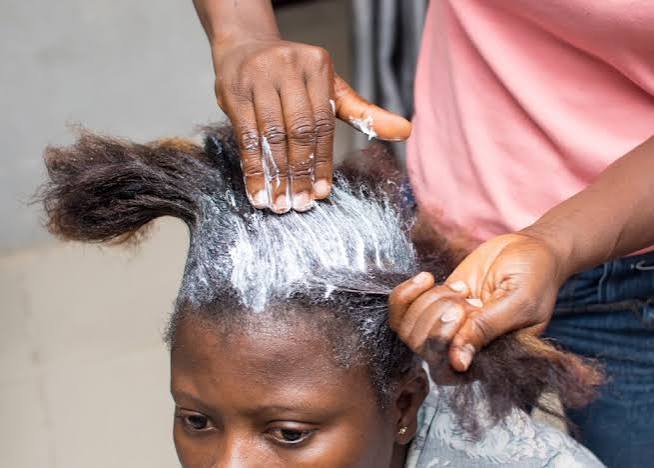
Recent use of some hair products has been linked to the development of fibroids in the womb.
The link comes from two studies led by researchers at Boston University School of Public Health, both drawing on the same long-running project in Detroit, in the United States.
That project, the Study of Environment, Lifestyle and Fibroids, enrolled 1,693 Black women aged 23 to 35 between 2010 and 2012, all of them free of fibroids at the start.
They were scanned by ultrasound at enrolment and at four follow-up visits over the next decade. Because the scans were repeated, researchers could pick up fibroids as they formed rather than wait for a woman to develop symptoms and seek help.
The relaxer finding
The first study, on chemical hair straighteners, was published in the American Journal of Epidemiology on 31 December 2025.Women who had used a relaxer in the previous 12 months showed a higher estimated rate of new fibroids, though the overall estimate was imprecise.
The researchers also estimated that fibroids in recent users grew about 11 percent more, but the range around that figure was wide enough to include no difference at all. Neither result settles the question on its own.
Two products, two very different chemistries
The sharper result was in the gap between product types.
Temporary treatments, the kind sold as keratin smoothing, showed a markedly stronger association than permanent relaxers, and the researchers describe this as a new finding that needs following up. The two work differently.
Permanent relaxers are more likely to contain lye, or sodium hydroxide, which can burn the scalp. Temporary treatments are more likely to contain formaldehyde, which the International Agency for Research on Cancer classifies as causing cancer in humans, or ingredients that release formaldehyde when heat is applied during the treatment.
That chemistry is what the researchers put forward as a possible explanation.
It is not something the study demonstrated. Nobody tested the products the women actually used, no brands or ingredients were recorded, and product use was reported by the women themselves on questionnaires.
Hair dye pointed the same way
The second study, on hair dyes, appeared in Fertility and Sterility on 7 August 2025. It covered 868 women from the same group who were still fibroid-free at the 40-month visit, and followed them for about four years on average.Of those women, 149 developed fibroids. Among the 351 who reported using any hair dye in the previous year, about 19 in every 100 developed fibroids. Among the 517 who used none, the figure was about 16 in every 100.
After adjusting for other factors the estimated rate was higher among dye users, but the researchers described their findings as modest and generally imprecise, because the number of cases among dye users was small.
One result stood out. Temporary rinses that fade were tied to roughly double the fibroid rate, and that estimate held up statistically where the estimates for permanent dye, semi-permanent dye, gloss and highlights did not.
A condition that is growing worldwide
Fibroids are extremely common.Ultrasound studies suggest most women develop them at some point by menopause, and older United States data found fibroids accounted for roughly 30 percent of hysterectomies among women aged 18 to 44.
Global estimates show the age-standardised rate of new fibroid cases rising between 1990 and 2021, from about 234 to about 251 cases per 100,000 women.
These are modelled estimates rather than counts, shaped by how well fibroids get diagnosed in a given country.
Within that picture, women of African ancestry stand out.
Create a free account
Join Joseph Mmwa Media Group and be the first to know the world's biggest health and medical stories as they happen
They tend to develop fibroids 10 to 15 years earlier than white women and are more likely to experience severe symptoms.
The difference in lifetime prevalence appears smaller than the differences in age at onset, tumour size and symptom burden, which is part of what makes the pattern hard to explain and worth explaining.
Why hair products draw this much attention
Most of what is known to raise fibroid risk cannot be altered.
Age cannot be changed. Family history cannot be changed.
Hair-product use can.
No study has yet shown that changing products lowers anyone's risk, and neither of these two established that hair products explain any part of the gap between groups.
But if further research does confirm a role for particular chemicals, product use would become one of the few fibroid risk factors a person could act on, and the question reaches well past Detroit to every market where these products are sold.
What these studies cannot tell anyone
Neither study shows that relaxers or dyes cause fibroids.Both are observational, meaning researchers watched what happened rather than assigning products to some women and not others.
Women who use these products may differ from women who do not in ways the analysis could not fully capture.
Both drew on one metropolitan-area group. Both relied on self-reported product use, and the dye study's authors noted that women may simply misremember.
Both received funding from the United States National Institute of Environmental Health Sciences, part of the National Institutes of Health.
The senior author on both, Lauren Wise, disclosed consulting work for the pharmaceutical company AbbVie and for the Gates Foundation, along with in-kind donations from two companies making fertility and pregnancy products.
Regulation has not kept pace
In the United States, the Food and Drug Administration began publicly advancing a rule in 2023 to prohibit formaldehyde and formaldehyde-releasing chemicals in hair-smoothing and straightening products that are heated during use.The date has slipped repeatedly.
The agenda published in early 2025 projected the end of that year, which passed with nothing published. The current agenda now projects November 2026, and notes that no legal deadline applies. The rule remains at the proposed stage, so no ban is in force.
The European Union settled part of this years ago.
Formaldehyde itself is prohibited in cosmetic products there, while some formaldehyde-releasing ingredients remain permitted under set conditions. Labelling leaves another gap.
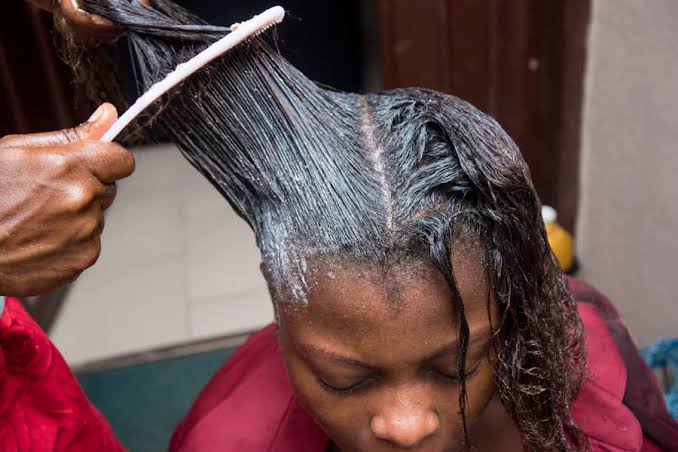
In the United States, fragrance ingredients can generally be declared collectively as "fragrance" rather than listed one by one.
The evidence tying these products to fibroids remains suggestive rather than settled. That makes accurate ingredient labelling more relevant, not less, while researchers work out which chemicals, if any, are behind the association.
Sources
Wise LA, Schildroth S, Lovett SM, et al. Am J Epidemiol. 2026;195(5):1462-1467. doi:10.1093/aje/kwaf286 | Schildroth S, Gaston SA, Harmon QE, et al. Fertil Steril. 2026;125(1):94-105. doi:10.1016/j.fertnstert.2025.08.002 | Munro MG, et al. Int J Gynecol Obstet. 2025. doi:10.1002/ijgo.70527 | Front Reprod Health. 2025;7:1629834. doi:10.3389/frph.2025.1629834 | US FDA Unified Agenda, RIN 0910-AI83 | Boston University School of Public Health

Joseph Mmwa is a health and medical journalist covering breaking health news, medical research, vaccines, infectious diseases, and public health developments around the world.