Diabetes Risk Climbs After One Type of HIV Treatment Switch, Major Studies Find
The studies suggest that people with HIV may face a higher risk of type 2 diabetes after switching from a protease inhibitor to an integrase inhibitor, with the increase most apparent during the first two years

Millions of people living with HIV have been moved off an older HIV medicine and onto a newer one over the past decade.
Two large new studies now suggest that for one group of them, the switch came with a rise in the risk of type 2 diabetes.
The newer medicine belongs to a family called the integrase inhibitors, which includes dolutegravir and bictegravir.
These control the virus well and are now the first choice almost everywhere. The new findings do not change that.
What matters is what a person was taking beforehand. Almost everyone who switched was coming off one of two older families of HIV medicine, and the two are not alike.
The first is the protease inhibitors.
They have been in use for decades and are already known to disturb the way the body handles blood sugar and fat.
The second is the non-nucleoside reverse transcriptase inhibitors. That family includes efavirenz, which for years anchored HIV treatment across much of Africa and Asia.
The higher diabetes risk showed up clearly and consistently in people leaving protease inhibitors. In people leaving efavirenz it was weaker and harder to pin down. That difference runs through everything else in the findings.
Both studies were published in the medical journal The Lancet HIV on 27 March 2026.
Where the risk showed up
The first study followed just over 13,000 people with HIV in the United States and Canada who had never taken an integrase inhibitor.Some switched to one. Others stayed on the medicine they were already using. Researchers compared what happened to the two groups over the next five years.
The result depended on which medicine people were switching away from.
People who moved off a protease inhibitor had a 38 per cent higher risk of developing diabetes.
In plainer terms, two years after the change, six in every 100 people who switched had developed diabetes, compared with four in every 100 of those who stayed on a protease inhibitor.
The picture for people leaving efavirenz is less tidy, and it deserves care.

Across the full five years, their risk was not meaningfully different from those who stayed. But at the two-year mark, just under six in every 100 switchers had developed diabetes against just over four in every 100 non-switchers, a gap the researchers judged unlikely to be chance.
A further analysis stretching back to 2007 found a clear rise in this group as well, though the researchers treat that older data cautiously, because in those years the people being switched tended to be less well.
So the honest summary is not that efavirenz users were in the clear. It is that the evidence against the protease inhibitor switch is strong, and the evidence around the efavirenz switch is mixed.
That distinction carries weight far beyond North America.
The World Health Organization recommended dolutegravir as the preferred first-line treatment in 2018, and by 2024 it reported that 116 of 127 countries had adopted it.
Before that shift, roughly 16 million people in low and middle income countries were on efavirenz-based treatment. The largest medicine switch in the history of HIV care ran out of that class, not out of protease inhibitors, which makes the weaker efavirenz signal the one with the widest reach.
Create a free account
Join Joseph Mmwa Media Group and be the first to know the world's biggest health and medical stories as they happen
The study was led by Dr Y Joseph Hwang of the Johns Hopkins University School of Medicine in Baltimore.
Weight gain does not explain it
Integrase inhibitors have been associated with weight gain in a number of studies, and extra weight raises diabetes risk. So the obvious explanation was simply that people were putting on weight.The researchers tested that idea and it did not hold. They re-ran their analysis as though nobody had gained more than 5 per cent of their body weight in the first year. The raised risk barely moved.
Something else appears to be at work.
Earlier laboratory research has suggested these medicines may interfere directly with how the body handles blood sugar, before any change in weight shows up.
That has not been confirmed in patients, and the researchers describe it as one possible explanation among several.
A second study, drawn from a wider map
The second study used data from REPRIEVE, a large trial that tested a cholesterol-lowering medicine in people with HIV across 12 countries.Because REPRIEVE recruited well beyond wealthy countries, it offers a broader picture than most previous work on this question.
Researchers led by Emma Kileel compared roughly 3,000 participants who switched to an integrase inhibitor with about 5,000 who did not. Everyone was aged between 40 and 75 and had been on stable treatment.
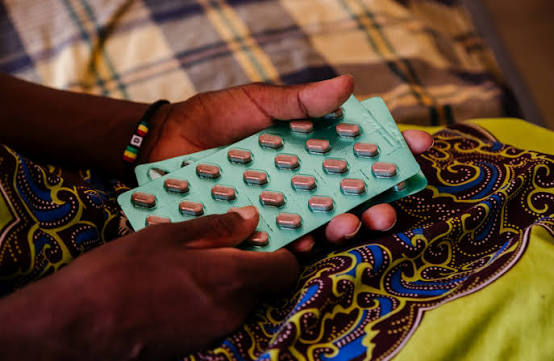
Those who switched were more likely to develop diabetes, obesity and high blood pressure.
Fewer than five in every 100 switchers developed diabetes over a follow-up period of just under three years. Here too, adjusting for changes in body weight did not make the pattern go away.
The result that should reassure patients
The same study looked at heart attacks and strokes, and found no significant difference between those who switched and those who did not.That is an important reassurance. Diabetes, obesity and high blood pressure are all steps on the road towards heart disease, so a rise in all three could reasonably have been expected to show up as more heart events.
It did not, at least over this timeframe. What happens over ten or twenty years remains unknown.
What neither study can prove
Neither study randomly assigned anyone to switch. Doctors and patients made those decisions themselves, which leaves room for a different explanation.Protease inhibitors are known to cause metabolic problems.
People are often moved off them precisely because those problems have already started. So the higher diabetes rate among switchers may partly reflect who was chosen to switch, rather than the effect of the new medicine.
Both research teams adjusted for known risk factors, but statistical adjustment is not the same as a randomised trial, and Dr Hwang's team names this as the main weakness in their work.
The North American study also covered only the United States and Canada. The REPRIEVE participants were all at low-to-moderate risk of heart disease to begin with, and half were taking a statin, which lowered their risk further.
What it means for clinics
Both research teams reach the same practical conclusion, and so does a commentary published alongside the studies by Jean-Jacques Parienti and Franck Boccara, two French specialists in HIV and cardiovascular medicine: screen earlier.Diabetes screening is not routine in many HIV clinics, particularly in countries where treatment programmes are stretched and a clinic visit is short.
These findings suggest the period just after a change of regimen is when a blood sugar check is most likely to catch something.
The North American researchers single out the first two years after a switch as the window that matters most.
Neither study gives any reason to avoid integrase inhibitors, and the researchers say plainly that discouraging the switch is not their intention. The finding is narrower than the headline suggests, and it is also less settled.
For people coming off a protease inhibitor, the evidence that the first two years deserve attention is firm.
For the far larger number who came off efavirenz, the question is still open, and a blood sugar test remains a cheap way to answer it one patient at a time.
Sources
Hwang YJ, Lesko CR, Brown TT, et al. Incident diabetes after switching to integrase strand transfer inhibitors in people with HIV in the USA and Canada: a cohort study. Lancet HIV. 2026;13(5):e297-e305. Published online 27 March 2026. doi:10.1016/S2352-3018(25)00335-2; Kileel EM, Malvestutto CD, Zanni MV, et al. Risk of obesity, diabetes, hypertension, and major adverse cardiovascular events after a switch to an integrase inhibitor: a target trial emulation in REPRIEVE. Lancet HIV. 2026;13(5):e306-e315. Published online 27 March 2026. doi:10.1016/S2352-3018(25)00354-6; Parienti JJ, Boccara F. Metabolic syndrome and cardiovascular risk on INSTIs. Lancet HIV. 2026. Published online 27 March 2026; World Health Organization. New report documents increase in HIV drug resistance to dolutegravir. Geneva: WHO; 5 March 2024.

Joseph Mmwa is a health and medical journalist covering breaking health news, medical research, vaccines, infectious diseases, and public health developments around the world.