New Medicaid Rule Leaves Thousands of Homeless Americans in the Cold
People without housing may need to meet Medicaid's new work requirements through employment, education or another qualifying exemption to keep their coverage
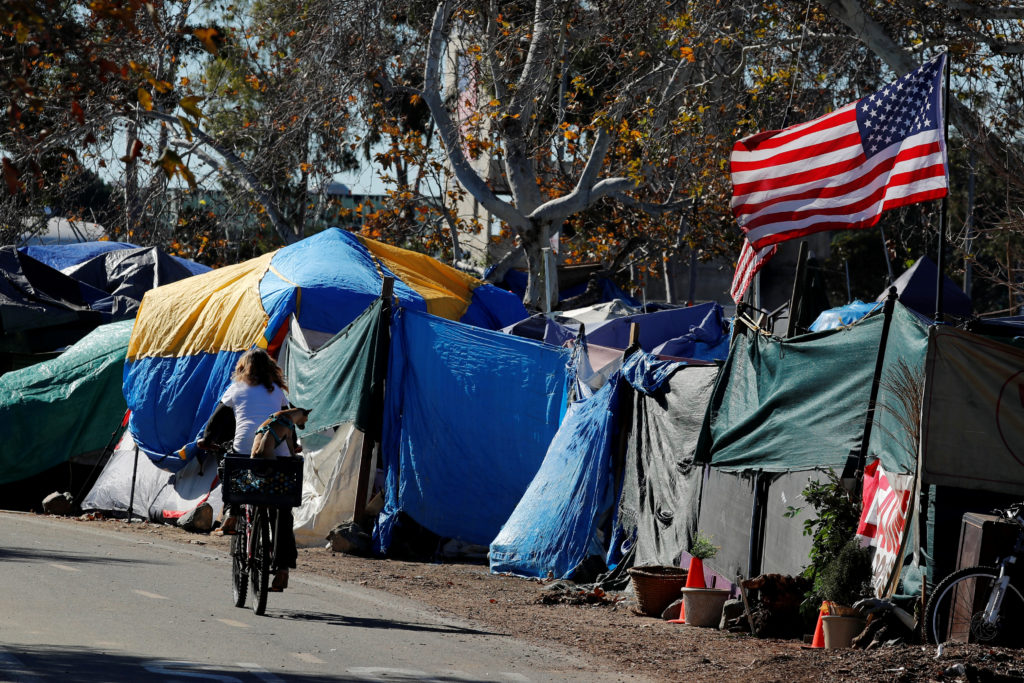
Being homeless is not, in the view of the United States federal government, a reason to be excused from proving that a person works for a living.
That determination now sits at the center of a policy shift moving through state Medicaid programs, and it has caught even supportive states off guard.
Medicaid is the joint federal and state program covering health care for low-income Americans, paying for prescriptions, doctor visits, hospital care and addiction treatment.
The Centers for Medicare & Medicaid Services (CMS), the federal agency that oversees the program, issued an interim final rule with comment period on 1 June 2026, published in the Federal Register two days later. It implements the work requirement provisions of the 2025 budget reconciliation law.
Non-pregnant adults aged 19 to 64 enrolled through the Medicaid adult group must demonstrate 80 hours a month of employment, community service, a work program or at least half-time education, or earn the equivalent of 80 times the federal minimum wage, which is 580 dollars a month in 2026.
Forty-three states and the District of Columbia must implement it no later than 1 January 2027. Montana, Arkansas and Nebraska have already begun.
The consequences for one group in particular were reported on 6 August 2026 by KFF Health News, the newsroom operated by the health policy organization KFF, in an investigation by correspondent Katheryn Houghton.
The List, and Who Fell Off It
The rule exempts a substantial number of people outright. The categories include pregnant and postpartum people, those who are disabled or medically frail, American Indians and Alaska Natives, parents and caregivers of children under 14 or of people with disabilities, former foster youth, veterans with a total disability rating, people in drug or alcohol treatment, and people already meeting the work rules attached to the Supplemental Nutrition Assistance Program (SNAP) or Temporary Assistance for Needy Families (TANF).
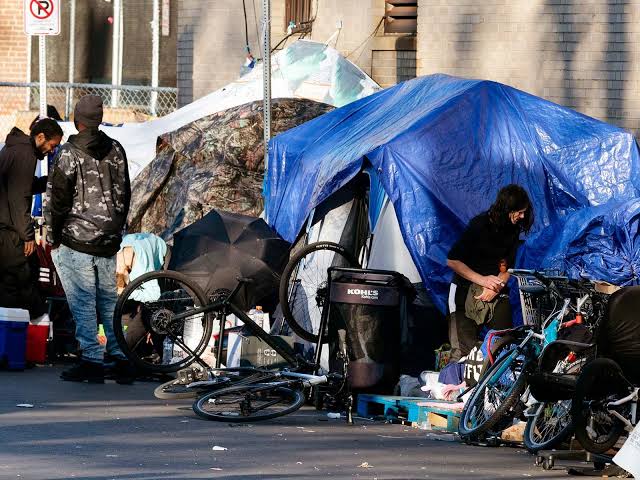
Homelessness is not on it. The administration determined that having no home is not itself a medical condition and therefore cannot serve as a standalone exemption.
Several states had assumed otherwise.
Montana, Arizona, Kentucky and Utah had each previously proposed work requirement policies treating homelessness as grounds for an exemption, KFF Health News reported.
Federal officials have since told states they must follow the federal list and cannot add to it.
Jennifer Tolbert, deputy director of KFF's Program on Medicaid and the Uninsured, said the regulations are considerably stricter than many states had expected, including states that support work requirements in principle.
The rules took everyone by surprise, she said.
Montana's own history illustrates the gap. When state lawmakers passed their first Medicaid work requirement bill in 2019, they also planned to excuse people fleeing domestic violence and people caring for hospitalized family members. Neither group appears on the federal list either.
How the Sick Route Narrowed
Federal officials have argued that many people without housing will still qualify through medical frailty, since serious untreated illness is common in that population.
The rule makes that route harder than it sounds. CMS interprets the exemption to require not only a qualifying condition but also that the condition significantly impairs the person's ability to complete the 80 hours, and states may not expand the definition beyond the five categories set in statute.
Timing softens the immediate impact. For 2027, people may attest that they meet an exemption; supporting documentation is required from 2028.
The documentation burden therefore lands hardest in the second year, on people whose circumstances are least stable.
Create a free account
Join Joseph Mmwa Media Group and be the first to know the world's biggest health and medical stories as they happen
A Population Counted Once a Year
The scale is significant, though its exact size is unclear. Homelessness in the United States rose 27 per cent between 2013 and 2025, according to Department of Housing and Urban Development figures cited by KFF Health News, with about 746,000 people counted as homeless on a single night in January 2025.
That is a point-in-time count, so the number who experience homelessness across a full year is higher.
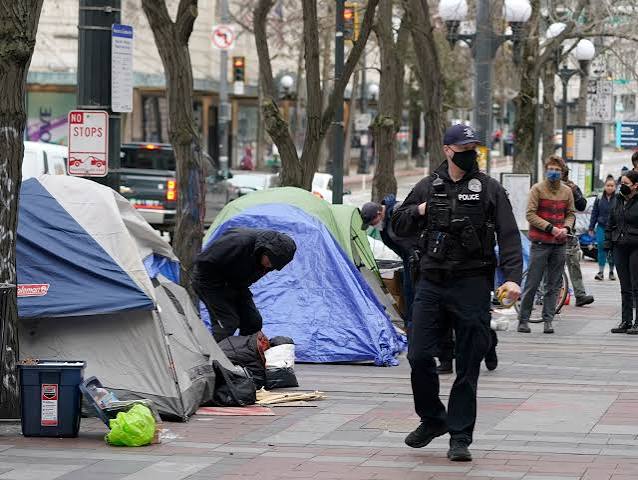
How many hold Medicaid is harder to establish, because enrollment records do not capture housing status reliably. One indicator comes from the roughly 300 Health Care for the Homeless programs operating nationally, where 55 per cent of patients treated for medical or behavioral health needs in 2023 were enrolled in Medicaid.
That figure describes patients at those clinics, not the homeless population as a whole.
The Congressional Budget Office (CBO), the non-partisan agency that scores federal legislation, has projected that the work requirement will increase the number of uninsured Americans by more than five million by 2034.
That estimate covers the work requirement provision alone and is separate from broader projections covering all the Medicaid changes in the 2025 law.
Where the Rule Meets the Pavement
The case KFF Health News followed is that of Tywon Pugh, a 46-year-old Missoula, Montana resident who has lived outside since his wife died in 2025. Medicaid pays for the medication controlling his seizures, a condition that already cost him a fast-food job.
He has been trying to enter addiction treatment and was told there is a waiting list, which is notable because enrollment in drug or alcohol treatment is itself an exemption category.
Over the past year he lost his wallet and identity documents while sleeping outside, and a neurology clinic discharged him after three missed appointments.
Each of those setbacks is also a documentation problem. Dustin Goss, a case manager at the Samaritan House shelter in Kalispell, Montana, told the newsroom that people who do not know where their next meal is coming from cannot realistically manage paperwork deadlines.
Cassidy Kipp, who leads the same shelter, added another complication. People who stabilize in shelter often do find work, but the first jobs tend to be informal and short term, such as clearing a storage unit, and they produce no pay stub for a verification system to read.
Montana's automated system for checking medical records and exempting people without an application is not yet operational, though state health department spokesperson Jon Ebelt said it should be running by October. Where a state cannot verify compliance, it must issue a notice and allow 30 days for the person to demonstrate compliance or establish an exemption before coverage ends.
Contested, and Not Yet Settled
Mehmet Oz, the CMS administrator, presented the regulations in June as a route to greater prosperity, and CMS has described the framework as intended to promote economic stability and self-sufficiency.Supporters have long argued that genuinely vulnerable people would be protected by the exemption categories.
In June, 25 states, most led by Democrats, sued the federal government, arguing that the medical frailty standard is too demanding for enrollees to meet and too difficult for states to assess.
That litigation was pending as of publication. Because the measure is an interim final rule, CMS is not obliged to substantially revise the policy before implementation, though the comment period closed on 31 July 2026.
A partial cushion exists. Roughly 1,400 federally funded community health centers treat patients according to ability to pay, so people who lose Medicaid can still obtain primary care.
Organizations representing those centers have warned that large coverage losses would strain their finances, and the centers generally do not provide specialty care, which is exactly what a patient with uncontrolled seizures needs.
Montana intends to begin removing non-compliant enrollees in October 2026. Most other states start in January 2027, with documentation requirements following a year later.
The question the policy now faces is not whether homeless enrollees are unwell enough to qualify for an exemption, but whether a verification system built on records and deadlines can reach people whose circumstances make records and deadlines nearly impossible to keep.

Joseph Mmwa is a health and medical journalist covering breaking health news, medical research, vaccines, infectious diseases, and public health developments around the world.