Injectable PrEP Outperforms Pills in HIV Prevention Among Mobile Men, Study Finds
Injectable PrEP kept more mobile men on HIV prevention than oral PrEP, with 28% remaining persistent compared with 16% on oral PrEP
Men who spend their working lives on the road, on boats, or moving between job sites have often been overlooked in HIV prevention research, despite facing real challenges in accessing and staying on it.
New results suggest more flexible options could help close that gap.
Results from the Mobile Men study, presented at the 26th International AIDS Conference in Rio de Janeiro, Brazil, on July 29, 2026, show that a long-acting injectable form of PrEP helped men who travel for work stay on HIV prevention longer than oral PrEP did.
The study was carried out by the Africa Health Research Institute (AHRI), the Desmond Tutu Health Foundation, the Medical Research Council/Uganda Virus Research Institute and London School of Hygiene & Tropical Medicine (MRC/UVRI & LSHTM) Uganda Research Unit, and King's College London.
Why truck drivers and fishermen became the focus
Taxi drivers, truck drivers, construction workers, and fishermen can spend long periods away from home for work.
Earlier community research conducted ahead of the trial found that many of these men had multiple sexual partners and rarely used condoms, citing time away from home, boredom, and alcohol use as contributing factors.
Despite that risk, HIV prevention research in the region has historically focused more heavily on women, and some men in the study said they viewed pre-exposure prophylaxis, or PrEP, as "for women."
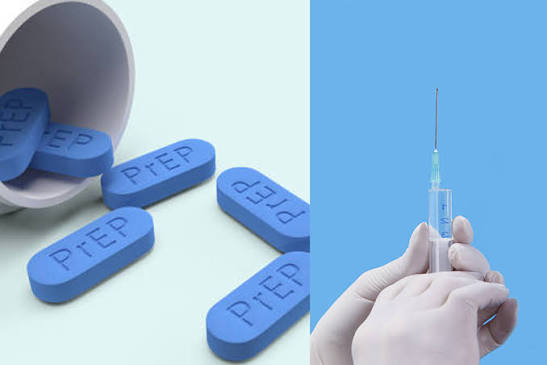
PrEP is medication taken by people who do not have HIV to sharply lower their chances of acquiring it. In this trial, men received it either as a daily or as-needed oral pill, or as a long-acting injectable called cabotegravir, or CAB-LA.
What the trial tested
The study enrolled 400 HIV-negative men in South Africa's Eastern Cape and KwaZulu-Natal provinces and in Masaka, Uganda, where men were reached through referrals from fishing communities.
In South Africa, researchers used mobile clinics at taxi ranks, construction sites, and truck stops to reach men where they worked and travelled, rather than waiting for them to come to a hospital or clinic.
The trial ran in two stages. For the first nine months, men were randomly assigned to receive either oral PrEP or long-acting injectable PrEP; those on the oral arm could choose between taking it daily or only around the times they had sex, a pattern researchers call event-based dosing. For the second nine months, participants could choose whichever type of PrEP they preferred.
The numbers behind the headline
Persistence, meaning how many men kept taking PrEP on schedule through the first nine-month stage, was 22% overall.
Broken down by type, persistence was significantly higher among men on the injectable, at 28%, compared with 16% among men on oral PrEP, whether they were taking it daily or around sex.
Create a free account
Join Joseph Mmwa Media Group and be the first to know the world's biggest health and medical stories as they happen
Among men on oral PrEP, event-based dosing, alone or combined with daily dosing, was generally preferred to a daily-only routine, though preference varied sharply by site.
Researchers also found that testing a man for HIV and giving his first CAB-LA injection on the same day was workable in these mobile clinic settings, meaning CAB-LA could be started during the same visit rather than requiring a separate return trip.
"This study clearly shows that choice matters," said Dr. Nigel Garrett, Chief Scientific Officer of the Desmond Tutu Health Foundation, who ran one of the trial sites.
He said long-acting injectable PrEP achieved higher persistence than oral PrEP, but many men still preferred the oral option, particularly event-driven dosing, and that this "reinforce[s] the importance of making a range of HIV prevention options available."
A trial built to meet men where they work
Professor Limakatso Lebina, Director of Science at AHRI, called it one of the most innovative clinical trials the institute has run, largely because of its decentralised design, using a mobile clinic set up at a taxi rank rather than a fixed hospital site.
Dr. Eugene Ruzagira of the MRC/UVRI & LSHTM Uganda Research Unit, who presented the findings on behalf of the Mobile Men study group, said mobile men face an increased risk of acquiring HIV but have often been overlooked in prevention research.
He said that as new prevention tools reach the market, keeping services flexible to people's real routines will be critical to cutting new HIV infections across sub-Saharan Africa.
The study team also shared the findings with participating communities at around the same time as the AIDS 2026 presentation, in line with international good-practice guidelines for research involving communities.
"Returning results to the communities who made this research possible is a fundamental part of good clinical research," said Professor Julie Fox of King's College London.
What is still unknown
The trial has not yet reported whether either form of PrEP led to fewer HIV infections; that analysis, along with cost-effectiveness comparisons and the feasibility of HIV self-testing, is still ongoing.
The results so far also cover only the trial's first nine-month stage, so it is not yet known how persistence held up once men could freely choose between oral and injectable PrEP in the second stage.
Why it matters beyond these clinics
A prevention method that removes the need to carry pills while travelling or remember a daily dose away from home can make it easier for mobile men to access and stay on HIV prevention.
At the same time, the trial's own numbers show injectable PrEP did not solve the persistence challenge on its own: even in the higher-performing group, fewer than a third of men stayed on schedule through the first nine months.
The finding that many men still preferred the oral, event-based option supports offering a range of PrEP options, the researchers said, rather than assuming one method will suit all mobile men.
Source
London School of Hygiene & Tropical Medicine; Africa Health Research Institute. Mobile Men study: injectable PrEP beats pills for men who travel for work. Presented by Dr Eugene Ruzagira at the 26th International AIDS Conference, Rio de Janeiro, 29 Jul 2026. Trial design: Kusemererwa S, et al. Implementing oral (event-driven and daily) and long-acting pre-exposure prophylaxis in mobile men in sub-Saharan Africa. Trials. 2025;26:486. NCT06133686.
Joseph Mmwa is a health and medical journalist covering breaking health news, medical research, vaccines, infectious diseases, and public health developments around the world.