Kenya Lacks Enough Testing to Track Gonorrhoea Resistance as the World Falls Behind Its 2030 Target
New WHO figures show the world is off track to cut new gonorrhoea cases by 90% by 2030, while resistance to key antibiotics is rising and a Kenyan review found resistance to older drugs above 94% among the limited samples tested
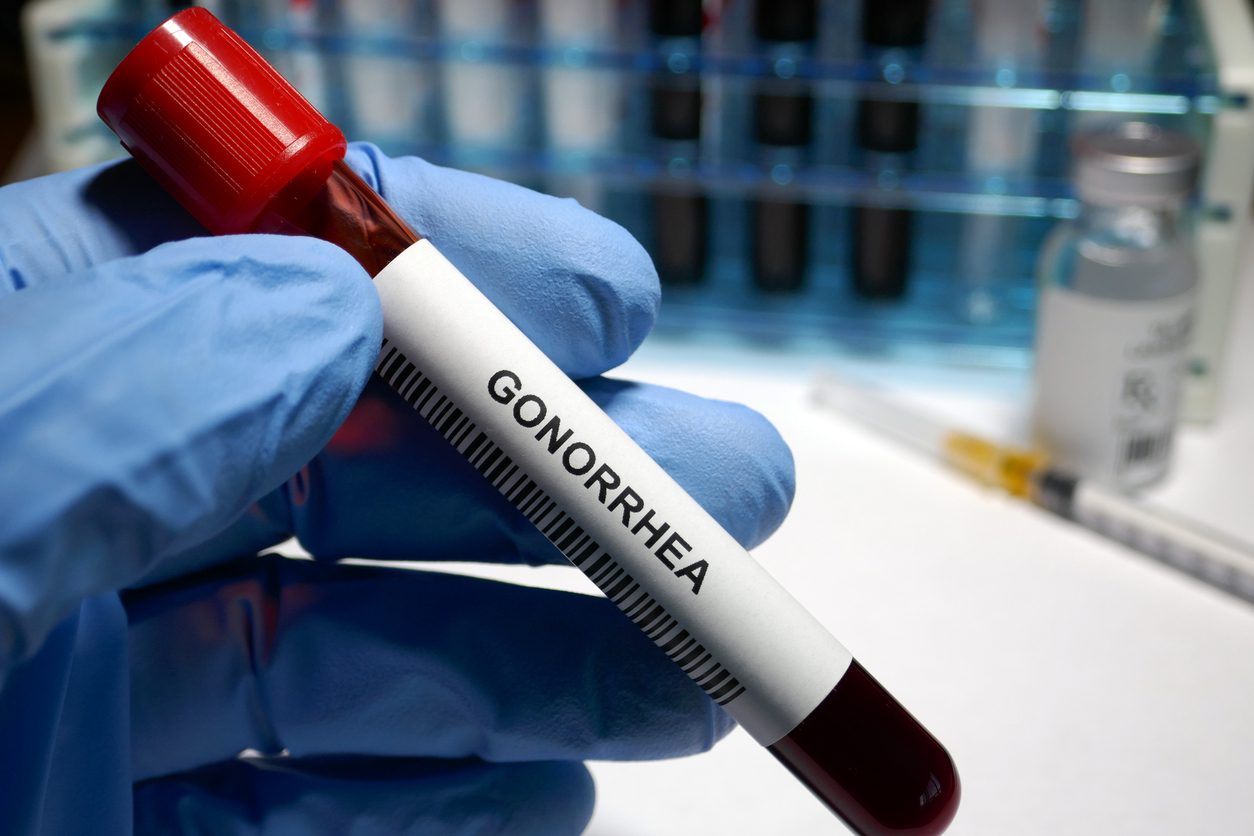
Kenya's treatment of gonorrhoea rests on ceftriaxone, the preferred injectable option under current World Health Organization guidance, and new global figures show that resistance to the alternatives is climbing faster than resistance to ceftriaxone itself.
The organisation has warned that the global effort against sexually transmitted infections is falling behind, and that gonorrhoea is the clearest example of why.
The warning came in its mid-term progress report on the Global Health Sector Strategies for HIV, viral hepatitis and sexually transmitted infections, released on 27 July during the 26th International AIDS Conference in Rio de Janeiro, Brazil.
It is the scheduled mid-term review of the 2022 to 2030 strategy period and the second report in the organisation's biennial assessment series.
That strategy, adopted by the World Health Assembly in 2022, commits to cutting new gonorrhoea cases among people aged 15 to 49 by 90 per cent, from an estimated 82.3 million new gonococcal infections a year in 2020 down to 8.23 million a year by 2030.
The organisation acknowledged when the strategy was written that the target would be difficult to reach with the tools available at the time.
The assessment found the global response to sexually transmitted infections remains off track, with the burden worsening in many settings, antimicrobial resistance increasing, and surveillance systems too weak in many places to measure the epidemic accurately.
Kenya's own resistance data are fragmented and under-represent the populations where infection concentrates, which makes the national picture difficult to characterise at all.
The drugs behind the drug
Gonorrhoea is caused by a bacterium called Neisseria gonorrhoeae, which has developed resistance to successive classes of antibiotics used against it, including penicillins, tetracyclines, quinolones and now cephalosporins.
The clearest picture of where that leaves treatment comes from the organisation's Enhanced Gonococcal Antimicrobial Surveillance Programme, which collects standardised laboratory and clinical data from sentinel sites worldwide.
Its most recent findings, published in November 2025, show resistance to ceftriaxone rising from 0.8 per cent in 2022 to 5 per cent in 2024. Over the same period, resistance to cefixime, the oral alternative, rose from 1.7 per cent to 11 per cent. Azithromycin resistance remained stable at 4 per cent, and 95 per cent of tested isolates were resistant to ciprofloxacin.
Resistance to cefixime was therefore more than twice as common as resistance to ceftriaxone in the 2024 data. Cambodia and Viet Nam reported the highest resistance levels.
Twelve countries contributed the 3,615 gonorrhoea cases summarised in the organisation's release, up from four countries reporting in 2022, and the current publication page describes thirteen countries as participating in the report.

The African countries contributing to that dataset were Malawi, South Africa and Uganda, and the WHO African Region accounted for 28 per cent of all reported cases, second only to the Western Pacific at 52 per cent.
Kenya is a participating country in the broader WHO Gonococcal Antimicrobial Surveillance Programme, but it did not contribute to the recent enhanced dataset.
The wider structural problem is regional. The organisation lists the African Region's GASP focal point as currently none; the previous one, at a laboratory in Johannesburg, lapsed in February 2012.
The continent bearing more than a quarter of reported cases has been without a regional coordinating centre for fourteen years.
Dr Tereza Kasaeva, Director of the World Health Organization's Department for HIV, TB, Hepatitis and STIs, has called on countries to fold gonorrhoea surveillance into their national programmes for sexually transmitted infections.
What Kenya's own laboratories show
A systematic review and meta-analysis led by Samuel K. Ndegwa, published online in February 2026 and carried in the May issue of Tropical Medicine and International Health, pooled eleven Kenyan studies covering 5,170 participants between 2019 and 2024.
The resistance estimates came from a small dataset within that review, covering 152 samples across four studies.
Among those samples, pooled resistance was 98.0 per cent for tetracycline, 96.7 per cent for ciprofloxacin and 94.7 per cent for penicillin. Resistance was reported at 1.3 per cent for ceftriaxone, 2.6 per cent for cefixime and 2.0 per cent for azithromycin.
Those figures come with a heavy caveat. All six are drawn from the same 152 samples, so the reassuring numbers rest on a handful of resistant isolates.
They are pooled laboratory findings from a small and non-representative subset, not national prevalence estimates, and laboratory susceptibility is not the same measure as clinical cure. The review did not assess treatment outcomes.
The very high resistance levels reported for the older antibiotics are consistent with their exclusion from routine empirical treatment.
Read alongside the global surveillance data, the Kenyan numbers describe a country that still has working options and very little visibility into how long that will last.
What comes after ceftriaxone
Ceftriaxone remains the preferred first-line treatment under current World Health Organization guidance, with cefixime as an alternative where ceftriaxone is unavailable or refused.
For the first time in decades, there is something behind them. In December 2025 the United States Food and Drug Administration approved two oral treatments for uncomplicated urogenital gonorrhoea: zoliflodacin, developed by the Global Antibiotic Research and Development Partnership with Innoviva Specialty Therapeutics, and gepotidacin, made by GSK.
Create a free account
Join Joseph Mmwa Media Group and be the first to know the world's biggest health and medical stories as they happen
Zoliflodacin is a single oral dose and its phase 3 trial, involving 930 participants, found it non-inferior to the combination of ceftriaxone and azithromycin. Both are approved for patients aged 12 and over.
Whether that reaches Kenya is a separate question. The manufacturer has said it plans to begin commercialising zoliflodacin in the second half of 2026, with the development partnership handling registration in low- and middle-income countries.
Neither drug has an established place in Kenyan practice, and how quickly either becomes available where the burden is heaviest will depend on regulatory approval, pricing and supply rather than on the science. There is still no licensed vaccine specifically for gonorrhoea.
Treating without looking
Gonorrhoea in many Kenyan and sub-Saharan African settings is managed syndromically, meaning treatment is based on symptoms rather than laboratory confirmation.The approach was designed for settings without reliable diagnostics and it gets medicine to people quickly.
It also misses asymptomatic infections, including cervical infections that symptom-based algorithms capture poorly, and it produces little isolate-based information about which antibiotics are still working.
The scale of that blind spot is visible inside the Kenyan review itself. Only four of the eleven studies performed antimicrobial susceptibility testing, contributing 152 tested samples, which the authors describe as 3.1 per cent of the 4,872 samples for which the relevant denominator was reported.
The national resistance picture rests on that. The authors name stronger surveillance, better access to reliable diagnostics and tighter antibiotic stewardship as the priorities.
Modelling by Michalow et al., published this year in The Journal of Infectious Diseases, examined how Kenya might deploy gonorrhoea point-of-care tests between 2025 and 2030 under a constrained-supply scenario.
Where supply was limited, using tests to confirm diagnoses in people already presenting with symptoms was more efficient than screening people without symptoms.
Testing symptomatic pregnant women produced the largest modelled reduction in health losses, while testing symptomatic female sex workers or their male clients produced the greatest modelled reduction in incident infections. Unrestricted screening produced a larger absolute effect but required far more tests per unit of benefit.
This is a deterministic transmission model rather than trial or implementation evidence, and its conclusions depend on assumptions about prevalence, care-seeking, test performance and health-system delivery.
What Kenya's syphilis data show
Kenya's surveillance is stronger for syphilis than for gonorrhoea, and the picture there is more encouraging, though the underlying tables are not publicly accessible.Data from the National Syndemic Diseases Control Council, cited by The Star, show that 309,419 people sought treatment for sexually transmitted infections at health facilities in 2023. That facility-based figure does not measure infections among people who never sought care.
The same figures, as reported by The Star, show syphilis screening rising from about 1.29 million people in 2020 to 1.42 million in 2025, while positive results fell from nearly 16,000 to just over 9,000. Nairobi recorded the largest number of positive results in 2025, 1,068 among 161,020 people screened, a positivity rate of about 0.66 per cent.
The Star also reported a Homa Bay positivity rate of about 1.4 per cent from a smaller number of positives, and increases in Uasin Gishu and Machakos, though those county-level trends should be checked against the council's surveillance tables before being treated as established.
Turkana offers the counter-example. Reported positive results fell from 1,182 in 2023 to 540 in 2025, a decrease of 54 per cent. Dr Douglas Bosire, acting chief executive officer of the council, attributed the decline to sustained local campaigns, prompt treatment and community outreach.
That is an attributed explanation rather than an evaluated finding, and changes in screening volume or reporting completeness could also affect the comparison.
Kenya's national framework targets syphilis prevalence among antenatal-care clients below 1 per cent by 2030, under a plan integrating syphilis services with those for the human immunodeficiency virus, tuberculosis and hepatitis.
A burden that lands on newborns
The Star's reporting on the World Health Organization assessment identifies eastern, central and southern Africa, Kenya included, as areas carrying some of the world's highest congenital syphilis rates.Congenital syphilis occurs when infection passes from a pregnant woman to the fetus. Untreated, it can cause stillbirth, newborn death, prematurity, low birth weight and congenital infection. Screening and timely, stage-appropriate penicillin treatment can prevent those outcomes.
The interventions are established and effective; the barriers are access, timely testing, treatment availability, follow-up and health-system delivery.
Speaking at the report's launch, Dr Tedros Adhanom Ghebreyesus, Director-General of the World Health Organization, said the report told two stories, one about what becomes possible when countries invest in health, communities and science, and another about how quickly that progress can be undone by funding disruptions, humanitarian emergencies and persistent inequality.
Dr Kasaeva described the assessment as a practical guide for the second half of the strategy period, showing where progress is stalling and where investment would do the most good.
Reading the prevalence number carefully
One figure from the Kenyan review requires care. The pooled prevalence of gonorrhoea across the eleven studies, among the study populations, was 22.5 per cent, with a 95 per cent confidence interval of 17.2 to 27.8 per cent.That is not the prevalence in the Kenyan population.
The included studies drew on clinical and higher-risk populations rather than a nationally representative sample, and used convenience and purposive sampling in many cases.
The review identified sex work, low educational attainment and multiple sexual partners as the main associated factors, which are associations found in observational studies rather than established causes. Applying the pooled estimate to the general population would not be justified and could substantially overstate the national burden.
What it does indicate is a substantial burden in some higher-risk and clinical populations.
If resistance to effective treatment became substantially more widespread, onward transmission could become harder to control, though the speed and scale of any spread cannot be inferred from a pooled prevalence estimate alone.
For people seeking care today, the practical position is unchanged: gonorrhoea remains treatable with recommended antibiotics, including ceftriaxone as the preferred regimen under WHO guidance, and anyone with symptoms should seek assessment at a health facility.
What has narrowed is the margin behind that treatment, and two new oral drugs have just widened it again for those who can get them. Until Kenya has more representative and continuous antimicrobial-resistance surveillance, it will remain difficult to know how that margin is changing.

Joseph Mmwa is a health and medical journalist covering breaking health news, medical research, vaccines, infectious diseases, and public health developments around the world.