Kilifi opens its first chemotherapy unit, cutting the trip to Mombasa for some cancer patients
New chemotherapy services at Kilifi County Referral Hospital have doubled patient numbers within weeks of opening, according to the hospital, removing the repeated journey to Mombasa for treatment
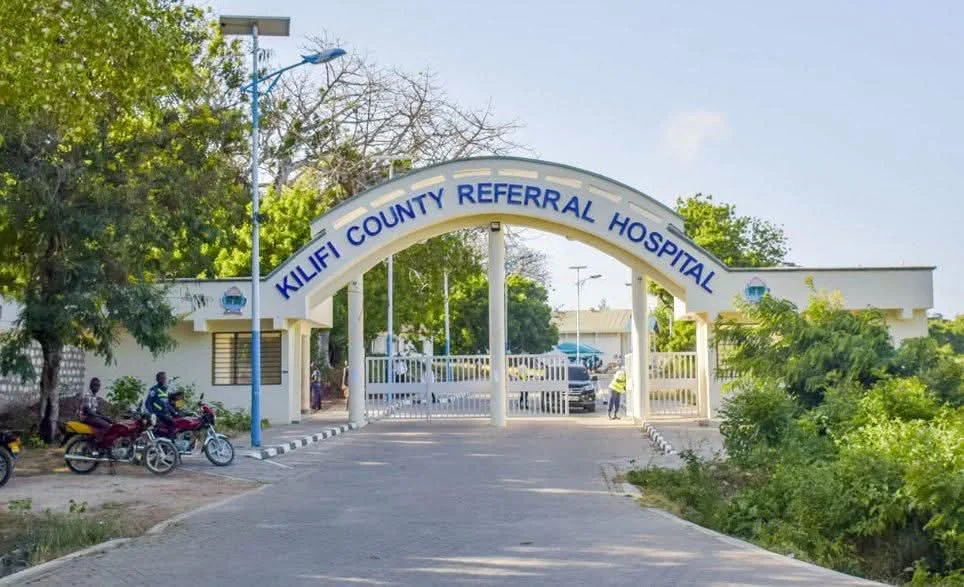
New chemotherapy services at Kilifi County Referral Hospital have doubled patient numbers within weeks of opening, according to the hospital, removing the repeated journey to Mombasa for treatment, though with five beds, no radiotherapy on site and most patients still arriving late, the county's cancer problem is far from solved.
Some cancer patients in Kilifi no longer need to travel to Mombasa for chemotherapy. A new unit at Kilifi County Referral Hospital, the main public hospital in this coastal county north of Mombasa, is now delivering the treatment locally.
Dr Suchira Udugamasooriya, a clinical and radiation oncologist at the hospital, told The Star that patient numbers have doubled since it opened, an increase he attributes largely to residents who had been seeking care elsewhere returning home.
The hospital has not published baseline figures alongside that claim.
The journey that came with the diagnosis
Mgeni Sudi, who has Stage Three breast cancer, told The Star that every session used to mean travelling from Kilifi to Mombasa, with fares, a place to stay and someone to accompany her on top of the illness. "Here I can just walk in," she said of the change.
Doctors have a term for what she was carrying. Financial toxicity describes the money a cancer diagnosis costs a family beyond the medical bill.
Kenya's Social Health Authority, the state health insurer, was covering her chemotherapy, but the transport, food and accommodation around it were hers to find.
What the new unit can, and cannot, do
The centre opened on 18 June with five chemotherapy beds, and The Star reports it is treating about 10 patients a day, with hospital staff saying demand is already pressing against the available space.
The Kenya News Agency reported at the launch that the oncology centre was built through a partnership involving the county government, the Government of France, the Gates Foundation and the Aga Khan Foundation, and that it offers screening, diagnosis and chemotherapy. ,
Kilifi Governor Gideon Mung'aro said the facility was intended to serve patients from Tana River, Lamu and Mombasa as well.
That intent matters, because Mung'aro said in April that Lamu and Tana River had no chemotherapy services of their own, leaving patients to reach Coast General Teaching and Referral Hospital in Mombasa or travel as far as Nairobi.
Kilifi County recorded 1,453,787 residents at the 2019 census, spread along a wide stretch of coastline.
The numbers behind the demand
Between July 2025 and June 2026 the hospital recorded more than 300 new cancer diagnoses, according to The Star. Cervical cancer accounted for about one in five of them, with prostate and breast cancer also among the most common, alongside oesophageal, colon and liver cancers. These are the hospital's own diagnoses rather than a county-wide incidence count.
The national picture depends on which estimate is used.
Create a free account
Join Joseph Mmwa Media Group and be the first to know the world's biggest health and medical stories as they happen
The National Cancer Institute of Kenya said in July 2026 that around 80 Kenyans die of cancer each day and about 120 are newly diagnosed, figures its chief executive, Dr Elias Melly, called a wake-up call.
The International Agency for Research on Cancer, the World Health Organization's cancer research arm, estimated Kenya's burden at 44,726 new cases and 29,317 deaths for 2022, while its 2024 estimates give 35,867 new cases and 22,888 deaths. The two are not a time series.
IARC rebuilds its estimates between editions using updated registry data, population figures and modelling, so the drop does not describe a real fall in illness.
Arriving too late is the harder problem
The hospital says its biggest obstacle is not equipment but timing.Patients often delay seeking care because of fear, stigma, cultural beliefs or not knowing the warning signs, and arrive when the disease is advanced.
When cancer is found at an advanced stage, curative options and survival are generally reduced, although how much depends on the cancer type.
Dr Udugamasooriya said patients who present early can still be cured, including of breast cancer, and Dr Eddy Nzomo, the county's head of curative and rehabilitation services, said the disease is manageable when caught and treated early.
The county says it has expanded screening and awareness work with community health promoters, religious leaders and local leaders, and reports rising uptake of the human papillomavirus (HPV) vaccine and cervical screening, without publishing coverage figures for either.
HPV vaccination protects against the high-risk virus types that cause most cervical cancers.
Radiotherapy is the next gap
The county says it is building a room to house radiotherapy equipment and wants to develop the site into a regional oncology centre.No procurement or commissioning timeline has been announced. In May 2026 the Ministry of Health and the International Atomic Energy Agency commissioned a radiotherapy centre at Coast General in Mombasa, fitted with a linear accelerator expected to lift the hospital's capacity from 70 to 140 patients a day.
Three months earlier, Health Cabinet Secretary Aden Duale signed agreements covering maintenance, quality assurance and technical support for regional cancer centres in Mombasa, Garissa and Nakuru, intended to keep radiotherapy machines running once installed.
Cover has grown, and so have complaints
Cancer cover under the Social Health Authority rose to Ksh800,000 a year under Legal Notice No. 78, gazetted on 8 May 2026, made up of an increased limit under the Social Health Insurance Fund topped up by the Emergency, Chronic and Critical Illness Fund, with chemotherapy reimbursed at Ksh5,500 a session.The package covers oncology consultations, radiotherapy and scans, subject to eligibility and approval rules.
In November 2025 the Kenya Network of Cancer Organizations told the National Assembly health committee that delays, unclear approvals and rigid payment terms were interrupting treatment for members who had paid their premiums.
Why a county unit counts
The WHO Global Status Report on Cancer 2026, produced with IARC and released on 8 July, found that 87 per cent of women diagnosed with breast cancer in high-income countries are alive five years later, against about 42 per cent in low-income countries.Median five-year survival across sub-Saharan Africa stood at 39 per cent for the years 2017 to 2021, and the report attributes the gap to late diagnosis, thin pathology and imaging capacity, gaps in surgery and radiotherapy, cost barriers and weak referral systems rather than to the biology of the disease.
Kilifi's unit addresses one item on that list. Bringing chemotherapy closer cuts travel and the costs attached to it, and whether it also improves survival will only be visible in treatment-completion and outcome data the county has yet to collect.
Late diagnosis, five beds and the absence of radiotherapy on site all remain.
Joseph Mmwa is a health and medical journalist covering breaking health news, medical research, vaccines, infectious diseases, and public health developments around the world.