Leucovorin Prescriptions Soared After White House Claim it Can Treat Autism
New research in the New England Journal of Medicine found that leucovorin dispensing to American children, already rising through 2025, jumped further during the week of a September White House event where federal officials promoted the drug in connection with autism
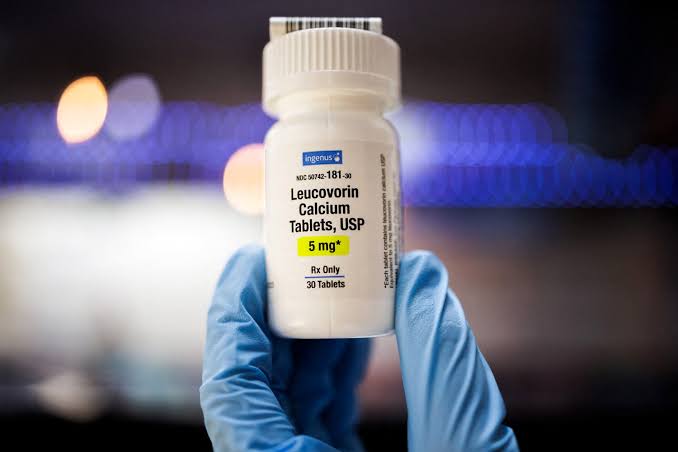
Dispensing of a decades-old folate medication to children was already climbing through 2025 when it jumped sharply during a single, widely publicized week.
Research published in the New England Journal of Medicine found that leucovorin dispensing to children rose 46 percent during the week of a White House event in September 2025, at which federal officials promoted the drug in connection with autism, even though the evidence behind that claim remained limited.
Researchers led by a pediatrician at the University of Michigan analyzed prescription data covering nearly all US retail pharmacies.
Their findings provide a nationwide example of how a major government announcement can coincide with a rapid change in medication use, even while the underlying science remains unsettled.
A Folate Medication Promoted for Autism
Leucovorin, also known as folinic acid, is a reduced, biologically active form of folate, or vitamin B9. Doctors have used it for decades to reduce toxic side effects from methotrexate, a drug used to treat certain cancers and autoimmune conditions.Leucovorin is not approved to treat autism.
At the September 2025 event, FDA Commissioner Marty Makary said the agency was initiating a fast-tracked process to update leucovorin's label for cerebral folate deficiency, a rare disorder that can produce features resembling autism, while also telling the public the drug could help "hundreds of thousands" of children with autism.
That broader claim was not backed by strong clinical evidence at the time.
The narrower approval did not actually arrive until March 10, 2026, when the FDA approved leucovorin only for patients, children and adults, with a confirmed variant in the FOLR1 gene, a substantially narrower indication than the one described at the September event.
The agency said evidence remained insufficient to support the drug for autism itself.
What the New Data Show
The research team analyzed the IQVIA Longitudinal Prescription Database, covering nearly all prescriptions filled at US retail pharmacies, from December 29, 2024, through December 14, 2025.Before the press conference, the rate of children with a filled leucovorin prescription had already been climbing, from about 1 per 100,000 to 4.6 per 100,000.
During the week of the press conference itself, that rate rose a further 46 percent, to 6.7 per 100,000. By the end of the study period in mid-December, it had reached 8 per 100,000.
Across all of 2025, 47,394 children received a combined 150,026 leucovorin prescriptions.
The weekly number of children with a filled prescription rose from 734 at the start of the year to 5,858 by the end, roughly a 700 percent increase.
Create a free account
Join Joseph Mmwa Media Group and be the first to know the world's biggest health and medical stories as they happen
Children ages 6 to 11 living in the southern United States received more prescriptions than children in other regions.
By comparison, leucovorin dispensing to adults did not show a similar spike after the press conference, a pattern consistent with the increase being tied specifically to the autism-related messaging rather than a broader trend affecting the drug.
"Our findings suggest the press conference may have increased off-label prescribing of leucovorin to children with autism," lead author Kao-Ping Chua, a pediatrician and researcher at University of Michigan Health C.S. Mott Children's Hospital in Ann Arbor, Michigan, said in a press release.
"This increase is concerning because the effectiveness and long-term safety of leucovorin for children with autism are uncertain."
A Major Trial Was Retracted
Since the press conference, the published evidence for leucovorin as an autism treatment has not gotten any stronger.On January 29, 2026, the European Journal of Pediatrics retracted the largest of only a handful of randomized trials to test the drug in autistic children, a study of 77 participants, after a post-publication review found errors and statistical concerns in the data and could not reproduce the reported results.
Zoe Gross, director of advocacy at the Autistic Self Advocacy Network, told CIDRAP News that the retraction widened the gap between the claims made in September and the evidence available to support them.
She said the government's broader focus on autism, including renewed messaging around vaccines despite extensive evidence that vaccines do not cause autism, has added confusion for families making decisions about their children's care.
Gross said she would rather see federal attention directed toward support services already known to help autistic people across their lives.
In its most recently updated guidance, published February 13, 2026, the American Academy of Pediatrics said it does not recommend routine use of leucovorin in autistic children, citing evidence that remains too limited to support broad use.
Why This Matters Beyond One Drug
The findings illustrate how high-profile government messaging can coincide with rapid changes in medication use, even while questions about the evidence remain unresolved.In this case, prescribing rose months before the FDA issued its final, much narrower approval in March 2026.
For US families of autistic children, the takeaway is not that leucovorin has been proven unsafe.
It is that its use for autism remains off-label, unapproved, and supported by a limited evidence base that the AAP says still needs larger, well-designed trials before it could support broader use.
"Our findings demonstrate the power of the federal government to influence medical practice," Chua said. "Given this power, it is important that the government's messaging about medications is based on rigorous evidence."

Joseph Mmwa is a health and medical journalist covering breaking health news, medical research, vaccines, infectious diseases, and public health developments around the world.