2025 Measles Outbreaks in U.S cost Nearly $134 Million to Contain,Researchers Find
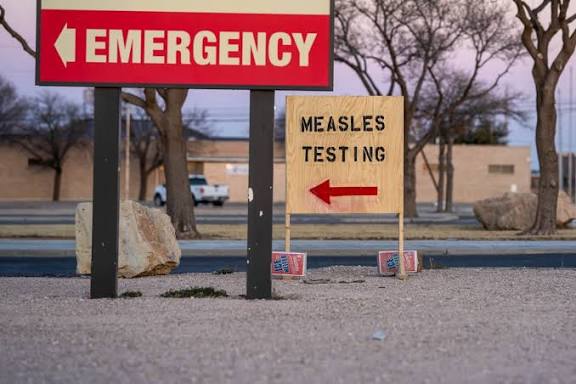
Measles outbreaks in the United States have cost an average of nearly $60,000 for every case once the full public health response is counted, according to a new analysis of a quarter century of outbreak spending.
Applied to the 2,289 cases the country confirmed last year, that average produces a national bill of roughly $134 million.
That calculation was made by the news service CIDRAP rather than by the researchers themselves, and it is an estimate built on a historical average, not a measured total of what was actually spent.
The per-case figures come from Salin Sriudomporn and Bryan Patenaude, health economists at the International Vaccine Access Center at the Johns Hopkins Bloomberg School of Public Health in Baltimore.
Their paper appears in the journal Vaccine, having first circulated as a preprint last October.
The pair reviewed published studies and government reports on the cost of American measles outbreaks between January 2000 and October 2025.
They screened 120 articles, drew cost data from 19 of them, and added eight reports from health departments and other bodies, together covering outbreaks in 18 states. Some were single-case events. The largest in the dataset ran to 802 cases.
What a single case actually costs
The average worked out at about $43,200 per case across all the records reviewed.
That figure moves depending on whose books are being examined. Counted from the medical provider's side, covering treatment along with the staffing and protective measures a hospital puts in place, the average was roughly $33,400.
Counted from the public health side, which takes in both the medical costs and the wider outbreak response, it rose to about $58,600. That higher figure is the one behind the $134 million estimate.
It is worth being clear about what the response side of that money buys.
It pays for the work of finding out where an infected person has been, tracing everyone they came close to, keeping people at risk under quarantine and checking on them, testing samples in laboratories, and opening vaccination clinics to stop the virus moving further.
Across all the outbreaks reviewed, the cost worked out at about $443 for each contact identified. The overall expense builds because a single measles case can generate a great many contacts.
The virus is among the most infectious known, and it can linger in the air of a room for up to two hours after an infectious person has left, according to the Centers for Disease Control and Prevention, exposing anyone without immunity who passes through.
The bill starts before the second case
Much of the money is committed at the very start.
Setting up a response, before anyone knows how large an outbreak will become, carried an estimated fixed cost of $297,747 in the published paper, up from a lower figure in the earlier preprint version.
The researchers noted wide uncertainty around that estimate. Each additional case then added roughly $16,300 on top.
For small outbreaks, those startup costs can account for more than half of everything spent. In large ones they fall below a tenth.
That is what makes small outbreaks look so expensive when the total is divided by the number of patients.
Create a free account
Join Joseph Mmwa Media Group and be the first to know the world's biggest health and medical stories as they happen
The most costly single case in the whole review came in at more than $243,000, and it was costly precisely because the outbreak stayed small. The lowest cost per case worked out at under $7,000.
For anyone planning a health budget, that is the practical lesson in the paper.
The cost of a measles outbreak is not a simple multiplication of cases. Much of the spending happens as soon as a response is launched, whatever the outbreak turns out to be.
Why 2025 mattered Last year was the worst for measles in the United States since 2000, the year the country was declared to have eliminated the disease.
Elimination is a technical term. It means the virus has not spread continuously anywhere in the country for at least twelve months. Cases still arrive, usually with a traveller, but the expectation is that each one is contained before it establishes itself.
Holding that status rests on two things: vaccination coverage high enough that an imported case runs out of people to infect, and a system able to find and contain cases quickly when they appear.
The single largest outbreak of last year was centred on West Texas.
It began on 20 January and was declared over on 18 August, having reached 762 confirmed cases and 99 hospitalisations, according to the Texas Department of State Health Services. Two school-aged children died.
Nationally, the picture has since worsened. As of 14 August this year, the CDC had confirmed 2,566 measles cases in 2026, already above the whole of last year.
Applying the study's historical average to that count gives a rough figure of about $150 million, though the researchers made no estimate of what this year has actually cost.
Sriudomporn and Patenaude concluded that these outbreaks remain largely preventable through measles vaccination, which they described as inexpensive and highly effective, combined with health systems prepared to contain cases quickly.
What the numbers do not capture
The study is a review of existing cost records rather than fresh fieldwork, and the authors are direct about the limits of that.
Different states counted costs in different ways, which makes the averages rougher than a single clean figure suggests. The estimate of upfront response costs came with a very wide margin of uncertainty.
The bigger gap is what sits outside the accounts entirely. Only one study in the whole review counted patient productivity losses, meaning the wages given up by parents staying home with a sick child or sitting out a quarantine.
That was an outbreak in Clark County, Washington, in 2019, where those losses came to about $1.3 million, roughly $18,000 per case.
The researchers deliberately left productivity out of their main calculations so the figures would be comparable across studies, which means it does not appear in the headline per-case numbers at all.
The $134 million estimate also rests on confirmed cases only. Infections that were never reported are not in it.
The authors are careful about what this adds up to.
The available data do not capture the full burden on society, particularly lost work, so the figures should be read as a partial account of what measles outbreaks cost rather than a complete one.

Joseph Mmwa is a health and medical journalist covering breaking health news, medical research, vaccines, infectious diseases, and public health developments around the world.