MMR vaccination before age 2 not linked to autism, large U.S. study finds
A new analysis of U.S. health records covering 2.5 million children adds to more than two decades of research challenging the claim that the combined measles, mumps and rubella vaccine contributes to autism
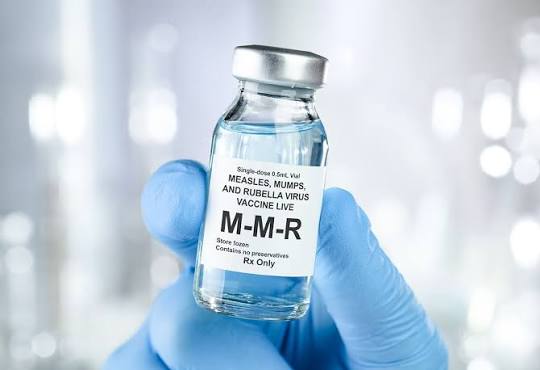
One of the largest studies of American health records yet carried out on this question has come back with the same answer researchers have been getting for more than two decades.
Children who received their first measles, mumps and rubella shot before their second birthday were no more likely to be later diagnosed with autism than children who had not yet been vaccinated.
The study covered 2,560,035 children and was published on 28 July 2026 in the Pediatric Infectious Disease Journal.
It was carried out by Todd L. Burstain and two colleagues at the University of Washington in Seattle, and the authors declared no funding and no conflicts of interest.
Two and a half million files, one question
The researchers used Cosmos, a database built from the electronic health records of health systems across the United States that run the Epic records system, which allows patterns to be studied without anyone being recruited or interviewed.They selected children whose records could be linked to a birth parent, and according to CIDRAP's account of the paper the records ran from January 2015 to December 2024, with each child followed either to the age of eight or to the last appointment on file before the study closed.
The measles, mumps and rubella vaccine, usually shortened to MMR, is given as a single injection that protects against all three diseases. In the United States the first dose is normally due between 12 and 15 months.
The main comparison looked at children who received that first dose between 11.5 and 24 months of age. Among them, the result came out at 0.97, where 1.00 would mean the two groups were identical.
Statisticians call that an adjusted hazard ratio, and it compares how quickly autism diagnoses appear in each group once other differences between the children have been accounted for.
The researchers also published the range their result could plausibly sit within, a 99 per cent confidence interval running from 0.91 to 1.03.
Because that range includes 1.00, the study found no sign of a raised rate and no difference it could call statistically real.
When the same analysis was repeated at other ages inside the window, the answer stayed in the same place.
The check they built into their own work
Studies that use hospital records rather than a controlled trial carry a known weakness. Families who bring a child in for vaccines on time also tend to bring that child in for everything else, so their children are seen by doctors more often, and a child who is seen more often is more likely to have any condition picked up and written down.So the team ran the same test on the pneumococcal vaccine, another routine childhood shot given around the same age, which has never been the subject of autism claims. If the method itself were quietly manufacturing a link, that vaccine should have produced one too. It came back at 1.01, essentially flat.
That is evidence against the specific problem the researchers were worried about, families who use health services more, being enough on its own to explain the main result. It does not show that every possible source of bias has been ruled out, and the authors do not claim it does.
What the study cannot tell anyone
This was a look back at records that already existed, not a trial in which children were assigned to one group or another. Because it is observational, it cannot by itself establish cause. A randomised trial that deliberately withheld a recommended vaccine from children purely to test autism risk would raise serious ethical problems, which is why questions like this one are answered from records.There is also a narrower point worth stating plainly, because it has already been misread in some coverage.
The main comparison was anchored on the timing of that first dose in the first two years of life, rather than being an overall comparison between vaccinated and never-vaccinated children.
That broader question has been answered elsewhere, repeatedly, and this paper was built to close a specific remaining gap about when the shot is given.
The study reports adjusted hazard ratios rather than simply giving the number of autism diagnoses in each group, which is standard for this kind of analysis but leaves the simplest version of the figure unstated.
An order signed two weeks later
The paper appeared 13 days before President Donald Trump signed an executive order on 10 August 2026 stating that the combined MMR vaccine should be given as three separate single-disease shots once such products are available domestically, and that all childhood immunisations should be given at separate medical visits to the maximum extent feasible.The order names 11 immunisations as recommended for all children and places others into high-risk or shared-decision categories.
It also directs the attorney general and other agencies to act on state vaccine-mandate laws and on religious and medical exemption obligations.
Trump described the recommendations as the country's gold standard and tied them repeatedly to autism at the signing.
The order sets federal policy and recommendations; it does not by itself change school entry requirements in any state, and it does not make separate measles, mumps and rubella products available, because none are currently licensed for routine use in the United States.
The American Academy of Pediatrics objected the same day.
Create a free account
Join Joseph Mmwa Media Group and be the first to know the world's biggest health and medical stories as they happen
Its president, Andrew Racine, called the order disheartening and dangerous, and said measles cases had reached a 35-year high.
Senator Bill Cassidy, the Louisiana Republican who chairs the Senate health committee, wrote on X that breaking up the vaccine would mean children receiving more injections for the same protection, not fewer, and would increase hesitancy.
A CDC page still online at the time of the signing states that no published scientific evidence shows any benefit in separating the combined shot into individual doses.
Kennedy's position on the shot itself
Health and Human Services Secretary Robert F. Kennedy Jr., a long-standing critic of childhood vaccines, drew a distinction of his own eight days before the order.
In an interview on CNN's State of the Union on 2 August, he said he had never questioned the efficacy of the MMR vaccine, described it as effective, cited protection against measles of about 97 per cent, and encouraged parents to vaccinate their children.
That figure is the CDC's estimate for two doses; a single dose is put at about 93 per cent. His remarks addressed the vaccine's effectiveness rather than the wider schedule changes the administration is pursuing.
The pile of evidence this lands on
The modern MMR and autism controversy was amplified by a 1998 case series in The Lancet, which the journal fully retracted in 2010 after serious concerns about the paper's conduct and accuracy. Since then the question has been examined repeatedly in very large populations.In 2002 the New England Journal of Medicine published a Danish nationwide study by Madsen and colleagues covering 537,303 children, which found no association between MMR vaccination and autism.
A second Danish nationwide cohort by Hviid and colleagues, published in Annals of Internal Medicine in March 2019, followed 657,461 children and reported an adjusted hazard ratio of 0.93 with a 95 per cent confidence interval of 0.85 to 1.02, again showing no increased risk.
A 2014 analysis in the journal Vaccine pooled five cohort studies covering more than 1.2 million children with five case-control studies, and found no association between vaccination, including MMR, and autism or autism spectrum disorder.
Meanwhile the disease itself is doing what it does when vaccination slips.
The CDC had confirmed 2,465 measles cases in the United States as of 6 August 2026, the highest annual total since 1991, with 93 per cent of patients unvaccinated or of unknown vaccination status.
Seven per cent have been hospitalised, down from 11 per cent last year, and no measles deaths have been reported in 2026.
The national committee that verifies the country's measles elimination status, held since 2000, meets in mid-August to review the year's data. Its assessment goes to the Pan American Health Organization, which will announce a determination in November.
Why an American argument reaches far beyond America
The World Health Organization estimates that 95,000 people died of measles worldwide in 2024, mostly unvaccinated or under-vaccinated children under five, with the burden falling overwhelmingly on low-income countries.Global coverage with a first dose was estimated at 84 per cent in 2024, and WHO puts the level needed to interrupt transmission at about 95 per cent coverage with two doses.
Africa carries a large share of that gap, though the direction of travel has been upward.
Second-dose coverage across the WHO African Region reached 55 per cent in 2024, up from 5 per cent in 2000, and a joint analysis published in April 2026 by WHO's African regional office and Gavi, the Vaccine Alliance, estimated that measles vaccination had averted 19.5 million deaths in Africa since 2000.
In November 2025 Cabo Verde, Mauritius and Seychelles were verified by WHO as having eliminated both measles and rubella, the first countries in sub-Saharan Africa to reach that mark.
The consequences of a missed dose are not the same everywhere.
WHO reports that measles deaths fall most heavily on unvaccinated and under-vaccinated children under five, and that the disease is at its most dangerous where coverage is low, malnutrition is common and medical care is hard to reach.
Claims about vaccines made in Washington circulate widely on social media, including across Africa.
For parents weighing what to do, this study does not answer every question that has ever been asked about vaccines, and no single study can.
What it does show, across two and a half million children, is that the timing of a first MMR dose in the first two years of life was not associated with a higher rate of later autism diagnosis.
Sources
Burstain TL, Jacques D, Burstain JM. Association Between First MMR Vaccination Before Age 2 Years and Childhood Autism in a U.S. EHR Cohort of 2.5 Million Children. Pediatr Infect Dis J. 2026 Jul 28. doi:10.1097/INF.0000000000005349. Hviid A, Hansen JV, Frisch M, et al. Ann Intern Med. 2019;170(8):513-520. Madsen KM, Hviid A, Vestergaard M, et al. N Engl J Med. 2002;347(19):1477-1482. Taylor LE, Swerdfeger AL, Eslick GD. Vaccine. 2014;32(29):3623-3629. Executive order, The White House, 10 Aug 2026. American Academy of Pediatrics statement, 10 Aug 2026. CDC measles data, updated 7 Aug 2026. WHO measles fact sheet. WHO African Region and Gavi analysis, April 2026. Reporting by CIDRAP (Meghan Holohan) and STAT (Noel T. Brewer).*
Joseph Mmwa is a health and medical journalist covering breaking health news, medical research, vaccines, infectious diseases, and public health developments around the world.