Moderna's mRNA Vaccine Succeeds in Helping Stop Deadly Melanoma From Coming Back
Melanoma, the most lethal common form of skin cancer, was diagnosed in more than 330,000 people worldwide in 2022, according to the International Agency for Research on Cancer's Global Cancer Observatory, with roughly 58,000 deaths that year
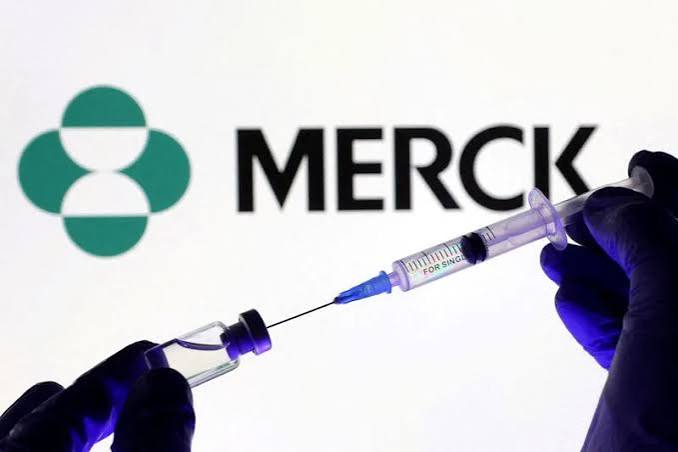
Moderna and Merck announced Wednesday that their experimental cancer vaccine, given after surgery, helped keep high-risk melanoma from coming back in a major late-stage trial, the first positive Phase 3 result reported for any mRNA-based cancer therapy.
The personalized vaccine, intismeran autogene, was tested alongside Merck's existing immunotherapy drug Keytruda (pembrolizumab).
The companies describe it as the first Phase 3 study of an individualized neoantigen therapy, a treatment built from a patient's own tumor, to succeed, and the first Phase 3 trial of any kind to beat Keytruda alone in this specific setting: patients whose melanoma had already been fully removed by surgery.
What the Vaccine Actually Does
Unlike a traditional vaccine that prevents an infection before it happens, this one is built after a patient already has cancer.Doctors take a sample of a patient's tumor once it has been surgically removed and sequence its mutations.
From that, they design an mRNA vaccine unique to that person, built around neoantigens, abnormal proteins created by those mutations, to train the immune system to recognize and respond to the patient's own cancer cells.
Keytruda works differently. It is an antibody that blocks PD-1, a checkpoint that can suppress the immune system's T cells, allowing those cells to attack cancer more freely. The vaccine and the drug were given together in the trial.
Inside the Trial
The Phase 3 study, called INTerpath-001, enrolled 1,137 patients with completely resected stage 2B, 2C, 3, or 4 melanoma who had not previously received systemic cancer treatment.
Patients were randomly assigned, two to one, to receive either the vaccine plus Keytruda or a placebo plus Keytruda, without knowing which group they were in.
The vaccine itself was given every three weeks for up to nine doses, roughly six months, while Keytruda continued for about a year.
The trial met its main goal: recurrence-free survival, meaning the combination extended the time before a patient's cancer returned or the patient died of any cause, compared with Keytruda alone.
It also met a key secondary goal, distant metastasis-free survival, delaying the cancer's spread to other parts of the body or death.
The companies have not yet released the size of these improvements.
They say the safety results were consistent with earlier studies of the combination, with no new safety concerns.
Create a free account
Join Joseph Mmwa Media Group and be the first to know the world's biggest health and medical stories as they happen
"This is the first Phase 3 study to show that intismeran, a treatment designed based on the unique mutational fingerprint of a patient's own tumor, given in combination with pembrolizumab can reduce the risk of recurrence or death in patients with completely resected stage IIB-IV melanoma compared to KEYTRUDA alone," said Professor Georgina Long, the trial's principal investigator and medical director of the Melanoma Institute Australia.
"By intervening earlier in the course of disease, when many cancers are considered most treatable, the goal of adjuvant therapy given after surgery is to increase the possibility of cure for more patients," said Dr. Dean Li, president of Merck Research Laboratories, adding that the results reinforce the promise of a more personalized approach to cancer treatment.
Why a Phase 3 Result Matters More Than Earlier Data
This is not the first time this vaccine-drug combination has shown promise.
In January, Moderna and Merck reported five-year follow-up data from an earlier, smaller Phase 2b trial, later also presented at the 2026 ASCO Annual Meeting, showing the combination lowered the risk of recurrence or death by 49 percent compared with Keytruda alone.
That earlier trial randomly assigned only 157 patients, 107 to the combination and 50 to Keytruda alone. Its results supported moving into the larger Phase 3 study now reporting.
Phase 3 trials are generally the largest, most rigorous confirmatory studies in drug development, providing the pivotal evidence regulators look for before approval.
Until now, no mRNA-based cancer therapy had produced a positive result at this stage.
A Disease That Still Kills Broadly
Melanoma, the most lethal form of skin cancer, was diagnosed in more than 330,000 people worldwide in 2022, according to the International Agency for Research on Cancer's Global Cancer Observatory, with roughly 58,000 deaths that year.It is far less common than some other skin cancers but causes the large majority of skin cancer deaths, because it spreads easily to other organs.
The burden falls unevenly around the world. Europe and North America record the largest shares of cases and deaths. Africa accounted for about 4.6 percent of global melanoma deaths in the same period, a much smaller share, though the disease is still diagnosed there.
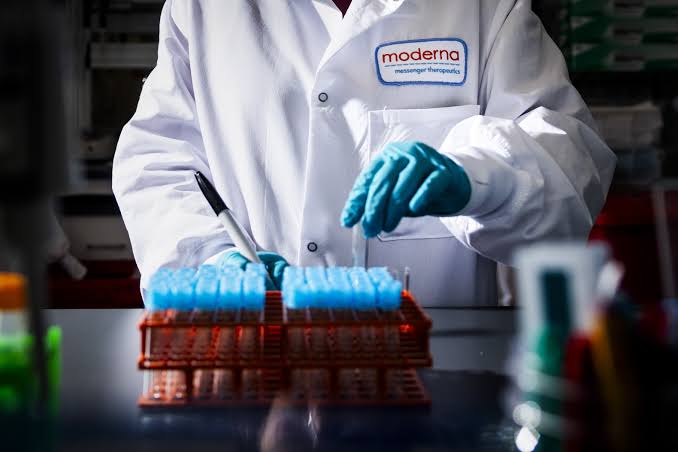
Personalized cancer therapies like this one are individually designed and manufactured based on each patient's tumor mutations, a process more complex than producing a standard, mass-manufactured drug.
If intismeran autogene is approved, its cost and how it might eventually reach patients outside wealthy countries are questions likely to follow the science closely.
What Still Needs to Happen
Intismeran autogene remains investigational and has not been approved by the U.S. Food and Drug Administration.Moderna and Merck say they plan to present detailed trial data at an upcoming international medical meeting and share it with regulators.
In an interview with Reuters, Moderna President Stephen Hoge said patients could potentially gain access as early as next year if the therapy is approved, though Moderna CEO Stéphane Bancel told CNBC that a price has not yet been decided.
For now, the result stands as the strongest evidence yet that a personalized mRNA-based therapy can improve recurrence-related outcomes for melanoma patients after surgery, though the full size of the benefit and its effect on long-term survival are still being worked out.

Joseph Mmwa is a health and medical journalist covering breaking health news, medical research, vaccines, infectious diseases, and public health developments around the world.