More Than 90 Test Positive for Cholera as Outbreak Hits Yangon, Myanmar's Largest City
Health authorities are racing to contain the outbreak after a surge in severe diarrheal illness overwhelmed hospitals in parts of Yangon
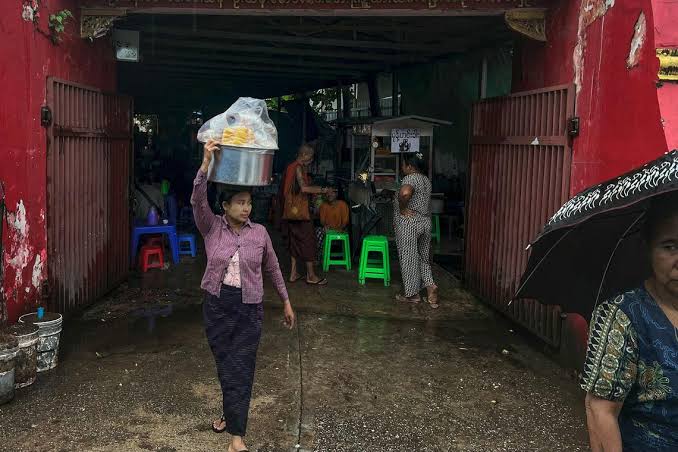
A cholera outbreak has spread through Yangon, Myanmar's largest city and its main commercial hub, infecting more than 90 people and filling hospital wards with patients suffering severe diarrhea.
Myanmar's Ministry of Health confirmed on August 13, 2026, that laboratory testing had detected the bacteria Vibrio cholerae in 93 patients.
The confirmation came after Yangon General Hospital reported a surge in diarrheal illness, with 171 people currently hospitalized, 54 of them in severe condition. One death has been reported so far, according to the Ministry and the risk-monitoring outlet Global Risk Atlas, which cited hospital figures as of August 12.
Cholera spreads when people eat food or drink water contaminated with the bacteria, usually where sewage has mixed with drinking water or where food handling is unsafe.
It can cause severe watery diarrhea and dehydration within hours, and without quick treatment it can be fatal. The disease responds well to oral rehydration and, in severe cases, antibiotics and IV fluids, which is why fast detection and clean water access matter so much once an outbreak starts.
Where the outbreak is concentrated
Most of the confirmed cases have come from four townships in downtown Yangon: Lanmadaw, Latha, Pabedan and Kyauktada.
Yangon, a city of more than five million people and Myanmar's former capital, is the country's largest urban center and its economic gateway, meaning an outbreak there can affect a far larger population than one in a smaller town.
How officials are responding
Local health authorities are testing water and food sources in the affected townships to trace the contamination, and have temporarily shut down roadside food stalls in high-risk areas while the investigation continues.
Health workers have also been sanitizing homes in affected neighborhoods. The Ministry of Health has advised residents to boil drinking water, wash their hands thoroughly and avoid food that may not have been prepared safely.
A country already under strain
This outbreak lands in a country whose health system has been stretched thin for years.
Create a free account
Join Joseph Mmwa Media Group and be the first to know the world's biggest health and medical stories as they happen
Myanmar is dealing with the combined effects of an armed conflict that has displaced more than 3.6 million people, plus the aftermath of a major earthquake in March 2025 that damaged infrastructure across central parts of the country.
According to the United Nations, roughly 9.3 million people in Myanmar currently need essential health services, and disease outbreaks have been rising because of unsafe drinking water, poor sanitation and disruptions to routine health programs.
Myanmar has recent experience with cholera on a larger scale.
A nationwide outbreak ran from June 2024 through April 2025, driven by many of the same conditions, damaged water systems, displacement and gaps in health services, that are complicating this year's response too.
Cholera's return to Myanmar in 2026
World Health Organization surveillance data shows Myanmar has continued to report cholera and acute watery diarrhea cases through 2026, though at much smaller numbers than the 2024-2025 nationwide outbreak.
In May, the WHO recorded a sharp jump in cases across the South-East Asia region, all of them from Myanmar, though the overall count for the year remained relatively low, at 241 cases as of the end of May.
The current Yangon cluster appears to be a fresh flare-up in the country's largest city rather than a continuation of one long, uninterrupted outbreak.
Globally, cholera remains a serious public health threat, particularly across parts of Africa and the Eastern Mediterranean region, where case numbers and deaths are far higher than in South-East Asia.
But outbreaks like the one in Yangon are a reminder that cholera can resurface anywhere basic water and sanitation systems come under pressure, whether from conflict, natural disaster or rapid urban crowding.
For now, Yangon's outbreak remains centered on a handful of downtown townships, and health authorities are working to identify and cut off the source of contamination before it spreads further across the city.

Joseph Mmwa is a health and medical journalist covering breaking health news, medical research, vaccines, infectious diseases, and public health developments around the world.