New HIV Treatment Keeps Two Patients Undetectable for Nearly Two Years Without Daily Pills
New clinical trial data show that a single infusion of engineered immune cells allowed two people living with HIV to stop antiretroviral therapy and maintain undetectable to very low viral loads, one for nearly two years and another for nearly a year, offering an early signal that HIV could one day be controlled without lifelong daily treatment
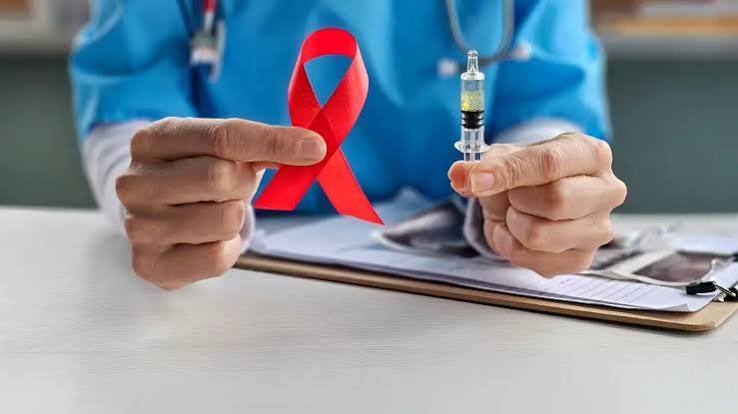
Two people living with HIV stopped antiretroviral therapy after a single infusion of their own re-engineered immune cells, and their virus has stayed at undetectable to very low levels since, in one case for close to two years.
The results come from an early-stage clinical trial testing a new type of cell therapy for HIV, and they were presented on May 12 at the American Society of Gene and Cell Therapy's annual meeting in Boston, Massachusetts.
The therapy has not yet been published in a peer-reviewed medical journal, and researchers themselves describe the findings as preliminary.
The findings are notable because sustained viral control after stopping antiretroviral therapy, without ongoing treatment, remains one of the central goals of HIV cure research worldwide.
How The Treatment Works
The trial is led by researchers at the University of California, San Francisco (UCSF), with the University of California, Davis (UC Davis) serving as a clinical site and the nonprofit research group Caring Cross as the developer of the cell therapy and a collaborator on the study.It is testing a therapy called duoCAR-T cell therapy, developed by Caring Cross.
The process starts by collecting a sample of a patient's own T cells, a type of white blood cell that normally helps fight infection, through a process called leukapheresis.
In a laboratory, scientists use a modified virus to give these T cells two new receptors: one designed to recognize and attack cells displaying a protein found on HIV's outer surface, and another designed to shield the modified T cells themselves from being infected by HIV.
The resulting cells, called duoCAR-T cells, are then infused back into the same patient in a single dose.
This approach is built on chimeric antigen receptor T-cell therapy, or CAR-T therapy, a technique that has been approved to treat several types of blood cancer since 2017.
Applying it to HIV is newer, and this is the first time this particular duoCAR-T approach has been tested in humans.
The trial is funded by the California Institute for Regenerative Medicine, a California state agency that supports stem cell and gene therapy research.
A Closer Look At The Results
Nine people have received the therapy so far in this trial, which is designed primarily to test safety rather than effectiveness.Participants were split into three groups. The first group received the engineered cells with no other preparation beforehand, then stopped their HIV medication.
All three patients in that group saw their virus return quickly.
The second and third groups, six patients in total, first received a mild dose of a chemotherapy drug called cyclophosphamide to prepare the body, followed three days later by an infusion of either a lower or higher dose of the engineered cells.
Among those six patients, two have maintained undetectable to very low viral loads after stopping antiretroviral therapy, one for close to two years and the other for close to one year.
A third patient in this group briefly controlled the virus for about three months before it returned.
Dr. Steven Deeks, professor of medicine at UCSF and the trial's principal investigator, said in the May 12 presentation in Boston that the team was not expecting results this strong from a study built to test safety.
Create a free account
Join Joseph Mmwa Media Group and be the first to know the world's biggest health and medical stories as they happen
"Although the primary focus of the study was safety, a few participants experienced better-than-expected outcomes following interruption of antiretroviral therapy," Deeks said.
"We are particularly interested in two individuals who have maintained control of HIV with undetectable viral loads for extended periods."
What This Does Not Prove Yet
Two patients out of nine maintaining long-term control, and a third showing only a brief response, is a very small number, and the researchers have been careful not to call this a cure.
A trial this size cannot show how common this response will be, how long it will last beyond two years, or whether it will work the same way in a larger, more diverse group of patients.
The study is continuing, and researchers plan to enroll more participants.
It is also worth noting what happened to the patients who did not receive the preparatory drug beforehand: no engineered cells were detectable in their blood after the infusion, and their virus rebounded quickly once they stopped medication.
Researchers say that gap between the groups is an important clue about what conditioning may add to the therapy, though it also shows how much is still not understood about making this approach work reliably.
Antiretroviral therapy, taken daily as pills or periodically as long-acting injections, remains the standard treatment for HIV and does not cure it.
Nothing in this trial changes that guidance for current patients.
Why This Matters Beyond The Lab
An estimated 41.0 million people were living with HIV worldwide at the end of 2025, according to the Joint United Nations Programme on HIV/AIDS (UNAIDS).About 32.1 million people were accessing antiretroviral therapy globally that year, most through regimens that require ongoing dosing, whether daily pills or periodic long-acting injections.
More than two out of every three people living with HIV worldwide are in the World Health Organization's African region, which the WHO says remains the region most severely affected by the epidemic.
For patients across that region, treatment access depends on a functioning supply chain, consistent clinic visits, and, for many, the ability to keep taking medication without interruption for the rest of their lives.
A one-time therapy, if it were eventually shown to be safe, effective and scalable, could potentially ease some of that long-term burden on both patients and health systems.
That possibility remains years away.
Because this is an autologous cell therapy, each dose is manufactured individually from a patient's own cells rather than mass produced like a standard pill, which creates real manufacturing and logistical challenges.
If the therapy eventually proves safe and effective, making it affordable and scalable in lower-income settings, including much of Africa, would likely be a major implementation challenge requiring years of further investment.
For now, the trial offers a genuine, if early, signal that the body's own immune system, engineered rather than assisted with daily pills, may eventually be able to keep HIV under control on its own.
Confirming that will take a larger trial, a longer follow-up period, and, researchers stress, a great deal more evidence before it changes how anyone is treated.

Joseph Mmwa is a health and medical journalist covering breaking health news, medical research, vaccines, infectious diseases, and public health developments around the world.