HIV Patients in Nigeria Pushed Toward Death and Uncertainty as Government Inaction, Donor Cuts Cripple Care
HIV Patients in Nigeria Pushed Toward Death and Uncertainty as Government Inaction, Donor Cuts Cripple Care
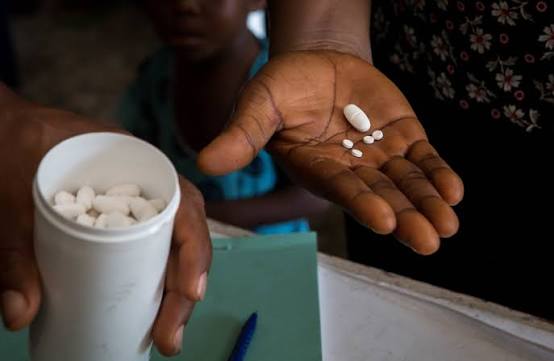
State and federal governments in Nigeria kept approving budgets for HIV programmes even as international donor support became increasingly uncertain, but an ongoing investigation by Premium Times has found that several HIV budget lines in Rivers and Akwa Ibom states were not released, or were released at very low levels, while patients and health workers described major disruptions to donor-funded community care.
The findings come from the first two instalments of a three-part investigation by Premium Times, reported by Ekemini Simon and supported by the Centre for Journalism Innovation and Development (CJID).
The investigation, based on state and federal budget documents, budget implementation reports, government expenditure records and interviews with patients, health workers and officials, focused on Rivers, which Premium Times says has Nigeria's largest estimated population of people living with HIV, and Akwa Ibom, which also ranks among the country's highest-burden states.
A third instalment had not been published as of 20 August 2026.
Approved is not the same as released
Nigerian government budgeting moves through separate stages, and Premium Times' findings turn on the difference between them.
An appropriation is lawmakers authorising an agency to spend up to a certain amount. A release, sometimes called cash backing, is the finance ministry actually making that money available.
Expenditure is money the agency has gone on to spend. An approved budget does not guarantee any of the later stages happen.
In Akwa Ibom, the State Agency for the Control of AIDS was allocated capital budgets in every cycle Premium Times reviewed, including 24.05 million naira in 2023, 10 million naira in 2024, 33 million naira in 2025 and 150 million naira in the 2026 budget.
Premium Times reported, citing Akwa Ibom budget-performance reports it reviewed, that the agency recorded no capital releases in 2023 or 2024.
NACA, the National Agency for the Control of AIDS, told the newspaper that Akwa Ibom had released only one per cent of its combined 2024 and 2025 HIV appropriations.
Because the state did not provide documentation of how much was released in each year separately, the amount attributable specifically to the 2025 capital allocation could not be independently established.
Akwa Ibom's Commissioner for Health, Ekem Emmanuel, told Premium Times the agency had received some support toward the end of 2025 but did not provide records of the amount, its source, or what it funded.
Rivers State followed a comparable pattern.
The state appropriated 180 million naira for HIV interventions in 2023 and 230.66 million naira in 2024, covering testing kits, community counselling and the drafting of an anti-stigma law.
Premium Times reported that the corresponding budget-implementation reports showed no releases against either appropriation, and that NACA separately confirmed zero HIV releases for Rivers in the period reviewed.
The newspaper said Rivers had not published the approved fiscal documents necessary to independently scrutinise HIV spending for 2025 or 2026.
The same shortfall in Abuja
Premium Times found the release gap was not confined to the two states. Nationally, the federal government approved 18.27 billion naira in capital spending for NACA in 2025, more than double the 2024 figure.
Govspend.ng records reviewed by the newspaper showed 31.2 per cent of that allocation was cash-backed, meaning made available for spending, a distinct measure from how much was actually spent. In 2026, NACA's approved capital budget was 13.97 billion naira.
Govspend records showed 36.68 million naira, about 0.3 per cent, had been spent between January and May. NACA separately told Premium Times its capital-release rate, a different measure again, had reached 3.8 per cent by mid-year.
Of the expenditure recorded between January and May, 16.13 million naira was classified as direct HIV-response spending, and Premium Times found it recorded only in Lagos State.
NACA later said HIV expenditure in Lagos rose to about 210 million naira by June, which it attributed to two constituency projects.
Other transactions recorded in the January to May window included 7.4 million naira for cleaning services at NACA's headquarters and 13.12 million naira for 364 bags of rice and 152 cartons of vegetable oil for agency staff.
Poorer, smaller states did better
The most striking part of the investigation is a comparison few would expect.According to budget documents reviewed by Premium Times, Kwara State, where an estimated 20,259 people live with HIV, about one-eighth of Akwa Ibom's estimated population of people living with HIV, spent 608.63 million naira on HIV interventions in 2024 and released another 132.16 million naira as counterpart funding for Global Fund programmes between January and September 2025.
Its 2026 budget earmarks 8.29 billion naira for Global Fund-supported health work, including HIV. Zamfara and Yobe, which Premium Times identified as having among the country's lowest estimated HIV burden, spent 3.42 million naira and 500,000 naira respectively on HIV programmes in 2025.
Rivers and Akwa Ibom, by contrast, are major oil-producing states. Akwa Ibom currently ranks fourth among Federation Account allocation recipients nationally, while Rivers ranks second, according to Premium Times.
Create a free account
Join Joseph Mmwa Media Group and be the first to know the world's biggest health and medical stories as they happen
The newspaper previously calculated that Akwa Ibom received 2.53 trillion naira in total revenue receipts during the first 32 months of Governor Umo Eno's administration.
The investigation found no evidence that either state's revenue position translated into stronger HIV financing.
What disappeared when the money did not arrive
The first instalment of the series, published in July, documented what happens to patients when this financing gap meets a donor pullback.
For years, donor-funded community health programmes, financed mainly through the United States President's Emergency Plan for AIDS Relief (PEPFAR) and the Global Fund, supported home delivery of antiretroviral medicines for some patients, alongside counselling, adherence support and follow-up.
A National AIDS Spending Assessment carried out by NACA with UNAIDS found that international sources financed 96.1 per cent of Nigeria's HIV spending in 2021, with domestic public financing at 3.9 per cent and domestic private financing effectively at zero.
On 20 January 2025, United States President Donald Trump ordered a review and 90-day pause of American foreign assistance. Stop-work orders followed, and some USAID-funded programmes were later terminated, disrupting HIV activities in Nigeria and elsewhere.
A subsequent US waiver, issued in early February 2025, allowed certain life-saving HIV treatment and care services to continue, along with related testing and counselling, but left many prevention, outreach and community-support services outside its scope.
UNAIDS reported in March 2025 that immediate access to antiretroviral medicines in Nigeria remained stable at that stage, with more than six months of first-line drug stock in the pipeline, while community HIV testing, case-finding and other community services had been significantly disrupted after more than 95 per cent of community workers initially received stop-work orders.
Premium Times interviewed patients across both states describing what followed. One woman, identified only as Grace to protect her identity, had her antiretroviral medicine delivered discreetly to her home in Uyo, the Akwa Ibom State capital, for years.
After that arrangement ended, she began collecting her medicine at a public clinic, was recognised there, and faced stigma in her community. Her family told Premium Times that she stopped attending the clinic and had died by April 2026. Her sister said she believed continued home delivery would have helped Grace stay in treatment.
Elizabeth Udo, Akwa Ibom State Coordinator of the Network of People Living with HIV/AIDS in Nigeria (NEPWHAN), told Premium Times that people in her network had died amid the disruption of community support services, even where treatment itself remained available.
In Rivers State, a NEPWHAN coordinator who asked not to be named told Premium Times that more than 300 donor-funded HIV workers lost their jobs, including 185 who worked directly with patients in communities.
Uduak Nyaetok, executive director of the Milestone Initiative for Human Rights and Empowerment, a Niger Delta organisation providing HIV services, told Premium Times that the interruption raised concerns about treatment follow-up and prevention, though the investigation did not present state-level data quantifying any resulting change in viral suppression.
NACA told the newspaper that community-level coverage for case-finding, pre-exposure prophylaxis and condom distribution had experienced setbacks during the same period.
The Federal Ministry of Health and Social Welfare's State of the Health of the Nation Report 2025 recorded 102,025 HIV cases nationally, with Rivers logging 6,287 and Akwa Ibom 5,413.
NACA has separately cautioned that similar state-level HIV figures reflect routine testing conducted in health facilities rather than measured disease incidence or prevalence, and should not be used to estimate new infections or rank states by burden.
Why this matters beyond Nigeria
Nigeria's push toward domestic HIV financing reflects a pressure many donor-dependent countries face.
PEPFAR and the Global Fund have historically financed the large majority of HIV programmes across much of sub-Saharan Africa, including in Kenya, and the same 2025 US funding review that disrupted Nigeria's community HIV services also affected donor-funded programmes elsewhere on the continent.
What Premium Times documented in Rivers and Akwa Ibom, budgets approved on paper without the funds to back them, is the specific test facing any government asked to convert a domestic commitment into money that actually reaches clinics and community workers.
What the government says it is doing
NACA told Premium Times it is working to reduce Nigeria's reliance on foreign donors through its Domestic Resource Mobilisation and Sustainability Strategy.
It pointed to the HIV Trust Fund of Nigeria, a private-sector financing mechanism launched in January 2022 under the Nigeria Business Coalition Against AIDS, which NACA said mobilised 10.7 million naira in 2024.
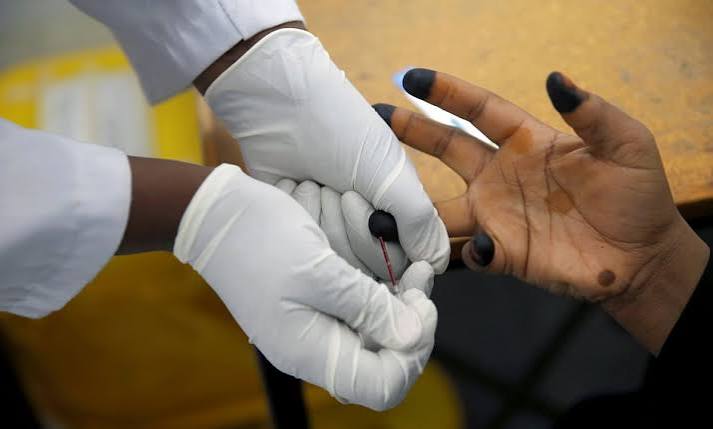
NACA said HIV testing is included in national and subnational health-insurance benefit packages, and that it is working toward broader inclusion of antiretroviral treatment and enrolment of people living with HIV in financial-protection schemes.
The Federal Ministry of Health said Nigeria committed an additional 200 million dollars in its 2025 budget for HIV, tuberculosis and malaria programmes combined.
Separately, Premium Times reported that 31.2 per cent of NACA's 18.27 billion naira 2025 capital allocation, roughly 5.7 billion naira, was cash-backed.
The gap between what Nigerian governments have approved for HIV care and what has actually reached the agencies meant to spend it is, for now, better documented than it is closed. Premium Times says its investigation continues with a third instalment not yet published.
Source
Simon E. Donor cuts, govt inaction push HIV patients towards death, uncertainty in Rivers, Akwa Ibom (I). Premium Times. 28 Jul 2026. Simon E. Donor cuts, govt inaction push HIV patients towards death, uncertainty in Rivers, Akwa Ibom (2). Premium Times. 20 Aug 2026. Reporting supported by the Centre for Journalism Innovation and Development (CJID)
Joseph Mmwa is a health and medical journalist covering breaking health news, medical research, vaccines, infectious diseases, and public health developments around the world.