Nurses Walk Out of Ebola Wards as Congo's Outbreak Surpasses 4,000 Cases
Unpaid nurses have walked out of Ebola treatment centres in eastern Congo as the outbreak surpasses 4,000 cases, straining an already fragile response
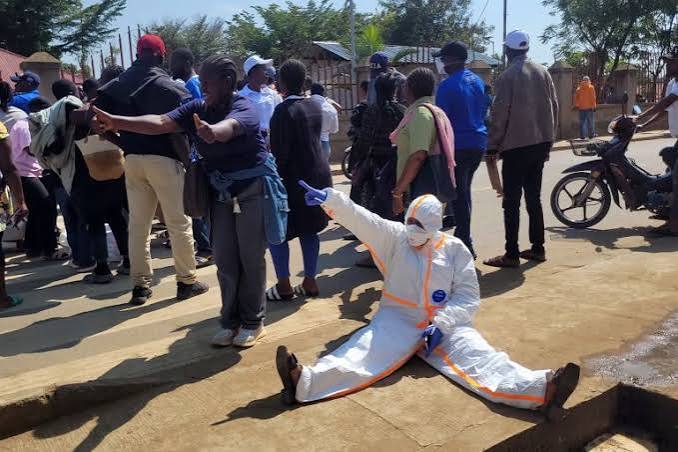
The nurses who care for Ebola patients in eastern Democratic Republic of Congo put down their protective gear this week and walked to the governor's office instead.
Several health facilities in the outbreak's epicentre were left without staff. The reason was not fear of the virus, although fear is constant. It was pay.
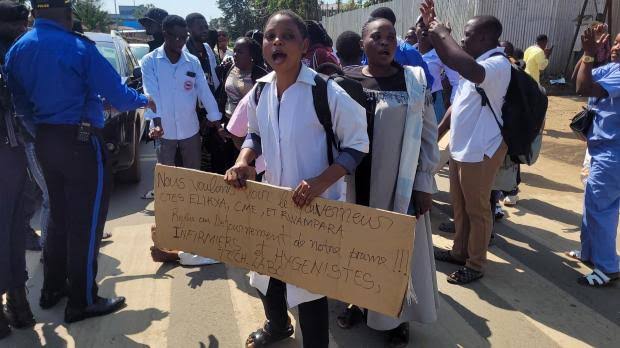
Dozens of health workers staged protests in Bunia, the capital of Ituri province, demanding wages and bonuses they say have never arrived.
They are the latest group to strike since pay protests began weeks earlier. Their walkout landed in the same week that Congo's public health institute reported the outbreak crossing a threshold it had not crossed before.
Four thousand cases, and counting
Confirmed infections have now passed 4,000 for the first time since the outbreak was declared.The latest situation report from Congo's Institut National de Santé Publique, the national public health institute, puts the total at 4,053 confirmed cases and 1,850 deaths.
The pace behind those figures matters more than the figures themselves. Médecins Sans Frontières, the medical charity also known as Doctors Without Borders, counted 1,437 reported deaths as of 26 July.
Government data covering 4 August put the toll at 1,801. The most recent tally adds another 49 on top of that.
In under two weeks, more than 400 deaths were added to the record.
Reported deaths now equal roughly 46 percent of confirmed cases. That ratio should be read with care.
Epidemiologists believe the virus was circulating for months before the outbreak was formally declared on 15 May, and that the true number of infections is considerably higher than the confirmed count.
A larger denominator of undetected mild or unconfirmed cases would push the real fatality rate lower.
It would also mean the response has never seen the full shape of what it is fighting.
This is Congo's seventeenth Ebola outbreak since the virus was first identified in 1976, and it began barely five months after the previous one ended in December 2025. It is now the second-largest on record, behind the West Africa epidemic of 2014 to 2016, which recorded more than 28,000 cases and over 11,000 deaths.
The strike that emptied the wards
Ituri province accounts for nearly 90 percent of Congo's cases, which makes the Bunia walkout unusually consequential.The staff involved include nurses providing critical care inside isolation units, the people who administer medicine, clean contaminated spaces and feed patients too weak to feed themselves.
They say they have received no wages or bonuses since the outbreak was declared in mid-May. Edouige Makosi, one of the protesters, told the Associated Press that with this style of management, "Ebola will not end in this province."
The grievance is not only financial. Ebola spreads through contact with bodily fluids and contaminated surfaces, so routine bedside care carries real risk.
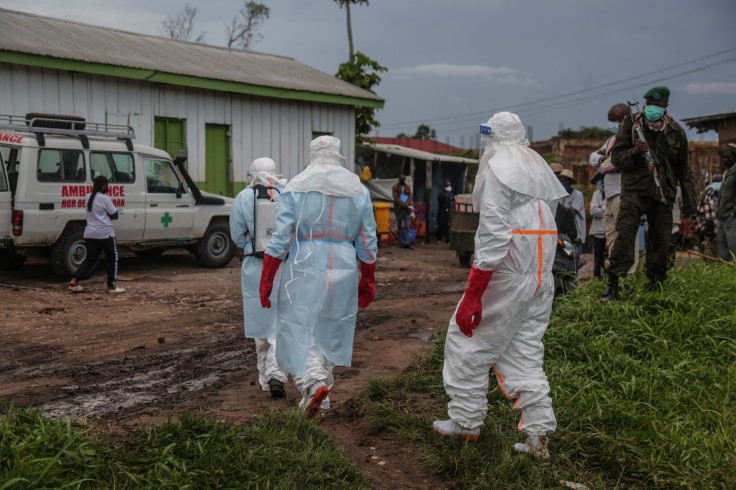
One nurse at the Elikya Ebola Treatment Centre in Bunia described to CNN a daily routine of pulling on layers of protective equipment knowing that a single error could be fatal, and said she is deeply afraid for her safety.
Health workers and facilities in the region have also been attacked by armed groups and by angry crowds.
A wage bill nobody can trace
Congolese officials have previously blamed logistics for the delays.Patrick Muyaya Katembwe, the country's communications minister, acknowledged that late payments had triggered protests at several Ebola treatment centres and said the outstanding money is now being processed.
He attributed the holdup to the administrative work of verifying which workers were genuinely deployed to the response and ensuring funds reach the right people, adding that "anyone officially listed will be paid."
That explanation points at a structural problem rather than a clerical one.
A response that cannot produce an accurate roster of its own frontline staff within three months is a response with weak administrative infrastructure, and administrative weakness is precisely what allows outbreaks to outrun containment.
Tedros Adhanom Ghebreyesus, Director-General of the World Health Organization, visited Congo on 5 August and pressed authorities to prioritise care and support for responders.
The missing shield
The detail that separates this emergency from the one the world watched in 2018 is the virus itself.This outbreak is caused by Bundibugyo virus, a rarer member of the Ebola family.
Two Ebola vaccines are licensed, but neither is approved for use against Bundibugyo.In the 2018 to 2020 outbreak in eastern Congo, responders had the Ervebo vaccine and a ring vaccination strategy, meaning contacts of confirmed cases and their contacts could be immunised to build a protective barrier around each infection.
When community trust faltered, the vaccine still worked. On 28 May, the World Health Organization advised against relying on that vaccine here, citing weak evidence that it cross-protects against Bundibugyo.
Create a free account
Join Joseph Mmwa Media Group and be the first to know the world's biggest health and medical stories as they happen
No approved treatment exists either.
The two monoclonal antibody therapies licensed after clinical studies in Congo between 2018 and 2020 were developed against a different species. The World Health Organization has recommended candidate products for emergency clinical trials: the antiviral remdesivir, and the monoclonal antibody therapies MBP-134 and maftivimab.
Trials of remdesivir and MBP-134 began in Congo in July. On the prevention side, three vaccine candidates from the International AIDS Vaccine Initiative, Moderna and the University of Oxford are being expedited.
Diagnosis is slower too.
The Africa Centres for Disease Control and Prevention has recommended molecular testing using real-time polymerase chain reaction, a laboratory method that detects the virus's genetic material, because no rapid antigen test currently meets the required standards for this strain.
Rapid tests give results at the bedside within minutes. Polymerase chain reaction requires a functioning laboratory, transport and time, all of which are scarce in remote Ituri.
Strip away vaccines, licensed treatments and rapid tests, and containment rests almost entirely on people: contact tracers, burial teams, community mobilisers and the nurses who walked out this week.
There is no biomedical safety net underneath them.
Chasing a virus that keeps slipping the net
The surveillance figures explain why officials keep using the word alarming.Government data shows 674 patients currently in isolation, most of them in Ituri. At least 75 percent of known contacts are being followed after exposure.
The problem is what sits outside that system. Officials say 60 to 70 percent of new cases are being detected among people who were never on a contact list.
Most new infections are emerging from unmonitored sources and from remote localities where armed conflict and mining-related population movement restrict access.
Médecins Sans Frontières said this week that the outbreak continues spreading at an alarming and unprecedented rate, and that the response, although expanding, is still not reaching communities quickly enough to break chains of transmission.
The organisation has more than 1,400 staff deployed across Ituri, North Kivu, South Kivu and Tshopo provinces in Congo, and in Kampala, Bwera and Arua in Uganda. It runs seven Ebola treatment centres in eastern Congo with three more under construction.
A boat, a river and a capital on edge
The geographic risk became concrete this week.Congolese authorities placed nearly 200 boat passengers in quarantine near Kinshasa after a traveller who had been aboard died with symptoms consistent with Ebola.
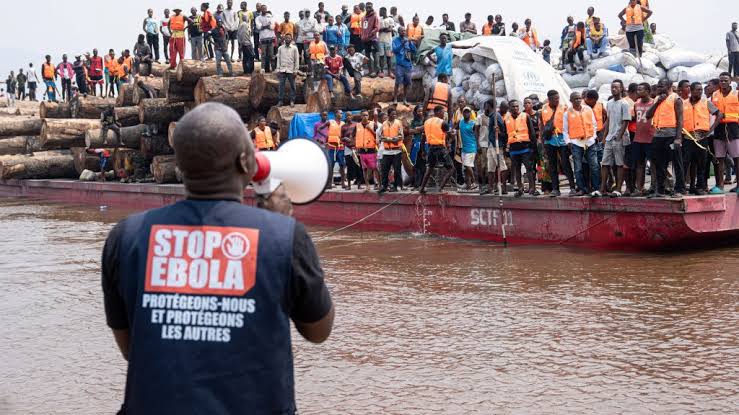
Jean Kaseya, Director-General of the Africa Centres for Disease Control and Prevention, said the passenger had fallen ill and disembarked roughly three weeks earlier at Pimu, in Mongala province, more than 1,000 kilometres from the capital along the Congo River.
Kinshasa has no confirmed case. Authorities said passengers without symptoms were detained as a precaution while test results are awaited, and declined to specify where the group is being held or for how long.
News of the death caused public alarm in Kinshasa, a city of more than 17 million people located far from the eastern epicentre. River transport links the two, which is the point.
Camps where the virus finds room
The United Nations High Commissioner for Refugees has warned that the outbreak is worsening in displacement settings.
At least 19 internally displaced people have been infected and five have died in camps in Ituri province. No cases have been recorded among refugees or asylum seekers.
Overcrowding, poor sanitation and limited access to health care make camps efficient amplifiers for a virus transmitted by close contact.
Ituri hosts large displaced populations because of long-running conflict involving armed groups that has restricted humanitarian access for years. The same insecurity that created the camps is now obstructing the response inside them.
Why the world beyond Ituri is watching
The outbreak has already crossed an international border. Uganda has recorded 20 confirmed cases and two deaths.The World Health Organization declared the situation a public health emergency of international concern on 17 May, a designation reserved for events requiring coordinated international action.
External risk assessments remain measured.
The European Centre for Disease Prevention and Control considers the likelihood of infection within the European Union and European Economic Area very low, while noting significant gaps in surveillance and epidemiological data. One patient was medically evacuated to Germany on 13 July.
The United States Centers for Disease Control and Prevention says risk to the American public and to travellers remains low, and no cases linked to this outbreak have been reported there.
For African health systems, the more durable lesson concerns preparedness rather than importation. Bundibugyo virus has caused only two previous outbreaks, in Uganda between 2007 and 2008 and in Congo in 2012, both small.
Because it was rare, it was not commercially or scientifically prioritised, and the countermeasures built after 2014 and after 2018 were built for a different species. The continent that absorbed the research burden of the last two epidemics is now facing a third with tools that do not fit.
The wage dispute in Bunia belongs to the same story. Vaccines and antibody therapies are years of trials away at best.
Until then, the response is only as strong as the workforce willing to enter the isolation wards each morning, and that workforce is currently unpaid.

Joseph Mmwa is a health and medical journalist covering breaking health news, medical research, vaccines, infectious diseases, and public health developments around the world.