One Person Dead, 207 sick as UK Traces Salmonella Outbreak to Imported Eggs
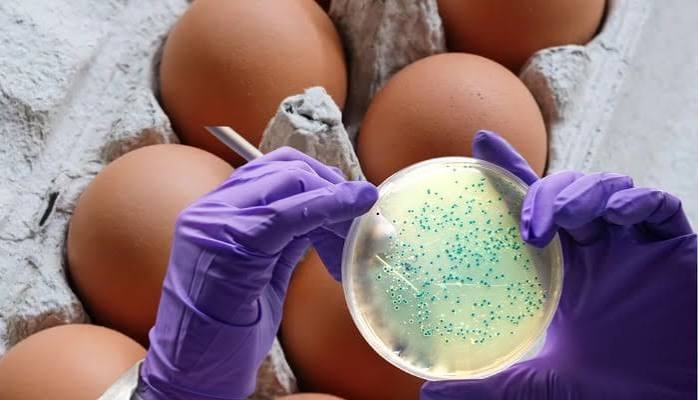
New figures released by the UK Health Security Agency show a salmonella outbreak has killed one person and sickened 207 others across the country, with investigators now pointing to eggs brought in from outside the UK as the likely source.
The agency, known as UKHSA, said the outbreak involves a single strain of Salmonella Enteritidis, the bacteria responsible for most cases of food poisoning linked to eggs and poultry in England.
Cases span an unusually wide age range, from infants to people in their 90s, and more than a third of those affected needed hospital care.
What the new data shows
UKHSA first spotted a rise in this particular strain on 26 May 2026, after genetic sequencing showed a cluster of infections all carrying the same molecular fingerprint.
That kind of match tells investigators the cases almost certainly share one common source, even when the people who fell ill live hundreds of kilometres apart.
By 13 August 2026, the tally had reached 207 confirmed cases, recorded between 11 August 2025 and 1 August 2026.
The overwhelming majority, 206 of the 207, were reported this year. England accounted for 199 cases, with London and Yorkshire and Humber the hardest-hit regions. Scotland recorded six cases, and Wales and Northern Ireland one each.
The median age of those affected is 30, and just over half are women. Salmonella infection typically causes diarrhoea, stomach cramps, and sometimes fever, and most people recover on their own within days.
But 38 percent of cases with available information were admitted to hospital, and two people developed bloodstream infections, a complication that can turn a stomach bug into a medical emergency. One person has died in connection with the outbreak.
Why eggs are the leading suspect
Investigators have interviewed 114 of the confirmed cases so far. Of those, 83 percent said they had eaten food prepared outside their own home in the week before symptoms began, a detail that points investigators toward restaurants, takeaways, and other food businesses rather than home kitchens.
Five food businesses turned up repeatedly in those interviews, linked to 24 cases between them.
Eleven of those 24 people specifically remembered eating dishes made with eggs, which UKHSA calls the strongest signal in the investigation to date.
Create a free account
Join Joseph Mmwa Media Group and be the first to know the world's biggest health and medical stories as they happen
Checks on where those businesses source their eggs found supplies coming from multiple places, including importers bringing eggs in from abroad. No connection has been found to eggs or poultry produced within the UK.
Local health teams have already flagged possible cross-contamination risks at two of the businesses under investigation, and the Food Standards Agency is now working with environmental health officers to tighten food safety practices at the sites involved.
A second outbreak with the same fingerprint
This is not an isolated event. Genetic analysis shows the current outbreak strain is closely related, within 25 genetic differences, to a separate Salmonella Enteritidis outbreak recorded in November 2025, which was also traced back to imported eggs.
UKHSA, alongside the Animal and Plant Health Agency and the Food Standards Agency, is now comparing data from both outbreaks to work out whether they share a common supply route and whether stronger safeguards on imported eggs are needed.
UKHSA has also shared genetic data through EpiPulse, a European surveillance platform, to check whether the same strain has turned up in other countries.
That step matters because contaminated food does not respect borders, and an import problem affecting the UK could just as easily be affecting other markets that buy from the same suppliers.
A global pattern, not just a British one
Salmonella infections tied to eggs are a recurring problem well beyond the UK.
The World Health Organization estimates that non-typhoidal salmonella causes tens of millions of illnesses worldwide each year, with the heaviest burden falling on countries where food safety systems are weaker and refrigeration and inspection infrastructure is limited.
Egg supply chains that cross multiple countries, as this outbreak appears to involve, make it harder to pin down exactly where contamination first occurs and easier for it to reach several markets before it is caught.
For lower and middle income countries that import eggs or egg products, outbreaks like this one are a reminder that food safety oversight has to extend to imported goods, not only domestically produced food.
What happens next
The source of contamination has not yet been confirmed, and UKHSA describes the food chain investigation as ongoing. Officials have not named the specific businesses, suppliers, or countries of origin involved while the inquiry continues.
The agency's standard advice remains to cook eggs and egg-based dishes thoroughly and to handle raw eggs with care, though it has not issued a product recall at this stage.

Joseph Mmwa is a health and medical journalist covering breaking health news, medical research, vaccines, infectious diseases, and public health developments around the world.