TB-Preventing Pills Reduce Illness and Death Among People With HIV,Major Study Confirms
A new study covering six countries has found that people with HIV who received tuberculosis preventive treatment had lower risks of developing TB and dying than those who did not receive it
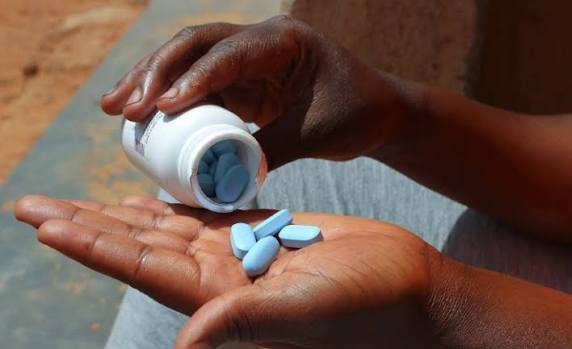
A tuberculosis-preventing treatment that Kenya began scaling up nationally in HIV clinics in 2015 has received fresh real-world validation.
A new study covering six countries, Kenya among them, found that people with HIV who received tuberculosis preventive treatment had lower risks of developing TB and dying than those who did not.
The evidence comes not from a controlled clinical trial, but from routine HIV care in ordinary health systems.
The findings were published this week in The Lancet HIV.
The study, known as PROTECT, was led by the United States Centers for Disease Control and Prevention's Division of Global HIV and Tuberculosis, working with Emory University's Rollins School of Public Health.
Researchers tracked tuberculosis preventive treatment as it was actually delivered in routine HIV care across Haiti, Kenya, Nigeria, Uganda, Ukraine, and Zimbabwe.
What The Study Actually Tracked
Tuberculosis preventive treatment is a course of medicine given to people with HIV, after screening has ruled out active tuberculosis, to reduce the risk that a TB infection progresses into full-blown disease, which can cause serious illness and death if it goes untreated.In the study, the treatment given was most commonly six months of the drug isoniazid, though shorter regimens are also now recommended in TB guidelines.
Clinical trials had already shown the approach works under study conditions. What had remained less clear was how it would perform once it left the trial setting and was delivered inside real public health systems, with their staffing gaps, supply chains, and patient follow-up challenges.
The researchers found that its protective effect held up in routine care.
Across a wide range of country settings, health conditions, and risk groups, people who received the preventive treatment were less likely to develop tuberculosis and less likely to die than those who did not.
Timing mattered. The protective effect was strongest when treatment began within the first two weeks of a person entering HIV care. It still held up, though somewhat less strongly, when started within eight weeks.
"What is powerful about these findings is that they come from routine HIV programs, not from a controlled clinical trial," said Anand Date, chief of the CDC's Global TB Branch. "This is program data showing what happens when countries deliver TB preventive treatment at scale."
Why Kenya's Inclusion Matters
Kenya began rolling out isoniazid preventive therapy for people with HIV nationally in 2015, following pilot projects the year before.
Tuberculosis has been reported as a leading cause of death among people with HIV in the country despite two decades of government and donor investment in TB care.
People with HIV face a substantially higher risk of developing active tuberculosis than people without the virus, because HIV weakens the immune system, raising the risk that a TB infection will progress to active disease.
Create a free account
Join Joseph Mmwa Media Group and be the first to know the world's biggest health and medical stories as they happen
That backdrop is what makes Kenya's presence in this six-country study significant.
It means the positive result was measured, at least in part, inside the same kind of health system Kenyan clinics operate every day, rather than only in wealthier or better-resourced settings.
The Scale Already Reached
The preventive treatment approach was not new when this study began.Clinical trials had backed it for years, but countries were slow to actually deliver it in large numbers until the United States President's Emergency Plan for AIDS Relief, known as PEPFAR, made it a major commitment in 2018.
Since then, more than 13 million people living with HIV worldwide have received the treatment.
The new study is essentially a report card on what that scale-up has actually achieved.
Tuberculosis remains the world's leading cause of death from a single infectious disease. More than 10.7 million people fell ill with it in 2024, and an estimated 1.23 million died.
It is responsible for roughly a quarter of all deaths among people with AIDS.
Older adults, children, and anyone with a weakened immune system, including people with HIV or cancer, face higher risk. TB is an airborne infectious disease that occurs in countries around the world.
A Gain Now Facing A Funding Threat
The study lands at a difficult moment for the global HIV and tuberculosis response.
Emory University's own summary of the findings notes that the past year has brought freezes on United States foreign aid, disruption at the US Agency for International Development, and interruptions to PEPFAR funding, the same program that drove the 2018 scale-up this study is now measuring.
It cites projections that reduced funding for tuberculosis programs could result in more than half a million additional deaths from the disease, along with rising catastrophic costs for the families affected.
"Taken together, the findings support the critical role of tuberculosis preventive treatment in HIV care programs," said Sarita Shah, MD, MPH, professor of epidemiology and global health at Emory University's Rollins School of Public Health.
"This is important in the current context of reduced funding for global health programs to ensure that gains made in HIV care over the last two decades are sustained."
What The Study Does Not Claim
The researchers describe this as program data drawn from routine care across six countries, not a randomized clinical trial conducted under laboratory conditions.That is precisely its strength, since it provides evidence of how the treatment performs under routine programme conditions rather than only inside a controlled trial, but it also means the result reflects six specific countries with their own health systems, and does not automatically predict how the treatment performs everywhere tuberculosis and HIV overlap.
The message from the researchers is straightforward rather than dramatic: a preventive treatment that already reaches millions of people with HIV each year is showing the outcomes it was designed to produce, and the study's authors say sustaining the funding behind it is now central to keeping those gains.
Source
Shah S, et al. Programmatic effectiveness of tuberculosis preventive treatment for people with HIV in six high-tuberculosis-burden countries (PROTECT): a prospective cohort study and meta-analysis. Lancet HIV. 2026. DOI: 10.1016/S2352-3018(26)00140-2.*
Joseph Mmwa is a health and medical journalist covering breaking health news, medical research, vaccines, infectious diseases, and public health developments around the world.