United States Commits a Further US$242 Million as DRC Ebola Outbreak Outpaces Response
New funding of US$242 million from the United States has arrived as the Democratic Republic of Congo's Ebola Outbreak becomes fastest ever growing in history
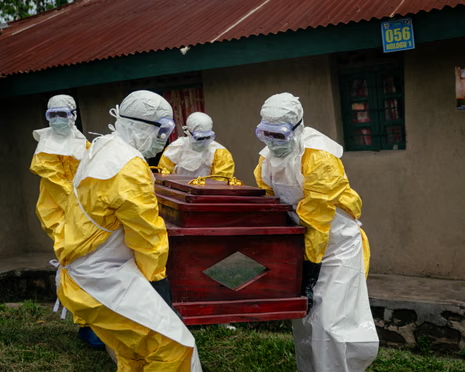
The United States has put another US$242 million behind the Ebola response in central Africa, and the money is arriving at a moment when new infections are being detected faster than responders can trace them.
The United States Department of State announced the funding on 5 August 2026, saying it is intended for immediate outbreak response, regional preparedness and humanitarian assistance in the Democratic Republic of the Congo (DRC), Uganda and neighbouring countries.
The Africa Centres for Disease Control and Prevention (Africa CDC) welcomed the announcement within hours. It also did something less expected for a moment of good news: it immediately urged other partners to close the remaining financing gaps and release money they have already pledged. That response says a great deal about where the response actually stands.
An outbreak moving faster than the teams chasing it
As of 4 August 2026, the DRC had reported 3,973 confirmed cases, 1,801 deaths and 776 recoveries across 51 health zones in five provinces, according to a joint Africa CDC and World Health Organization (WHO) statement issued on 6 August.In the most recent 24-hour reporting period, the country recorded 99 new confirmed cases and 52 deaths.
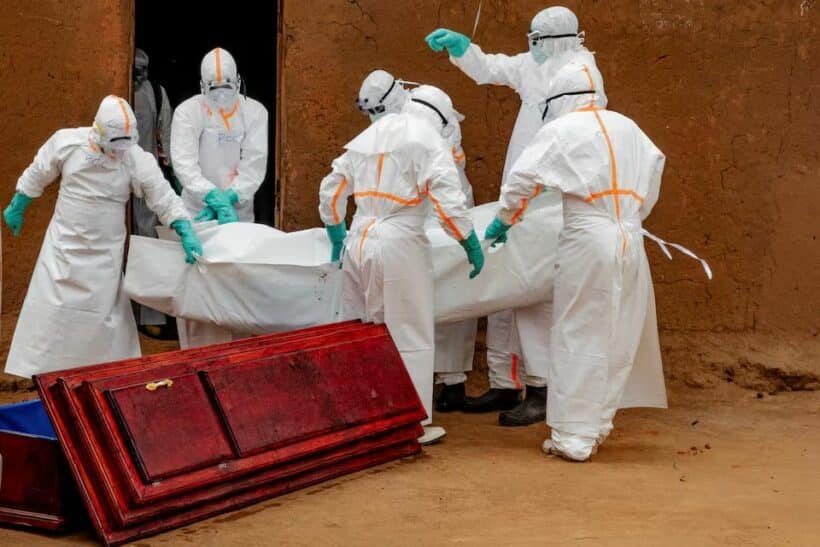
Two operational figures explain the alarm. Contact follow-up stood at 75 percent, well below the target of at least 95 percent needed to trace transmission chains quickly and catch new infections among people already known to the response.
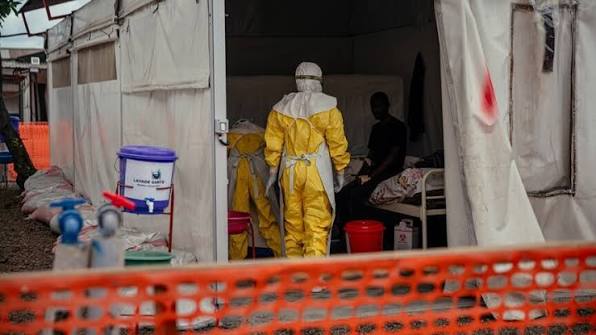
At the same time, 674 patients were under care, and treatment centre occupancy in North Kivu had reached 139 percent, meaning demand for beds exceeded capacity by roughly four in ten.
Ituri Province accounts for close to 90 percent of confirmed cases in the DRC, with the Bunia, Rwampara and Mongbwalu health zones among the hardest hit.
Figures published by the European Centre for Disease Prevention and Control put Ituri at 3,460 cases and 1,464 deaths, spread across 28 of the province's 36 health zones.
Dr Tedros Adhanom Ghebreyesus, Director-General of the WHO, said the outbreak is outpacing the response in parts of eastern DRC, and that containment will require guaranteed safe access for responders alongside greater resources and stronger international support.
What the American package actually contains
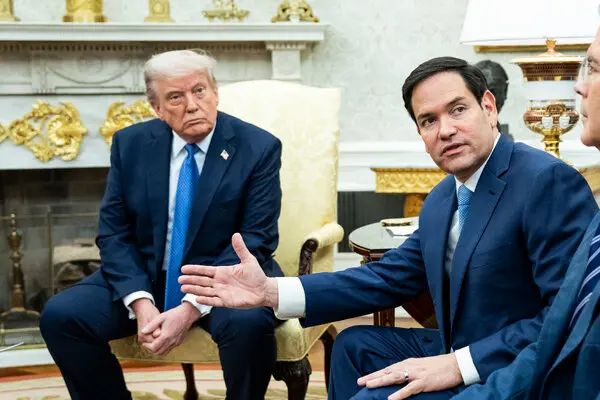
The US$242 million is being provided in coordination with the United States Congress and is aligned with a commitment made at the Group of Seven (G7) Leaders' Summit on 16 June to provide up to an additional US$500 million for Ebola response efforts.With the new allocation, direct assistance announced by the Department of State for this outbreak has now exceeded US$512 million.
That figure is separate from US$350 million earmarked for humanitarian assistance in the DRC, South Sudan and Uganda, itself part of a US$1.8 billion contribution to the United Nations Office for the Coordination of Humanitarian Affairs announced on 14 May.
The Department stated that the United States remains the largest single financial contributor to the response, and called on other donors to commit resources.
Africa CDC, in a statement issued after a high-level crisis meeting in Kinshasa convened by President Félix-Antoine Tshisekedi Tshilombo, noted that the two allocations are distinct, and said the commitments must now translate into faster detection, safer care and properly supported health workers.
Pledges made, money delivered
The distinction between promised and delivered money is where the response has repeatedly stalled. The joint continental preparedness and response plan launched by Africa CDC and WHO on 5 June sought US$518 million to cover June to November 2026.By 25 June, Dr Jean Kaseya, Director-General of Africa CDC, had revised the overall requirement upward to US$1.4 billion, saying that about US$910 million had been pledged but only 13 percent of that had actually been released.
By late July, the joint plan still faced a funding gap of more than US$400 million.
Read against those figures, the American contribution is substantial without being sufficient. Even at more than US$512 million in direct assistance, it covers a fraction of the revised continental estimate, which is why the welcome from Addis Ababa came attached to a demand aimed at everyone else.
Create a free account
Join Joseph Mmwa Media Group and be the first to know the world's biggest health and medical stories as they happen
Uganda's containment shows what works
Uganda declared the end of its outbreak on 28 July 2026 after recording 20 confirmed cases and two deaths, with all listed contacts completing follow-up.Fifteen of those infections were linked to importation from the DRC and five resulted from local transmission.
Africa CDC and WHO attributed the result to early detection, rapid contact tracing, coordinated national action, trusted community engagement and cross-border surveillance, and warned that Uganda and other neighbours must sustain preparedness while transmission continues next door.
Dr Kaseya has argued that the decisive factor is community trust, so that people recognise symptoms, report them early and seek care without fear.
Why financing alone will not end this outbreak
This epidemic is caused by Bundibugyo virus, one of several viruses that cause Ebola disease, and there is no approved vaccine and no approved treatment for it.
That distinguishes it from the Zaire strain responsible for most recent Ebola emergencies, where a licensed vaccine and licensed therapeutics have been available.
Responders are therefore relying on case finding, isolation, supportive care, infection prevention and safe burials rather than immunisation.
Work to change that has begun but remains early. Clinical trials of candidate therapeutics started in Bunia at the end of June, in a collaboration involving Africa CDC, WHO, Oxford University, the International AIDS Vaccine Initiative, the Coalition for Epidemic Preparedness Innovations, Gilead Sciences and other partners, and Africa CDC warned at the time that the trials themselves faced a financing shortfall.
Results are not yet available, and no conclusion can be drawn about whether any of the candidates will work.
A disagreement over travel measures
The announcement also highlights a policy split.The United States has kept its Travel Advisory for the DRC, Uganda and South Sudan at Level 4, Do Not Travel, and is offering repayable loans to American citizens affected by Do Not Board restrictions who need to change travel plans.
The United States Centers for Disease Control and Prevention has also restricted entry for travellers recently in the DRC and certain travellers from Uganda and South Sudan, with case-by-case humanitarian and law enforcement exceptions.
Africa CDC and WHO continue to advise against unnecessary restrictions on travel or trade, recommending instead that countries strengthen surveillance, laboratory capacity, preparedness and cross-border coordination. Following Uganda's declaration that its outbreak had ended, Dr Kaseya confirmed that he had written to the United States asking for the travel ban on Uganda to be lifted.
What this means beyond the region For bordering the DRC, including South Sudan, Rwanda, Burundi, Tanzania, Zambia and the Central African Republic, the practical implication is that preparedness funding matters as much as outbreak funding.
Uganda's experience indicates that importation is likely while transmission continues, and that whether an imported case becomes an epidemic depends on laboratory readiness, trained rapid response teams and community reporting already being in place.
The outbreak has already produced imported cases outside Africa. A United States citizen was medically evacuated to Germany in May 2026, France reported a case linked to the DRC on 24 June, and a further American aid worker who tested positive for Bundibugyo virus was evacuated to Germany on 13 July.
The European Centre for Disease Prevention and Control assesses the likelihood of infection for people living in the European Union and European Economic Area as very low, while noting that significant gaps remain in surveillance and epidemiological data.
That caveat applies to the case numbers throughout this outbreak. Africa CDC has previously explained sharp weekly jumps in reported figures as partly reflecting backlogs of cases and deaths that had not yet been confirmed or recorded, which means totals should be read as a lagging and probably incomplete picture rather than a real-time count.
The new American money is the largest single injection the response has received, but it addresses only part of a revised financing requirement, and its value will be measured by whether it reaches ambulances, laboratories, treatment beds and health worker salaries in Ituri quickly enough to lift contact tracing above 95 percent.
Joseph Mmwa is a health and medical journalist covering breaking health news, medical research, vaccines, infectious diseases, and public health developments around the world.