U.S. Embassy Issues Dengue Fever Travel Warning for Kenya as Reported Cases Hit 1,679
The new alert follows an earlier CDC travel health notice which placed Kenya among destinations reporting higher-than-usual dengue activity
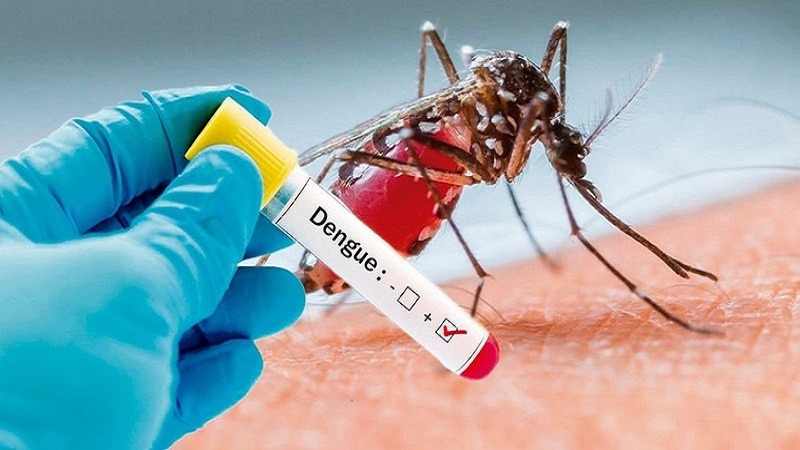
The United States Embassy in Nairobi issued a health alert on 3 August 2026 warning Americans about reported dengue activity in Kenya's coastal regions, Wajir and Garissa counties.
The alert followed a decision by the United States Centers for Disease Control and Prevention five days earlier to add Kenya to its Level 1 Global Dengue Travel Health Notice, making it the only African destination among the eleven locations named in that 30 July version of the notice.
The dengue health alert does not advise Americans to avoid Kenya.
What sits behind both notices is dengue transmission documented in Garissa and Wajir counties, in a part of the country where dengue surveillance and reporting remain limited.
The Lowest of Four Tiers
The CDC grades travel health notices on four levels. Kenya's listing sat at Level 1, the lowest, described as "Practice Usual Precautions." Level 2 asks travellers to take enhanced precautions, Level 3 asks them to reconsider non-essential travel, and Level 4 advises against all travel.
Kenya was included among destinations flagged because of higher-than-usual dengue activity or higher-than-expected dengue cases among United States travellers returning from those areas.
The practical instructions in the embassy alert are modest: use insect repellent registered with the United States Environmental Protection Agency, wear long-sleeved shirts and long trousers outdoors, and sleep in rooms that are air conditioned or fitted with window screens.
Alongside Kenya, the 30 July notice named Bolivia, Cambodia, Colombia, Malaysia, Maldives, New Caledonia, Samoa, Sri Lanka, Tonga and Vietnam.
The CDC notice itself does not impose Kenyan entry restrictions.
What the WHO Numbers Show
The detailed figures behind the listing come from the World Health Organization's Emergency Preparedness and Response weekly situation report for Kenya, covering the week of 5 to 12 July 2026.By that reporting period, cumulative reported cases across Garissa and Wajir counties had reached 1,679, comprising 60 PCR-confirmed cases, 547 rapid diagnostic test-positive cases and 1,072 suspected cases, along with five suspected deaths.
The figures cover Garissa and Wajir only; the WHO report reviewed here does not provide a case count for the coastal region named in the embassy alert.
Garissa accounts for the overwhelming majority of those cases.
A cumulative 1,583 reported cases have been recorded in the county, with all five suspected deaths, four in Garissa Township and one in Hagadera refugee camp.
The most recent Garissa case was reported on 9 June, with no new cases in the reporting week. WHO noted that the Garissa outbreak may be waning.
The upsurge had extended to Wajir, where active transmission was reported during the week. Wajir East accounted for 88 of the 96 reported Wajir cases, or about 92 percent, with the remaining cases spread across four other sub-counties.
The age profile of the Garissa cases is notable.
About 87 percent of reported cases were younger than 45, with the largest single group, 37 percent of the total, in the 25 to 44 age bracket. The WHO report does not establish why younger age groups made up most reported cases.
Five suspected deaths among the 1,679 reported cases across both counties give a crude suspected-death-to-reported-case ratio of about 0.3 percent.
This is not a confirmed case-fatality rate.
The deaths remain described as suspected, the case total includes different levels of diagnostic confirmation, and WHO notes that the vast majority of dengue infections globally are asymptomatic or mild and self-managed, meaning surveillance figures do not capture the full burden of infection.
Create a free account
Join Joseph Mmwa Media Group and be the first to know the world's biggest health and medical stories as they happen
Why the Coast Appears on a List the Data Does Not Cover
The embassy alert lists the coastal region alongside Garissa and Wajir, but the WHO report reviewed here does not provide a current coastal case count.Historical surveillance, however, documents previous dengue outbreaks on Kenya's coast, including episodes recorded in 1982 and in 2013 and 2014.
An initial 2021 outbreak report recorded 553 cases in Mombasa and Lamu during January through April of that year, with later reports documenting higher cumulative totals. CDC lists Kenya among countries with dengue risk, with risk levels that can vary by region.
A Daytime Mosquito and a Treatment Gap
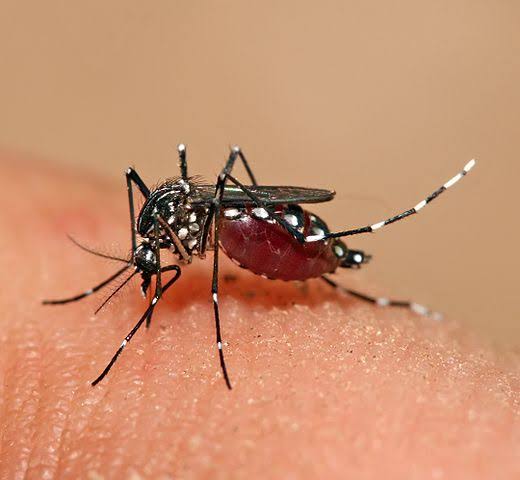
Dengue is transmitted primarily by infected female Aedes aegypti mosquitoes, although other Aedes species, including Aedes albopictus, can also contribute.It is primarily a daytime-biting mosquito, with peak biting often occurring in the morning and before dusk, and it breeds in water-holding containers around homes.
Because dengue mosquitoes are primarily active during the day, a bed net used only at night does not address daytime exposure. WHO recommends mosquito nets, ideally treated with insecticide, for people who sleep during the day.
When symptoms occur, they usually begin 4 to 10 days after infection and may include fever, severe headache, pain behind the eyes, muscle and joint pain, nausea and rash.
Most infections are asymptomatic or mild. A small proportion progress to severe dengue, where complications can become life-threatening without hospital care.
There is currently no specific antiviral treatment for dengue. Treatment is supportive and may include fluids, symptom control and close monitoring, with severe cases potentially requiring hospitalisation.
WHO recommends paracetamol for fever and pain and advises against aspirin and non-steroidal anti-inflammatory drugs such as ibuprofen because of bleeding risk.
Vaccination is not currently a routine or generally recommended option for travellers. One dengue vaccine, Qdenga, received WHO prequalification on 10 May 2024, with WHO announcing the decision on 15 May.
It is recommended as a two-dose course, three months apart, for children aged 6 to 16 in settings with high dengue transmission intensity.
WHO does not recommend its programmatic use in low to moderate transmission settings until additional evidence is available.
Qdenga is not licensed in the United States for travellers visiting dengue-endemic areas.
The older vaccine, Dengvaxia, is being discontinued by its manufacturer, Sanofi, because of low demand; remaining United States doses were expected to expire at the end of August 2026, and the vaccine was not available to ordinary travellers even before discontinuation.
One Listing Inside a Much Larger Global Picture
The Kenyan reported case total is small within global dengue.WHO recorded 2024 as the largest dengue year on record, with more than 14.6 million reported cases and over 12,000 dengue-related deaths across more than 100 countries.
Kenya's appearance as the only African destination on the 30 July notice should not be interpreted as evidence that dengue transmission is absent elsewhere in Africa.
CDC itself notes that not all countries with dengue transmission appear on the list, while WHO warns that dengue is under-reported where surveillance and reporting capacity are limited. Because dengue and malaria can both present with fever, limited dengue testing may complicate diagnosis in malaria-endemic settings.

Temperature affects the time dengue virus takes to develop inside mosquitoes, potentially altering how quickly infected mosquitoes become capable of transmitting the virus.
Urbanisation, population movement and water-storage practices are also among the factors WHO associates with dengue transmission and risk.
Where the Response Has to Start
The 30 July notice changes nothing about who may travel to Kenya.With no specific antiviral treatment available and vaccination not a broadly accessible option for most travellers or residents, the immediate response depends on vector control, eliminating mosquito breeding sites, safe water-storage practices, timely diagnosis and appropriate clinical management.
The WHO report reviewed here does not quantify current coastal cases. For the two northeastern counties where the outbreak has been documented, the data point to an upsurge that may be easing in Garissa while remaining active in Wajir.

Joseph Mmwa is a health and medical journalist covering breaking health news, medical research, vaccines, infectious diseases, and public health developments around the world.