Variant poliovirus detections in Africa fall by half in first half of 2026
New figures from the World Health Organization's Africa office show detections of variant poliovirus across the continent halved in the first six months of 2026 against the same period last year, even as three northern Nigerian states continue to account for most of the cases still being found
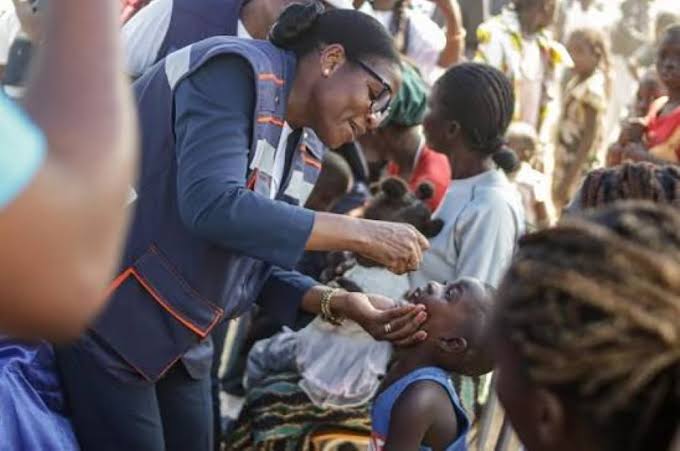
African health authorities detected half as much variant poliovirus in the first six months of 2026 as they did over the same period a year earlier.
The finding comes from the World Health Organization's Regional Office for Africa, based in Brazzaville, the capital of the Republic of the Congo, published on 22 July.
It covers all three types of variant poliovirus, the vaccine-derived form that can circulate where too few children have been vaccinated.
A fall measured in two ways
Variant poliovirus is not the wild virus that Africa was certified free of in 2020. It comes from the oral polio vaccine itself, which uses a weakened live virus.In communities with low immunization coverage, that weakened virus can circulate for prolonged periods and genetically change into a form capable of causing paralysis.
Its presence is therefore a marker of immunity gaps as much as a measure of the virus itself.
A drop in detections also depends on how hard countries are looking.
Nigeria's weekly polio report for week 30 of 2026 counted 719 wards, 8.1% of all wards in the country, as silent wards, meaning no suspected cases were being reported from them at all.
WHO attributes this partly to surveillance systems that need strengthening, not only to a genuine absence of virus.
Where the vaccinators went
Angola vaccinated more than nine million children under five across four campaigns in the first half of 2026, two national and two run jointly with Namibia and the Democratic Republic of the Congo along shared borders, according to WHO's Angola office.Angola subsequently held a national post-campaign evaluation workshop to review what worked and what needs to change.
Zambia began vaccinating after poliovirus turned up in a wastewater sample in Lusaka, its capital, earlier this year. The first round in April reached about 3.8 million children across six provinces, above the 3.7 million target, and two further rounds followed in June and July.
Progress in the east has been steadier still.
Kenya has reported no poliovirus cases since July 2024, Djibouti has recorded no detections of variant types 1 and 2 since May 2025, and Ethiopia cut its detections of those two types by 98% during 2025.
Nigeria carries what is left
Nigeria is where the remaining burden sits, and the picture there is narrow rather than nationwide.
The National Primary Health Care Development Agency told a meeting of northern traditional rulers in Abuja that 70% of detected poliovirus cases are concentrated in three states, Sokoto, Kebbi and Zamfara, where population immunity is low. In Sokoto, coverage with the injectable polio vaccine stands at 10%.
Create a free account
Join Joseph Mmwa Media Group and be the first to know the world's biggest health and medical stories as they happen
The agency also reported that variant type 2 cases had come down from 48 to 39 as of July 2026, while seven cases of variant type 3 had been detected and needed urgent attention.
An analysis of 121 confirmed cases showed why.
More than eight in ten of the children affected had never received a single routine childhood vaccine, and nine in ten had never had a routine dose of the injectable polio vaccine.
Nigeria records around eight million births a year, and about 2.1 million of those children go without any routine vaccine at all.
National coverage among children aged 12 to 23 months is estimated at 57%, but in northern Nigeria it falls to 41.5%.
The meeting was the second quarterly review of the Northern Traditional Leaders Committee, a body of emirs and chiefs who carry considerable influence over whether families accept vaccination, and it was attended by the federal health ministry, WHO, UNICEF, Rotary International and the Gates Foundation.
Its chairman, Alhaji Samaila Mera, the Emir of Argungu, said the responsibility of leaders was to ensure "no child is left unimmunized, no outbreak goes unreported".
Money arrives as attention drifts
Nigeria's Coordinating Minister of Health and Social Welfare, Dr Muhammad Ali Pate, told the meeting that a planned immunisation financing package worth 615 million US dollars is set for 2026 to 2030.
Of that, 515 million comes from Gavi, the international vaccine funding partnership, and 100 million from the federal government, intended for cold storage, vaccine delivery and frontline staff.
WHO lists shrinking resources alongside conflict, displacement, misinformation and other disease outbreaks as reasons vaccination teams still cannot reach every child.
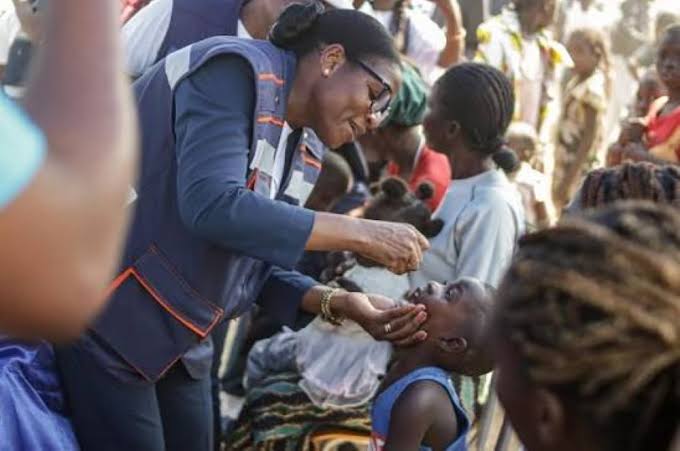
It is why the effort has gone looking for attention where it can find it. The Global Polio Eradication Initiative, the partnership of governments, WHO, UNICEF, Rotary International, the US Centers for Disease Control and Prevention, Gavi and the Gates Foundation, has run its Kick Out Polio campaign through the Women's Africa Cup of Nations in Morocco.
Eleven women footballers from Côte d'Ivoire, Cameroon and Nigeria have fronted it, asking African governments to hold their funding and political commitment steady.
Dr Marie Belizaire, WHO's Regional Emergency Director for Africa, described finishing the job as "an investment in the health, potential and future of an entire generation".
Halving detections in six months is real progress, but the virus is now concentrated among the children who have been missed the longest, and reaching them is the part that has never got easier.
Joseph Mmwa is a health and medical journalist covering breaking health news, medical research, vaccines, infectious diseases, and public health developments around the world.