West Nile Virus Spreads Through Six European Countries as WHO Urges Stronger Mosquito Surveillance
Rising West Nile virus activity is putting European health authorities on alert, with WHO calling for closer monitoring of mosquitoes and early detection of human infection
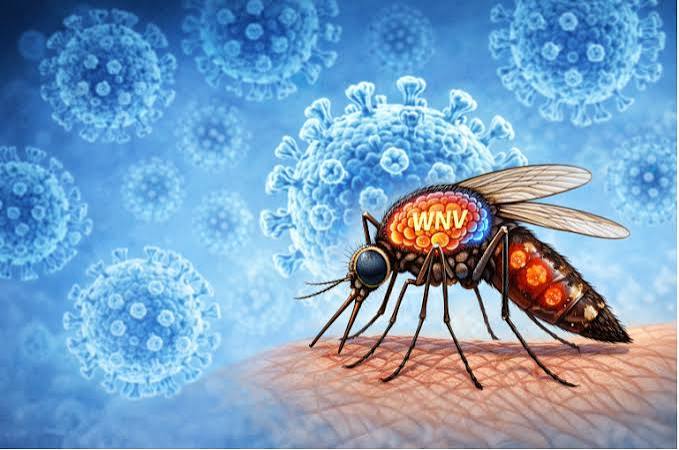
Health authorities across southern Europe have been asked to strengthen mosquito surveillance and public warnings as West Nile virus spreads through a widening list of regions, weeks before the season normally reaches its peak.
The request has come at a point in the calendar when transmission usually has months left to run.
The call was issued on 24 July 2026 by the WHO Regional Office for Europe, the World Health Organization's regional arm based in Copenhagen.
WHO stated that the risk to most people remains low, but that anyone living in or travelling to an affected area should take steps to avoid mosquito bites and learn the warning signs of severe illness.
Greece climbing fastest
Greece has recorded the steepest recent rise. National health authorities confirmed 21 human cases as of 22 July, and 14 of those were confirmed in the preceding week alone.What stands out is the severity. Twenty of the 21 patients developed neuroinvasive disease, meaning the infection reached the brain or the tissue surrounding the brain and spinal cord.
That includes encephalitis, which is swelling of the brain itself, and meningitis, which is swelling of the protective layers around it.
Thirteen patients remained in hospital at the time of the WHO update.
Italy has the widest geographic spread, with 21 confirmed cases reported across 17 separate areas as of 15 July. Locally acquired cases have also been confirmed in North Macedonia, Romania and Spain, with two in each country.
Surveillance from the European Centre for Disease Prevention and Control, the European Union agency that tracks infectious disease across the bloc, puts the spread in sharper focus.
As of 22 July, 35 areas across six European countries had been identified as affected: Italy with 20, Greece with six, Romania with four, North Macedonia and Spain with two each, and France with one.
No vaccine, no cure
There is no licensed vaccine for humans against West Nile virus and no medicine that attacks the virus directly.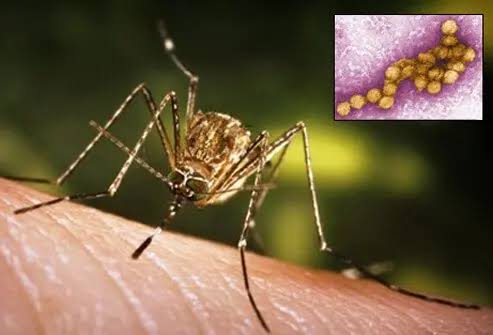
Treatment is limited to managing symptoms, with rest, fluids and pain relief for mild cases and hospital-based supportive care for severe ones.
That absence is why the WHO advice leans so heavily on prevention. Dr Hans Henri P. Kluge, WHO Regional Director for Europe, said the virus is not new but that the conditions driving its spread are changing rapidly.
He pointed to warmer temperatures and longer summers giving mosquitoes more time and more territory in which to transmit it.
Approximately 70 to 80 percent of infected people never develop any symptoms at all. Those who do may experience fever, headache, tiredness, body aches, nausea or vomiting, and sometimes a rash or swollen glands.
Create a free account
Join Joseph Mmwa Media Group and be the first to know the world's biggest health and medical stories as they happen
According to WHO, roughly one in every 150 people infected goes on to develop a severe infection of the central nervous system, which can be life-threatening.
Birds, bites and the rare exceptions
Mosquitoes pick up the virus by feeding on infected birds and pass it to people and other animals through bites.
Transmission has also been documented through organ transplantation, blood transfusion, pregnancy and breastfeeding, though rarely.
There has never been a recorded case of the virus passing between people through ordinary everyday contact.
What last season showed
The current numbers look small against last year. In 2025, 14 European countries reported 1,112 locally acquired human cases and 97 deaths by early December.
Italy alone accounted for 779 confirmed cases and 72 deaths, a fatality rate of 9.2 percent, with Greece next at 96 cases.
That annual total sat above the ten-year average of 758 cases, and infections in people peaked in August.
With the 2026 peak still ahead, the season's shape is not yet settled.
Both ECDC and the European Food Safety Authority have cautioned that reported case numbers almost certainly understate the true figure, because most infections cause no symptoms and because diagnosis and reporting run behind events.
An African virus with a European season
The virus is often reported as a European or North American problem, but its origins are African.It was first isolated in 1937 from a woman in the West Nile district of Uganda, and it is now the mosquito-borne virus with the widest geographic distribution in the world, present across parts of Africa, Asia, Europe, Oceania and the Americas.
Across sub-Saharan Africa the virus is considered endemic, yet the human burden there is poorly understood, largely because diagnostic testing is limited over large parts of the continent.
A rise in confirmed European cases therefore reflects both real transmission and the strength of European surveillance systems, a distinction worth holding on to when comparing regions.
Cutting the risk at home
WHO advises wearing light clothing that covers most of the body, limiting time outdoors at dawn and dusk when mosquitoes are most active, fitting screens on windows and doors, and using approved insect repellent according to the manufacturer's instructions.An adult should apply repellent to young children, keeping it away from their hands, eyes and mouth. Sleeping under a mosquito net or in a room with a fan or air conditioning lowers the risk further.
Clearing standing water matters just as much. Water sitting in pots, containers, discarded rubbish and uncovered storage tanks gives mosquitoes the breeding ground they need, and WHO recommends emptying and cleaning those containers regularly at both household and community level.
The agency advises anyone who develops a high fever, rash or neck stiffness after a mosquito bite to seek medical care without delay, and to mention recent travel to an affected area, since laboratory testing is the only way to confirm infection.

Joseph Mmwa is a health and medical journalist covering breaking health news, medical research, vaccines, infectious diseases, and public health developments around the world.