WHO Backs Zaire Ebola Vaccine Trial to Try Contain Accelerating Bundibugyo Outbreak in Congo
New expert advice from the World Health Organization recommends moving Ervebo, a vaccine licensed only against Zaire ebolavirus, straight into a late-stage study among contacts of confirmed cases in the Democratic Republic of the Congo, where Bundibugyo virus has reportedly infected more than 4,000 people
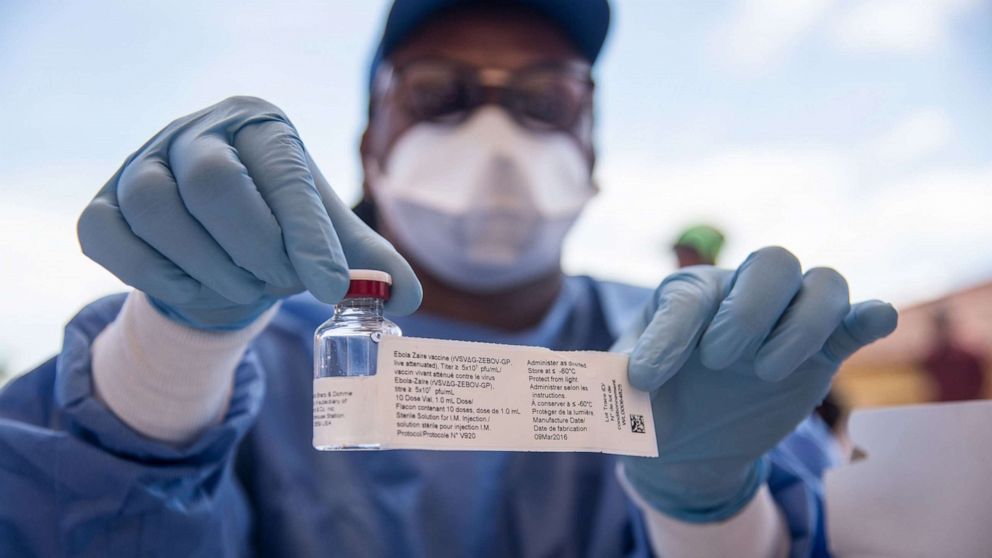
For nearly three months, the response to the Ebola epidemic in the Democratic Republic of the Congo has been shaped by one hard fact: the vaccine sitting in the global stockpile was built for a different
species of the virus. That calculation has now shifted, though not as far as the headlines suggest.
The World Health Organization's Technical Advisory Group on Candidate Vaccine Prioritization, an independent expert panel convened specifically for this outbreak, met on 31 July 2026 and recommended that Ervebo be prioritized for inclusion in a Phase 3 research study while the epidemic is still running, without a preceding Phase 2 evaluation.
The recommendation was published on 7 August, alongside a meeting report setting out the evidence behind it.
The panel was careful about its wording.
It recommended vaccination inside a controlled study. It did not recommend a vaccination campaign, and no trial has yet been registered, ethically approved or begun.
One Genus, Six Species, One Licensed Shot
Ebola is not a single virus.The genus Orthoebolavirus contains six known species, and the outbreak spreading through north-eastern Congo is caused by Orthoebolavirus bundibugyoense, commonly called Bundibugyo virus.
It has caused only two previously recognised outbreaks, the first in western Uganda in 2007 and 2008 and the second in Isiro, in what is now Haut-Uele province of Congo, in 2012.
WHO puts case fatality in those two events at approximately 30 to 50 percent.
Two vaccine regimens are licensed or authorised against Ebola in the jurisdictions that matter here, and both are indicated for Zaire ebolavirus disease only.
Ervebo, a single-dose vaccine made by Merck, and the two-dose combination of Zabdeno and Mvabea from a Johnson & Johnson subsidiary. Both were developed against the species responsible for the 2014 to 2016 West African epidemic.
The two regimens use different viral-vector platforms and different dosing schedules, but both are designed to generate immunity to the surface glycoprotein of Zaire ebolavirus.
Bundibugyo virus carries a different version of that protein. Protection against one species cannot be assumed to extend to the other, which is why a licence for one does not cover the other.
The Rings, Not the Region
The question of who would actually receive the vaccine has a specific answer.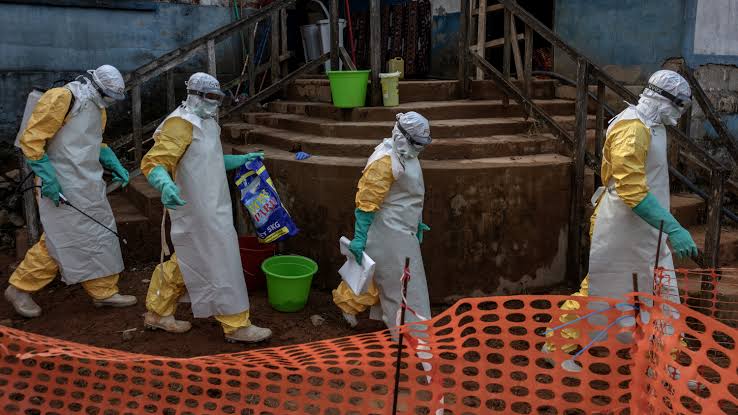
A WHO spokesperson told Agence France-Presse that the proposed study would be a ring trial in Congo, meaning vaccination is offered to the circle of people around each confirmed case: household members, caregivers, health workers who treated the patient, and the contacts of those contacts.
Final eligibility will depend on a protocol that has not been published.
Ring vaccination is not new to this vaccine.
It is the design that produced the pivotal efficacy evidence for Ervebo during the 2015 Guinea outbreak, and Gavi, the Vaccine Alliance says the global stockpile has since supported four campaigns against Zaire ebolavirus outbreaks in Congo, most recently in September 2025, when more than 47,000 people were rapidly vaccinated.
What is new is that this time the vaccine would be given to find out whether it works at all against the species in circulation.
Gavi says roughly 55,000 frontline workers in Ituri and North Kivu have already received Ervebo through earlier preventive campaigns aimed at Zaire ebolavirus, meaning part of the health workforce in the affected provinces already carries some exposure to the vaccine.
What the Animals Showed
The panel's shift was driven by laboratory and animal data that accumulated in the weeks after its May meetings.One small study found that three of four non-human primates vaccinated with Ervebo survived a Bundibugyo challenge, compared with one of four unvaccinated control animals.
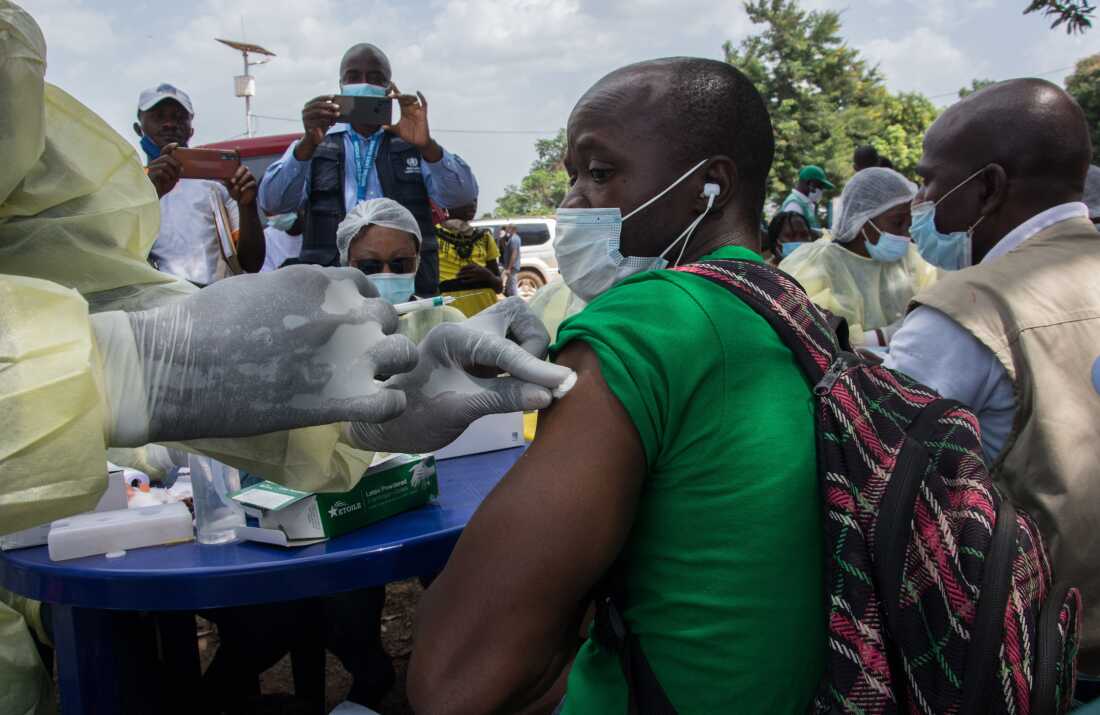
A second, still unpublished, tested a research-grade version of Ervebo in ferrets and reported complete protection, while every control animal died within ten days.
These are very small numbers. Four animals in a treatment group is a signal, not a finding, and the ferret work has not been published or peer reviewed. Neither study says anything directly about people.
Antibodies Are Not Protection
Separately, a research letter in the New England Journal of Medicine examined stored blood from 179 adults and children in West Africa who had been vaccinated during an earlier trial.Their serum was tested for antibodies recognising Bundibugyo virus at 28 days and three months after vaccination.
The antibodies were there.
They were also substantially weaker. Three months after a single dose of Ervebo, the antibody response against Bundibugyo was roughly eight times lower than the response against Zaire ebolavirus.
For the two-dose regimen, the reported gap was around sixfold.
This distinction matters more than any other in the story.
Measuring antibodies in stored blood shows that the immune system produced something that binds to the virus.
It does not show that vaccinated people are less likely to become infected, less likely to become severely ill, or less likely to die.
The authors state plainly that they did not assess protection against Bundibugyo disease. Only giving the vaccine to people at genuine risk of exposure and counting what happens can answer that, which is what the recommended study is designed to do.
A Deliberately Lowered Bar
The panel set expectations unusually low in public.It cautioned that efficacy against symptomatic disease and transmission may not be high, while protection against a fatal outcome may be achievable.
That is an expectation about what a trial might find, not an effect that has been observed.
The claim is narrow, and important. A vaccine that does not prevent infection but reduces the chance of dying would still be worth having in this epidemic.
It would not, however, break chains of transmission, which is what a ring strategy normally aims to do.
On safety, the panel was unanimous that studying Ervebo in case contacts raises no additional concerns, based on its existing regulatory status and on its administration to hundreds of thousands of people across Africa.
That is a judgement about the vaccine's established safety record, not a finding about its use against Bundibugyo virus.
Create a free account
Join Joseph Mmwa Media Group and be the first to know the world's biggest health and medical stories as they happen
An Epidemic Outpacing the Response
The recommendation arrives as the outbreak grows. WHO recorded 2,124 confirmed cases and 828 deaths in Congo as of 15 July.Congolese government data reported by news agencies on 7 August put confirmed cases at 4,053 with 1,850 deaths. Cases therefore roughly doubled in three weeks.
Deaths represented about 46 percent of reported confirmed cases, a provisional reporting ratio rather than a settled case fatality rate, since cases counted today include patients whose outcome is not yet known.
The climb from the outbreak's early weeks is steeper still. The United States Centers for Disease Control and Prevention recorded 378 confirmed cases and 63 confirmed deaths across both affected countries as of 2 June.
AFP reported that around 87 percent of cases were in Ituri province in the north-east, with a further 11 percent in neighbouring North Kivu.
Government data cited by Reuters places the outbreak across five provinces in eastern Congo, with Tshopo among them at seven confirmed cases.
One figure bears directly on whether a ring trial can work. Congolese authorities say that between 60 and 70 percent of new cases are being recorded outside the contacts already under monitoring.
A ring strategy depends on identifying the circle around each confirmed case and reaching it quickly. If most transmission is happening beyond those circles, the rings will capture a shrinking share of the epidemic, whatever the vaccine does inside them.
WHO Director-General Tedros Adhanom Ghebreyesus warned, in remarks reported by AFP, that the virus was spreading faster than the response could keep pace with.
Uganda Closed Its Books, and Changed the Rules
The contrast across the border is stark.Uganda declared its own outbreak on 15 May after confirming cases imported from Congo, recorded 20 confirmed cases with two deaths and 18 recoveries, and declared the outbreak over on 28 July.
Fifteen of those infections were imported and five were acquired locally, mainly among health workers who cared for the imported patients.
How that closure was reached is worth attention.
The standard for declaring an Ebola outbreak over is 42 days without a new confirmed case, equivalent to two maximum incubation periods. Uganda's Ministry of Health counted that window from 16 June, the discharge of the last locally transmitted Ugandan patient.
WHO's own record notes that the most recent patient in the country was discharged on 16 July after two negative tests, which places the declaration twelve days after that discharge rather than 42.
The Ministry addressed the point openly.
It argued that where an outbreak arises from a fully documented importation event, and epidemiological closure has been conclusively demonstrated through surveillance, sequencing and contact tracing, a fixed time interval may no longer be the only defensible basis for concluding that transmission has ended.
That is a proposal to revise a long-standing global standard, made by a country with genuine expertise in filovirus response, while the source epidemic next door is still expanding.
Uganda's own health ministry has urged continued vigilance on exactly those grounds.
The virus has also reached well beyond the region.
Two United States citizens working in Congo were medically evacuated to Germany for treatment, the second confirmed by German authorities on 13 July, and France reported an imported case on 24 June.
A Boat, a Death and a Test That Was Never Taken
The anxiety now reaching well beyond the east was captured in early August, when Congolese authorities intercepted a passenger vessel at Maluku, roughly 65 kilometres upstream from Kinshasa.A 32-year-old man who had travelled aboard had disembarked while ill in Pimu, in Mongala province, and later died with symptoms consistent with Ebola.
He was never tested.
A provincial health ministry report obtained by Reuters recorded that no biological sample was collected, because the facility treating him had no testing kits.
Seven passengers on the boat who developed fever and other symptoms were tested and all returned negative results, and Dr Jean Kaseya, Director-General of the Africa Centres for Disease Control and Prevention, said the capital had no confirmed case.
The episode resolved without a confirmed infection, but it prompted authorities to order screening of all boats arriving in Kinshasa, a city of more than 17 million people.
It also illustrated the gap the response keeps running into. A death that could not be classified either way, in a facility without the means to test, on a river route where journeys take weeks and communication is limited, is precisely the kind of event that keeps the true size of this outbreak uncertain.
The outbreak in both countries was declared a public health emergency of international concern on 17 May 2026.
Gavi describes it as the largest Ebola outbreak in Congo's history and warns it could become the largest ever recorded; news agencies place it second only to the 2014 to 2016 West African epidemic, which recorded more than 28,000 cases and around 11,000 deaths.
In Congo it is being fought in provinces where armed conflict and weak health infrastructure have obstructed detection and case management for years. Diagnosis has been a particular obstacle, because field tests were built around other Ebola species; WHO added the first molecular test specific to Bundibugyo virus to its Emergency Use Listing on 2 July.
Doses Already on Congolese Soil
Supply is not the constraint. Gavi maintains a global Ebola vaccine stockpile of 500,000 Ervebo doses, with some stock permanently pre-positioned in Congo given how often outbreaks occur there. Decisions on its use are governed by the Interagency Coordination Group on Vaccine Provision, which brings together WHO, the United Nations Children's Fund, the International Federation of Red Cross and Red Crescent Societies and Médecins Sans Frontières, with Gavi as an observer.Doses from that stockpile are expected to be made available for the trial. Gavi says lower-income countries eligible for its support receive stockpile doses at no cost, along with financing for the vaccination activity itself, while other countries reimburse Gavi.
Dr Sania Nishtar, Chief Executive Officer of Gavi, said the outbreak is already the largest in Congo's history and could well become the largest ever, and that the alliance is encouraged that Ervebo could help reduce severe illness and deaths.
The Right Vaccine Is Still in the Queue
None of this changes the panel's central position, which it restated: a vaccine designed specifically against Bundibugyo virus remains the preferred option for controlling this outbreak.
According to the panel's report as relayed by AFP, two Bundibugyo-specific candidates are in early-stage human trials and a third is being developed toward that point. Gavi has committed 40 million United States dollars from its First Response Fund to accelerate access to those candidates for investigational use and eventually toward WHO prequalification.
The gap between that ambition and the current epidemic curve is the problem. Early-stage trials take time that an outbreak adding hundreds of cases a week does not offer, which is the practical reason a partially matched, fully licensed vaccine with a decade of safety data has become the fastest thing available to test.
For countries across the region, the result will shape what is on hand if Bundibugyo virus crosses another border again.
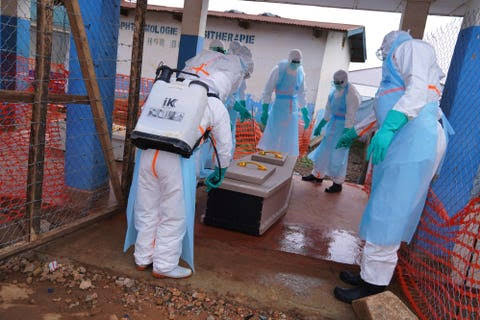
Uganda contained its outbreak without a vaccine, using surveillance, sequencing and contact tracing against a small and fully traceable importation. Congo is facing something different in kind, and South Sudan, Rwanda and Burundi are watching a source epidemic that has not slowed.
A positive finding could support consideration of Ervebo as an additional outbreak-response tool, subject to regulatory and public health decisions that would still take time.
A negative one would leave the response with the measures it has relied on throughout: early diagnosis, isolation and clinical care, infection prevention and control, contact tracing and monitoring, community engagement, and safe and dignified burials.
Until the study reports, the honest position is that no vaccine has been shown in any human efficacy or effectiveness study to prevent Bundibugyo virus disease or death, and the evidence supporting the one about to be tested comes from animals and laboratory assays rather than from people at risk.

Joseph Mmwa is a health and medical journalist covering breaking health news, medical research, vaccines, infectious diseases, and public health developments around the world.