WHO unveils new plan to tackle noma, a devastating disease affecting vulnerable children in Africa
New WHO guidance sets out how countries should detect, treat and track noma, a fast-spreading facial gangrene that has killed up to nine in ten untreated children in the past, and its arrival now gives health workers on the ground a clear roadmap for a disease that has gone largely unmeasured and unmanaged for decades
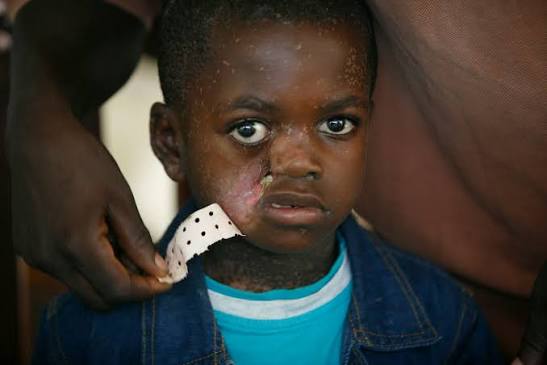
A new roadmap for an old, ignored disease
The World Health Organization has published its first dedicated technical guidance on controlling noma, a disease that eats away at the mouth and face of severely malnourished children.
The Noma Control Technical Brief, released in July 2026, tells national health ministries how to find cases, treat them, and fold noma care into health systems that already exist.
WHO's Regional Office for Africa and its Geneva headquarters are walking countries through the guidance in an online session on 17 August 2026.
The brief matters because noma has almost no dedicated infrastructure behind it anywhere.
It sets out monitoring indicators, strategic interventions and targets for 2030, giving countries a shared standard for the first time.
What noma actually is
Noma, also called cancrum oris or gangrenous stomatitis, starts as ordinary-looking gum inflammation.Within days it can turn into acute necrotizing gingivitis, a rapidly worsening infection of the gums, and from there it can tear through the soft tissue, muscle and bone of the face.
It is not contagious. Nobody catches noma from another person; it takes hold when a child's body is already overwhelmed by malnutrition, untreated infection or a weakened immune system.
WHO stages the disease in five steps, from stage 0 (simple gum inflammation) through acute gingivitis, swelling and gangrene, to the scarring and lasting damage, called sequelae, that follow in survivors.
There is still no quick test for it. Diagnosis depends entirely on a health worker recognising the signs early, before the disease reaches its most destructive stage.
Who it strikes, and where
Noma mainly affects children between two and six years old who are malnourished, living in extreme poverty, recovering from another infection, or immune-compromised.It can also affect adults with conditions such as HIV or leukaemia that weaken the immune system.
Most reported cases come from an area of sub-Saharan Africa known as the noma belt, stretching from Mauritania in the west to Ethiopia in the east.
But the disease is not confined there. Since the early 2000s, more than 13,000 cases have turned up in scientific literature from countries across Africa outside that belt, as well as in Asia, the Americas, the Middle East and Europe.
A burden nobody has properly measured
WHO's only global estimate of how many children get noma is nearly three decades old.It comes from 1998 and puts the number at roughly 140,000 new cases a year, with about 770,000 people living with the disease's after-effects at the time, and a case-fatality rate of 90 percent. ,
WHO itself now says that estimate has serious limitations and that the true scale of noma today is unknown.
Create a free account
Join Joseph Mmwa Media Group and be the first to know the world's biggest health and medical stories as they happen
Newer evidence suggests the real death rate is lower than 90 percent, mainly because early treatment works.
The gap exists because noma is hard to count.
It moves fast, kills quickly when untreated, and often goes unrecognised by health workers and caregivers who have never been trained to spot it.
Weak surveillance systems in the countries most affected make the problem worse.
The part that can be stopped
Noma is treatable, and cheaply, if it is caught in time.WHO says antibiotics that are already widely available, basic oral hygiene, a disinfectant mouthwash and nutritional support are usually enough to stop the disease at its early stages, before any lasting damage is done.
Once it reaches the gangrene stage, the outlook changes completely. Children who survive that point are usually left with severe facial disfigurement and lasting difficulty eating, speaking or breathing.
Many need complex reconstructive surgery, sometimes over several operations, and face social stigma and isolation that follow them long after the infection itself is gone.
From forgotten disease to official priority
Noma became WHO's 21st officially recognised neglected tropical disease in December 2023, after the organisation's Strategic and Technical Advisory Group for Neglected Tropical Diseases recommended it be added to the list.
Neglected tropical diseases, or NTDs, are a group of conditions that share a common thread: they mostly strike the poorest communities on earth and get a fraction of the global research funding and attention that other diseases receive.
The recognition followed years of advocacy. In 2012, the United Nations Human Rights Council had already found that the neglect surrounding noma could amount to a violation of children's basic rights.
WHO formally listed the disease in 2023, its Director-General framed it as a symptom of extreme poverty and malnutrition rather than simply a medical condition, one that reflects how little support reaches the world's most vulnerable children.
Why the new brief changes the picture
Being named an NTD opened the door to WHO's road map for neglected tropical diseases 2021 to 2030, the strategic plan that coordinates funding, research and country action against this group of diseases.
The new technical brief is the first document translating that inclusion into practical steps: how to design, run and monitor noma programmes on the ground, and how to build noma prevention into health systems that already exist rather than creating a separate parallel structure.
For families in the countries most affected, mostly across sub-Saharan Africa, the practical test will be whether frontline health workers actually get trained to recognise the early gum inflammation that signals noma, and whether the antibiotics and nutritional support needed to stop it reach clinics that often have neither.
The guidance gives governments a common standard to work toward by 2030. Whether it reaches the children who need it will depend on how it is funded and applied.

Joseph Mmwa is a health and medical journalist covering breaking health news, medical research, vaccines, infectious diseases, and public health developments around the world.