Kenya has buried its first Ebola patient behind tight security, under special rules meant to stop the virus spreading from his body, while health teams race to find and watch everyone who may have been exposed to him.
Citizen Digital reported on 8 October that Health Cabinet Secretary Aden Duale said 66 people had been accounted for and placed in quarantine at the National Police Service Hospital in Nairobi, Kenya's capital, and that the number was still rising.
The World Health Organization says Ebola spreads through the body fluids of an infected person, alive or dead, most often while someone is caring for a patient or touching the body of someone who has died.
Mourners who have direct contact with bodies at funerals are among those at higher risk, WHO said.
In West Africa's outbreak of 2014 to 2016, funerals were an important source of infection, NTV Kenya reported, citing a 2015 study by the US Centers for Disease Control and Prevention.
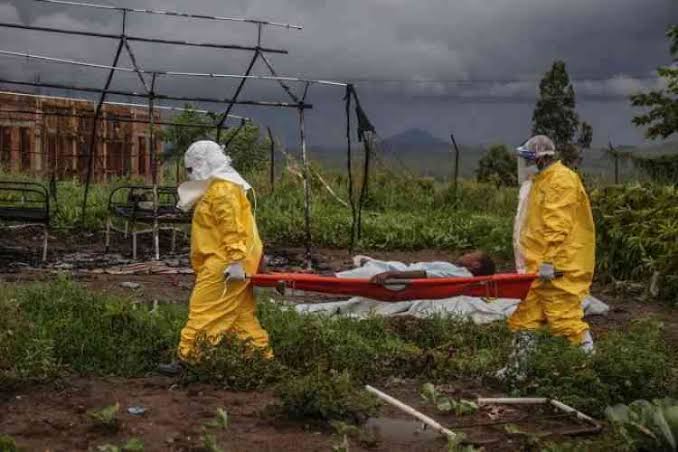
WHO's answer is a "safe and dignified burial", in which families do not wash or prepare the body and trained teams carry out the burial in line with the family's wishes.
Patrick Amoth, Kenya's Director General for Health, told Nation that every Ebola death should get this kind of burial.
A Ministry of Health official, speaking anonymously to the same newsroom, described the steps.
A trained ministry official cleans and disinfects the body, which is wrapped in several layers and never viewed or touched by relatives, and the burial should ideally happen within 24 hours.
Only the body and the driver travel in the vehicle, a few relatives may watch from a distance, and the grave must be at least six feet deep.
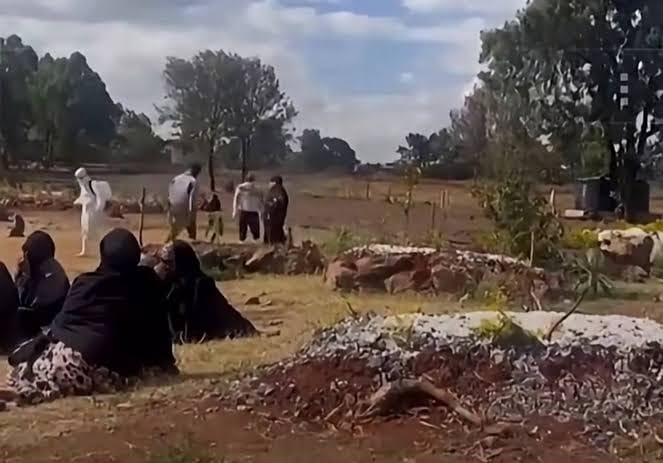
NTV Kenya, part of Nation Media Group, said the vehicle reached Langata Cemetery in Nairobi at about 2:30pm on Tuesday 6 October.
Mourners wore masks and stood back from the grave, and a fire burned beside it to destroy materials that had touched the body.
People Daily's account said a worker in a full protective suit later disinfected the grave and the red car that had carried the patient from the airport to hospital, then removed his protective gear layer by layer and burned it.
Duale said Kenyan media would not be allowed at the burial site, calling it part of public health safety protocols, People Daily reported.
NTV Kenya said men who had tried to record the burial were removed.
The Eastleigh Voice, in a report by Lucy Mumbi on 7 October, said some practices seen at the cemetery appeared to differ from WHO's burial guidance.
It pointed to the protective gear worn, the size of the burial team, the disposal of equipment and the family's agreement beforehand.
It said it was unclear whether Kenya followed the WHO protocol in full or added measures of its own.
SUPPORT INDEPENDENT JOURNALISM
Help keep health journalism independent
I report and explain important health and medical stories independently, with accuracy, context and African relevance. Your support helps me continue this work.
WHO's Africa office said in a 6 October release that the patient was buried that day in line with the country's Ebola safe and dignified burial protocol.
That release does not say how the burial was checked.
The ministry's reply to the Eastleigh Voice questions was not found in the reports reviewed, and none of them linked the burial to any infection.
In Ituri Province in eastern Congo, WHO said on 8 October, more than 10,000 such burials had been carried out by 27 September.
Health teams there met mistrust early on, and in some cases bodies were dug up so relatives could carry out their own rites.
WHO said the patient fell ill in Congo, travelled by road to Kampala, Uganda's capital, through the town of Beni on 2 October, and flew to Nairobi on 3 October.
Duale said he had lived in Congo for seven years, and Citizen Digital gave his age as 40.
NTV Kenya's coverage said he went through routine health screening when his flight landed at Jomo Kenyatta International Airport, Nairobi's main airport, at 1:10pm.
WHO said he was taken to hospital and quickly isolated, and that two Kenyan laboratories confirmed Bundibugyo virus, one of the Ebola strains.
He died on the night of 5 October.
The Associated Press said it is still unclear how he crossed from Congo into Uganda, which had closed its border with Congo. WHO said Uganda ended its latest outbreak in August 2026.
The ministry listed 28 contacts, including relatives and the health workers who treated him, and was tracing 27 more people from his flight, 55 in all, as JosephMmwa.com reported on 6 October.
The Kenya News Agency, the government's news agency, said the total reached 57 on 7 October, with ten in quarantine.
In his 8 October remarks Duale again gave 57 as the number identified, and the reports reviewed did not explain why 66 people were by then accounted for in quarantine.
WHO says contacts are monitored for 21 days after exposure, because symptoms can appear anywhere from two to 21 days after infection.
Duale has said Kenya faces one imported case, not an outbreak, the ministry said on 7 October.
A man suspected of Ebola in Wajir, in northern Kenya, tested negative, county authorities said, according to the Eastleigh Voice.
The ministry statements reviewed, up to 9 October, did not announce a second confirmed case.
Sources and Credits:Brenda Wanga, Citizen Digital, 8 October 2026; Lucy Mumbi, The Eastleigh Voice, 7 October 2026; Mabonga Makhanu, People Daily, 7 October 2026; Hellen Shikanda and Ngina Kirori, NTV Kenya, 7 October 2026; WHO Regional Office for Africa, 6 and 8 October 2026; World Health Organization, Ebola disease Q&A, 11 December 2025; Kenya News Agency, 7 October 2026; Associated Press, 6 October 2026; Kenya Ministry of Health, 6 and 7 October 2026
.jpeg)