The Court of Appeal has explained why it lifted the orders that had stopped Kenya's health deal with the United States, and the deal can now go ahead while the legal fight over it continues.
In a ruling dated 9 October, the court set aside the High Court's 19 December 2025 ruling and the orders that came with it, until the government's intended appeal is heard and decided, Kenyans.co.ke and Court Helicopter reported.
The Court of Appeal is the court that hears challenges to High Court decisions.
The orders it set aside were conservatory orders, which are temporary orders that freeze something until a case is decided.
The judges said public interest "favours the implementation of the programme pending hearing of the appeal," The Star reported on 13 October.
The agreement is a five-year health cooperation framework.
The US State Department described it as a US$2.5 billion framework under which the United States plans to provide up to US$1.6 billion for HIV/AIDS, TB, malaria, mother and child health, polio, disease surveillance and outbreak response.
Kenya pledged to raise its own health spending by US$850 million over the same five years, to take on more of the cost as US support falls.
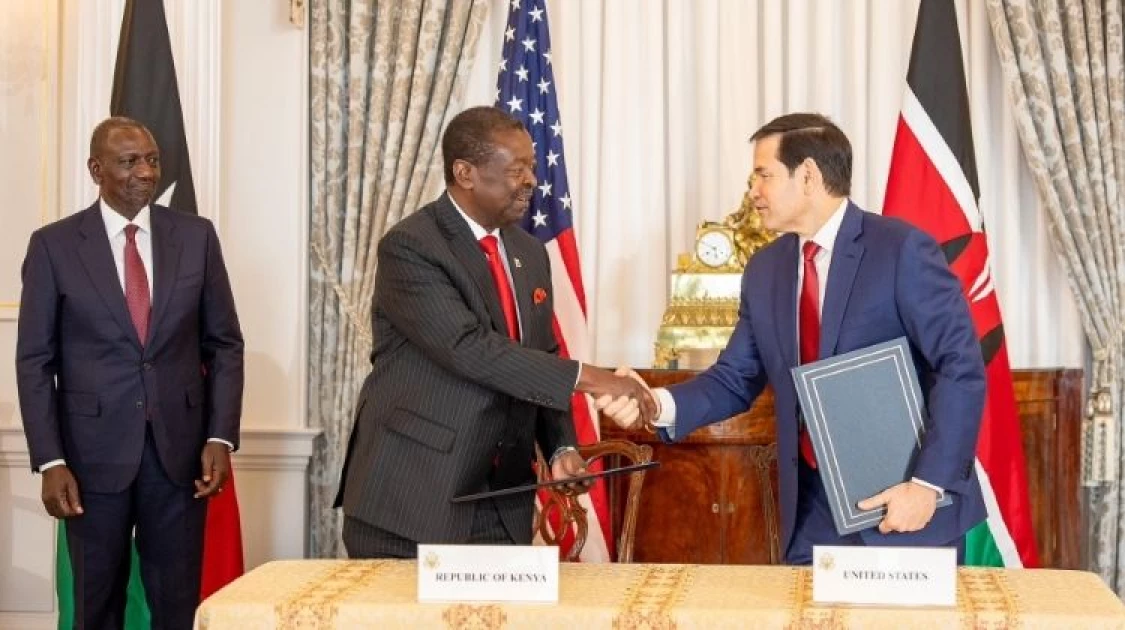
The two governments signed it in Washington on 4 December 2025, with President William Ruto witnessing the signing.
A first, narrower High Court order, reported on 11 December, stopped the deal only as far as it involved sharing health data, Citizen Digital reported.
On 19 December, the High Court stopped the agreement in its entirety until a petition by Busia Senator Okiya Omtatah was heard, Citizen Digital reported.
The Court of Appeal first paused the High Court orders on 12 May 2026.
It said it would give its detailed reasons on 30 October, Capital FM reported.
The ruling now reported is dated 9 October.
The government announced plans in the meantime.
On 8 June, Treasury Principal Secretary Chris Kiptoo said Kenya and the United States had agreed how to carry out the programme, Kenyans.co.ke reported.
The plan covers disease surveillance and outbreak response, laboratories, health supplies, the transition of frontline health workers and digital health systems.
On 30 June, the Cabinet said the framework would help bring more than 13,000 frontline health workers now supported by the United States gradually into Kenya's public health workforce, The Star reported.
On 15 July, the two governments signed a five-year grant agreement formally launching the framework, KBC reported.
The Attorney General, the government's chief legal adviser, and the Health Cabinet Secretary asked the court to pause the High Court orders.
The judges found that their intended appeal raises two arguable points, Citizen Digital reported.
The first is about how the High Court handled the case.
The government argued that the freeze application was heard on a day set only for directions, before a formal hearing date was given and without adequate notice to the government.
SUPPORT INDEPENDENT JOURNALISM
Help keep health journalism independent
I report and explain important health and medical stories independently, with accuracy, context and African relevance. Your support helps me continue this work.
The judges recorded that the case was indeed heard on a directions day, and said whether the High Court was right to go ahead is an arguable point.
The second is the sub judice rule, which says a court should not take up an issue that another court is already hearing.
The government said similar issues had been raised in Nairobi High Court Petition No. E806 of 2025. .
The judges said this could not be ignored, noting that conservatory orders appeared to have been issued in that other petition.
Finding these points arguable is not a finding that the government will win.
The government told the court that about 1.4 million Kenyans depend on medicines and health support linked to the framework, The Star reported.
The judges' own reasoning cited the same figure, Eastleigh Voice reported. The reports do not show how the number was counted.
The government also argued that a freeze could disrupt immunisation, staffing, service delivery and medical supplies.
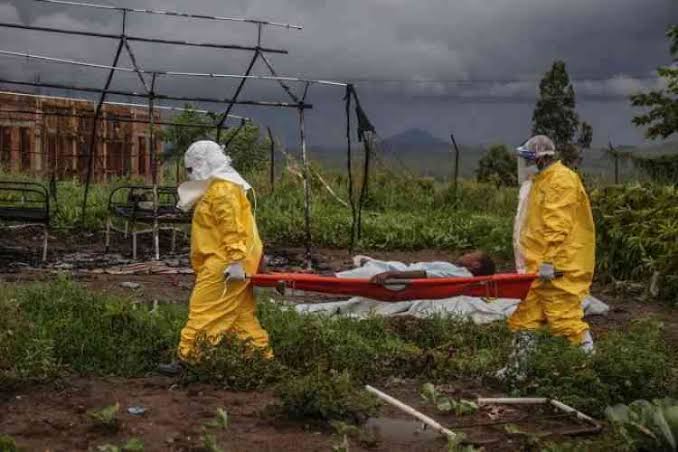
It warned that interrupting HIV and TB treatment could lead to drug resistance, which can make later treatment harder.
The judges said the lives of people on HIV, TB and malaria treatment under the framework risked being harmed beyond repair, and that some "even risk losing their lives," The Star reported.
They also said that if the money set aside for the framework were redirected before the appeal was decided, a government win would leave nothing to carry out, which would make the appeal pointless, Citizen Digital reported.
These are risks the court weighed. The reports do not show that any treatment has been interrupted.
Omtatah opposed the application.
He argued that carrying out the framework before the constitutional questions are settled could undermine fundamental rights and public accountability.
He raised concerns about data protection, privacy, public finance, devolution and Parliament's role in approving international agreements that create binding obligations and financial commitments.
He argued that the framework could violate seven articles of the Constitution. He also questioned whether a data protection impact assessment had been done before the agreement was signed, The Star reported.
The reports reviewed do not say whether one was done.
The Katiba Institute, also a respondent in the case, argued that constitutional safeguards and parliamentary oversight could not be sacrificed for speed in delivering health services.
The respondents further argued that the government had already increased its own funding to cover possible shortfalls in outside health financing, Citizen Digital reported.
The government's position, as the Cabinet put it on 30 June, is that the framework sustains cooperation against HIV, malaria, TB and emerging infectious diseases while moving Kenya towards a more self-reliant health system.
The Court of Appeal did not rule on whether the agreement is constitutional.
The judges observed that the framework had not been declared unconstitutional, and that the High Court had only stopped its implementation until that question is decided, The Star reported.
They left those questions to the intended appeal or to the main petition still before the High Court.
The reports reviewed do not say what would happen to money spent or health data shared in the meantime if the framework is later found unlawful.
.jpeg)