.jpeg)
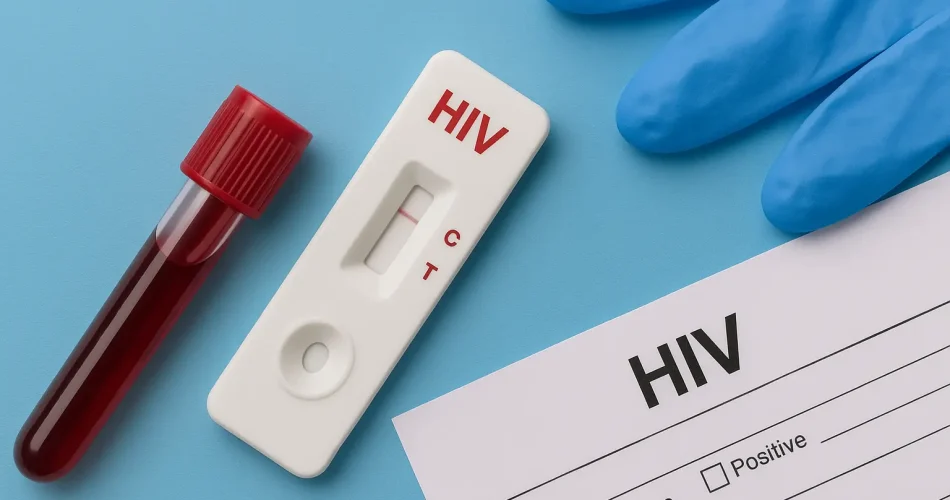
Conditions not classed as signs of advanced HIV are making up a growing share of hospital admissions for people living with HIV at a major hospital in Bogotá, Colombia, a new study has found.
According to a study published in PLOS ONE on 30 September 2026, the fall in admissions for advanced HIV illness is a positive trend that may partly reflect better HIV care in Colombia, the authors say.
Even so, patients admitted with the severe illnesses that mark advanced HIV stayed far longer and were more likely to die.
Tuberculosis became the leading cause among those illnesses in the period after the COVID-19 pandemic.
The research was carried out by a team at Hospital Universitario San Ignacio, a university hospital in Bogotá that receives referrals from other clinics, working with colleagues from the University of Cincinnati in the United States.
PLOS ONE is a peer reviewed journal.
Looking back at 872 admissions
The team reviewed hospital records of 584 adults with HIV (human immunodeficiency virus) who were admitted between January 2018 and June 2024.
Some people were admitted more than once, which brought the total to 872 admissions.
Half of the admissions involved people aged 34 or younger, and about nine in ten involved men.
Each admission was sorted by its main cause into two groups.
The first holds the illnesses that appear when HIV has badly weakened the body's defences, which doctors call AIDS defining illnesses, AIDS being short for acquired immunodeficiency syndrome.
The second holds everything else. The researchers also compared three periods: before, during and after the COVID-19 pandemic.
The last period was the shortest, with 164 admissions, so its figures rest on a smaller base.
Still the biggest cause, but losing ground
Advanced HIV illnesses remained the single biggest cause of admission across the study, at 38.2%.
Taken together, though, all the other conditions made up about six in ten admissions.
Their share climbed from 55.3% before the pandemic, to 63.1% during it, to 70.1% afterwards.
Put the other way, advanced HIV illnesses fell from 44.7% to 29.9%.
The study measured shares of admissions, not how often people with HIV were hospitalised.
It therefore cannot say whether admissions for other conditions actually rose, only that they now make up a bigger slice.
Many of the other admissions were ordinary infections.
About one in three of all admissions were for infections not tied to advanced HIV, making them the second largest group after advanced HIV illnesses.
Stomach and gut infections were the most common, followed by pneumonia.
The authors note that in Europe and the United States, such admissions more often involve heart disease and cancers unrelated to AIDS.
The Bogotá figures sit between two reference points the authors cite.
Earlier studies of hospitals in Medellín, another Colombian city, put advanced HIV illnesses at roughly 55% to 66% of admissions.
In North America and western Europe, the authors report a figure of under 15% to 30%.
The sickest patients, the longest stays
Half of those admitted with advanced HIV illnesses stayed 14 days or more, while half of the other patients stayed 6 days or more.
About 11 in 100 of them needed intensive care, compared with about 4 in 100 of the others.
Nearly 9 in 100 died within 30 days, compared with fewer than 3 in 100.
Across all patients, 4.8% died within 30 days.