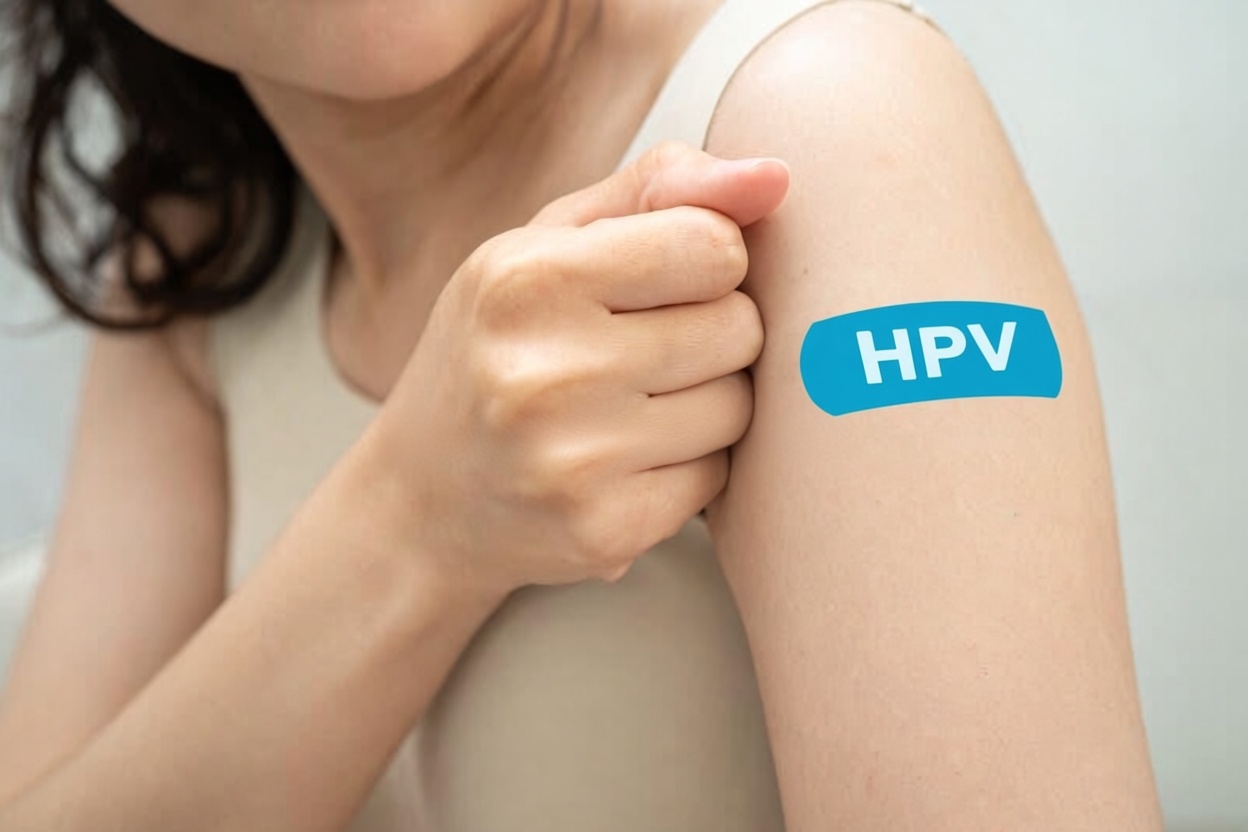
Medical experts in the United States are discussing whether one dose of the HPV vaccine, instead of the two now recommended, could be enough to protect young people against HPV, the virus that causes most cervical cancers, The Associated Press reported on 26 September 2026.
No change has been made yet.
Mike Stobbe, who wrote the AP report, said federal officials and doctors' groups have clashed over vaccine advice and even gone to court against each other in the past year.
Both sides, he reported, have nonetheless been looking at revising the HPV guidance.
HPV, short for human papillomavirus, is the most common sexually transmitted infection in the United States, according to the AP.
More than 40 types can infect the genital area and the lining of the mouth and throat.
Figures from the US Centers for Disease Control and Prevention (CDC), cited by the AP, put HPV-linked cancers at nearly 50,000 cases a year in the country.
The same figures attribute about 90% of cervical and anal cancers to the virus.
The US approved the first HPV vaccine, Merck's Gardasil, in 2006, and a second, GlaxoSmithKline's Cervarix, in 2009, the AP reported.
Children aged 11 and 12 are the priority group because the vaccines work best before someone is exposed to HPV.
The schedule has already been cut once. HPV vaccination began in 2006 for girls only, as three shots over six months.
Boys were added in 2011.
Ten years ago, officials cut the recommendation to two doses after studies showed two were enough, the AP said.
Since then, according to the AP, studies in several countries have shown sharp drops in infections, genital warts and precancerous changes in the cervix.
Angela Ulrich, who led a University of Minnesota Vaccine Integrity Project review of the evidence, told the AP that people now in their 20s, 30s and 40s are still showing protection.
The idea of a single shot gained attention after a trial in Costa Rica called ESCUDDO, published in the New England Journal of Medicine in December 2025.
The AP summarised the study as finding about 97% protection against the HPV infections that cause most cervical cancers.
The published trial measured something narrower.
Cancer takes years to develop, so the researchers counted persistent infection of the cervix and vagina with HPV, which an accompanying editorial by Ruanne Barnabas described as an established surrogate marker for most cervical cancer.
SUPPORT INDEPENDENT JOURNALISM
Help keep health journalism independent
I report and explain important health and medical stories independently, with accuracy, context and African relevance. Your support helps me continue this work.
The trial randomly gave 20,330 girls aged 12 to 16 either one or two doses of Cervarix or Gardasil 9.
According to the National Cancer Institute (NCI), which conducted the trial with Costa Rican researchers, one dose was not inferior to two doses in preventing the HPV infections that cause most cervical cancers.
The paper reported vaccine effectiveness of at least 97% against persistent HPV16 or HPV18 infection in each of the four vaccine groups.
Separately, the trial found that one dose was not inferior to two doses.
Five years of follow-up is the longest period this trial reports, so it cannot show how long one dose lasts.
An earlier NCI trial in Costa Rica suggested protection against infection from one dose of Cervarix lasted over a decade, according to the ESCUDDO design paper.
In January, the US Department of Health and Human Services and CDC moved to reduce the recommended HPV vaccine schedule from two doses to one, as part of a wider change to the childhood vaccine schedule, the AP reported.
A federal judge's order blocked that change.
Experts had been weighing the idea for some time, the AP said.
In 2024, a CDC advisory committee set up a work group to explore a revised recommendation, but the work stopped when Health Secretary Robert F. Kennedy Jr. dismissed the committee's members.
The American Academy of Pediatrics, one of the groups that sued Kennedy, writes its own recommendations.
Dr. James Campbell, who chairs its infectious diseases committee, told the AP the group is looking at whether one dose is enough for at least some people, and at what age vaccination should start.
Jason Schwartz, a Yale University vaccine policy researcher, called a move to one dose "a significant shift" from what doctors have long told families, the AP reported.
About 63% of US teenagers were up to date with their HPV vaccination in 2025, and CDC data showed coverage had not increased for the fourth consecutive year.
A recent CDC report linked part of the gap to most states not requiring the shot for school.
Dr. Scott Hadland, who treats young people at a Boston clinic, told the AP some of his patients say the HPV shot hurts more than other vaccines, but only for a moment.
The World Health Organization (WHO) has also pointed to low coverage as a reason to simplify the schedule.
Its vaccine advisory group said in April 2022 that one dose gives solid protection comparable to two or three, and that countries may use a one-dose schedule as an option for girls aged 9 to 14 and young women aged 15 to 20.
The AP did not report a date for any US decision.
.jpeg)