.jpeg&w=3840&q=75)
TB Preventive Treatment Linked to 61% Lower TB Risk and 45% Lower Death Risk in People With HIV
The study analysed health records from more than 235,000 people living with HIV across six high-TB-burden countries, including Kenya
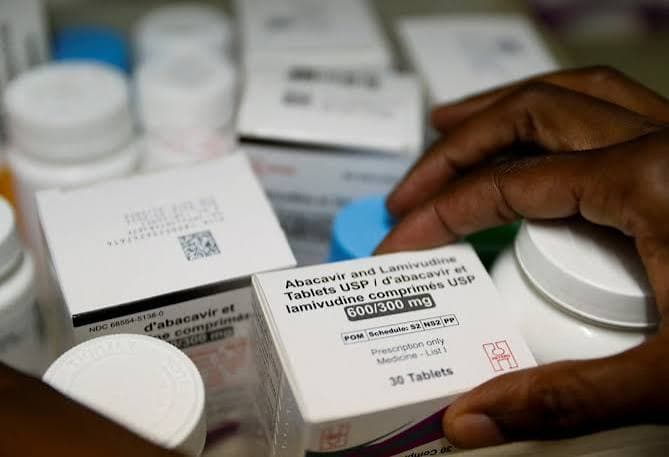
Photo:Reuters(File)
For people living with HIV, tuberculosis is often the danger that arrives quietly, taking hold in an immune system already under strain, long before it is ever diagnosed.
New evidence drawn from more than 230,000 people across six countries suggests a decades-old, low-cost course of pills can cut that danger by more than half, and cut the risk of dying by nearly as much.
The findings come from the PROTECT study, published in The Lancet HIV on August 17, 2026, led by researchers from Emory University's Rollins School of Public Health working with health ministries and the US Centers for Disease Control and Prevention in Haiti, Kenya, Nigeria, Uganda, Ukraine and Zimbabwe.
The researchers tracked people with HIV from the moment they started antiretroviral therapy (ART), the daily medication that keeps HIV under control, to see what happened to those who also received tuberculosis preventive treatment (TPT), compared with those who did not.
People who started TPT within eight weeks of entering HIV care had a 61% lower chance of developing active tuberculosis, and a 45% lower chance of dying from any cause, than those who never received it, the researchers reported.
Why tuberculosis still matters this much
Tuberculosis is preventable and curable, yet it remains the world's leading infectious killer, the World Health Organization reported in its 2024 global tuberculosis report, recording 10.7 million new cases and 1.2 million deaths worldwide that year.
Among people with HIV specifically, TB accounts for roughly a quarter of all AIDS-related deaths, the Joint United Nations Programme on HIV/AIDS (UNAIDS) said in its 2025 global update, despite two decades of expanded access to ART, which suppresses the virus and helps the immune system recover.
TPT works by treating latent (dormant) TB infection before it develops into active, contagious disease.
In this study, TPT mainly meant a six-month course of isoniazid, an inexpensive antibiotic. The WHO included it in its guidance for people with HIV as far back as 2011, the PROTECT researchers noted.
What the numbers actually show
Researchers pulled de-identified electronic health records for 235,424 people newly starting ART: 69,936 in Haiti, 65,936 in Uganda, 57,851 in Ukraine, 24,099 in Zimbabwe, 9,549 in Kenya and 8,053 in Nigeria.
During follow-up of up to two years, TB was diagnosed in 851 people in Haiti, 178 in Kenya, 19 in Nigeria, 775 in Uganda, 1,741 in Ukraine and 235 in Zimbabwe.
Deaths from any cause ranged from 28 in Nigeria to 3,607 in Ukraine.
Country by country, the reduction in TB risk associated with early TPT ranged from 65% in Haiti to 40% in Kenya.
The reduction in death risk ranged from a high of 75% in Uganda to about 31% in Zimbabwe.
It was protective everywhere, though the size of the benefit varied more for deaths than for TB cases, which researchers attribute to the many other things besides TB that can cause death in this population.
Because researchers cannot ethically or practically run a new randomised trial forcing some patients to skip TPT, they used a method called target trial emulation.
In simple terms, this means they analysed routine hospital records as if they had run a controlled trial, using statistical weighting to make the TPT and no-TPT groups more comparable on age, sex, CD4 count, viral load and other factors.
This approach is designed to reduce a well-known bias in this kind of research: patients who survive long enough to receive a treatment can look artificially "protected" simply because they lived long enough to get it.
It does not, however, fully replace a randomised trial, and some influence from unmeasured differences between patients cannot be ruled out.
Create a free account
Join Joseph Mmwa and be the first to know the world's biggest health and medical stories as they happen
How this compares with earlier evidence
The PROTECT researchers noted, in their review of the existing evidence, that clinical trials conducted mostly early in the HIV epidemic had already shown TPT cutting TB risk by 32% to 62% among people with HIV.
One of those, the Temprano ANRS 12136 trial in Côte d'Ivoire, reported a 46% drop in deaths among participants who received TPT, according to results published in The Lancet Global Health in 2017.
The PROTECT team also pointed to a smaller observational study of 4,706 people with HIV across 14 ART centres in southern India, which found even larger reductions, 87% for TB and 94% for deaths, sustained over five years.
The PROTECT researchers said their study is the largest of its kind to test whether these benefits hold up in ordinary clinics, in the current era where all people with HIV start ART immediately regardless of CD4 count, and where newer drugs such as dolutegravir have become the standard regimen.
The protective effect held steady across children under 15, people at earlier stages of HIV disease, and those on dolutegravir-based treatment, addressing earlier concerns that dolutegravir might interact badly with TB prevention drugs.
A separate trial, published in Lancet HIV in 2025 by the DOLPHIN-TOO study team, found the two treatments could safely be started together.
Started early, worked better
TPT was most effective when begun within two weeks of entering HIV care rather than eight weeks, though meaningful protection remained even with the longer delay.
In practice, though, uptake within that eight-week window varied widely, from 11% of patients in Uganda to 69% in Haiti, pointing to gaps in how consistently TB prevention is being rolled out even where the benefit is well established.
By 2023, more than 13 million people with HIV had received at least one course of TPT through the US President's Emergency Plan for AIDS Relief (PEPFAR), which funds much of the HIV care infrastructure across the six study countries, according to a 2024 update published in the CDC's Morbidity and Mortality Weekly Report.
The PROTECT researchers said continued funding for this kind of programme delivery, amid current global funding pressures, will determine whether these gains are sustained.
What the study could not tell us
The researchers relied on hospital records that were sometimes incomplete.
They also could not confirm whether patients actually completed their TPT course, only whether they started it, meaning the true benefit of finishing treatment could be even larger than what was measured.
Nigeria's sample was too small to draw firm country-specific conclusions, though its results pointed in the same protective direction as the other five countries.
The study also only evaluated the older six-month isoniazid regimen; shorter three-month regimens, now becoming more widely available, were not assessed.
The study was funded by the Gates Foundation, which the authors say had no role in data collection, analysis or the decision to publish.
Sources: Shah NS, Mishara F, Zissette S, et al. Programmatic effectiveness of tuberculosis preventive treatment for people with HIV in six high-tuberculosis-burden countries (PROTECT): a prospective cohort study and meta-analysis. Lancet HIV. 2026. doi:10.1016/S2352-3018(26)00140-2 WHO. Global tuberculosis report 2024. Geneva: World Health Organization, 2024. Joint United Nations Programme on HIV/AIDS. AIDS, crisis and the power to transform: UNAIDS Global AIDS Update 2025. Geneva: UNAIDS, 2025. Badje A, Moh R, Gabillard D, et al, and the Temprano ANRS 12136 Study Group. Effect of isoniazid preventive therapy on risk of death in west African, HIV-infected adults with high CD4 cell counts: long-term follow-up of the Temprano ANRS 12136 trial. Lancet Glob Health. 2017;5:e1080-89. Weld ED, Beattie T, Moodley J, et al, and the DOLPHIN-TOO Study Team. Simultaneous initiation of dolutegravir-based antiretroviral therapy and once-weekly rifapentine and isoniazid for tuberculosis prevention in antiretroviral-naive people with HIV: an open-label, non-randomised, phase 1/2 trial. Lancet HIV. 2025;12:e428-39. Ajiboye AS, O'Connor S, Smith JP, et al. Tuberculosis preventive treatment update, US President's Emergency Plan for AIDS Relief, 36 Countries, 2016-23. MMWR Morb Mortal Wkly Rep. 2024;73:233-38.

Related Stories
Chile Becomes First South American Country to Eliminate Dog-Transmitted Rabies, WHO Confirms

Measles Eradication Impossible Due to Vaccine Hesitancy in Wealthy Nations, Bill Gates Says
WHO Unveils 2026–2030 Strategy to Reduce Childhood Cancer Medicine Shortages
New TB Vaccines Could Save 7.3 Million Lives by 2050, Gavi Says
Comments
Be the first to comment.