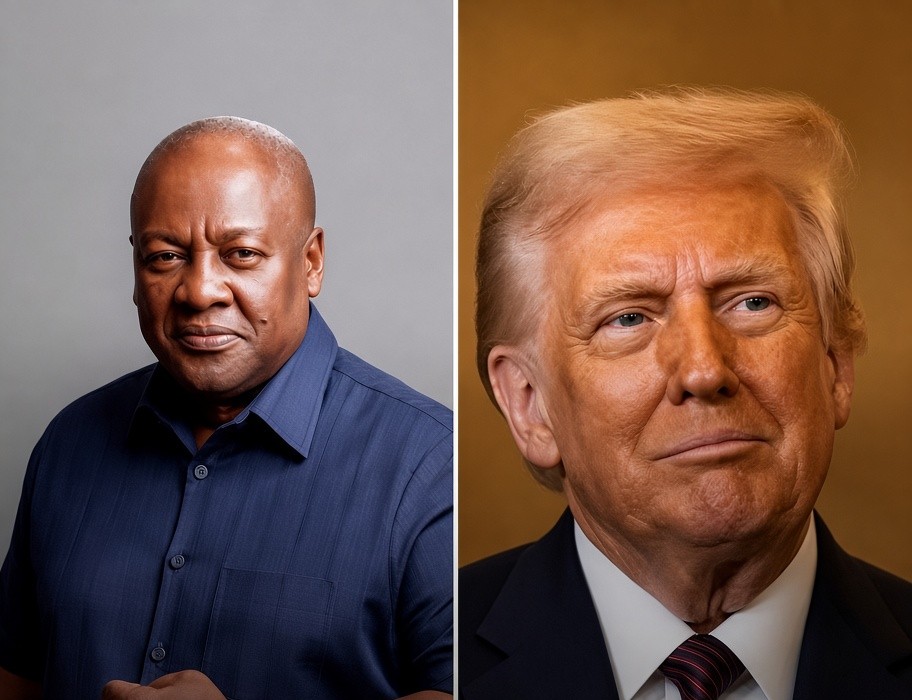
Months after Ghana said no, the United States has asked to sit down again over a health aid agreement, President John Mahama says.
Mahama made the disclosure at a citizens' engagement in Goaso, in the Ahafo Region, on 10 October, Citi Newsroom reported.
"There is room for further discussions," he said.
The Ghana News Agency reported that he told the gathering Washington wanted the agreement reviewed so that terms Ghana disliked could be changed or removed.
The reports reviewed did not include a US confirmation of the approach.
In this case, a compact is a formal agreement between the two governments.
It would have given Ghana about $109 million in US health funding over five years, Reuters reported on 28 April, citing a source familiar with the talks.
The two sides began negotiating in November 2025, according to the same report.
GBC Ghana Online reported that Mahama said the compact was meant to replace health funding Ghana lost when US support through USAID, the US government's aid agency, ended.
Reuters reported that the US spent $96 million on health in Ghana in 2024, citing government foreign assistance data.
Spread over five years, $109 million works out to about $22 million a year.
That is a simple division of the five-year total, not a reported annual figure.
The two numbers are also not a like-for-like comparison, because the 2024 figure covers all US health spending that year and the compact had its own terms.
Reuters also reported that it was unclear how much Ghana would have paid.
GBC reported that Mahama said Ghana was expected to put in an amount of its own money. None of the reports seen gave the figure.
The Associated Press reported on 1 May that Arnold Kavaarpuo, executive director of Ghana's Data Protection Commission, said the deal included provisions that would have let US entities reach sensitive health data without necessary safeguards.
Mahama gave more detail at the Council on Foreign Relations in New York on 25 September, GBC reported.
He said the Health Ministry reviewed the text, and MyJoyOnline reported that it sent an information paper to Cabinet.
He said the agreement required Ghana to hand over its pathogen profile, which he explained relates to diseases found in the country, and its medical records.
"Who takes another country's medical records?" he asked.
The Associated Press reported that Mahama also said Ghana would have had no right to inspect medicines or medical products brought into the country under the deal.
SUPPORT INDEPENDENT JOURNALISM
Help keep health journalism independent
I report and explain important health and medical stories independently, with accuracy, context and African relevance. Your support helps me continue this work.
Citi Newsroom reported that Ghana saw some of the conditions as humiliating and as a threat to its sovereignty.
These are Mahama's descriptions of the draft.
None of the reports seen published the text itself.
Ghana is not the only country that balked.
The Associated Press reported that Zimbabwe turned down a similar deal in February, partly over data and specimen-sharing requirements.
On 6 October it reported that the US had announced it ended all health assistance to Zimbabwe in September.
The reports reviewed do not say the US has announced a comparable step for Ghana.
Zambia went the other way.
The Associated Press reported that Health Minister Roma Chilengi said the US would provide about $1.5 billion over five years.
He said clauses requiring specimens and individual health data to be shared had been removed.
The BBC reported that Zambia signed the agreement on 8 October.
The Associated Press reported that the US has already signed deals with at least nine African countries that require them to send health data and specimens within five days of a request.
The US says it can then give them to up to 10 American "non-government entities" to develop diagnostics and treatments, AP reported, and the entities are not specified.
According to AP's reading of the agreements, they say the information helps track diseases with epidemic potential.
AP reported that they do not guarantee the country that supplied the data would benefit from any treatments developed.
The Associated Press also reported that the agreements aim to have African countries gradually raise their own health spending while the US phases out its aid.
Reuters reported that by late April the US State Department had signed 32 agreements under its "America First Global Health Strategy."
The reports reviewed did not give a date for the Ghana talks or a programme-by-programme breakdown of the $109 million.
The State Department told Reuters in April, in response to questions about the earlier negotiations, that it does not disclose details of bilateral negotiations.
Mahama said Ghana would remain firm in protecting its sovereign rights, Citi Newsroom reported.
Sources:Akosua Otchere, Citi Newsroom, 10 October 2026; Iddi Yire, Ghana News Agency, 10 October 2026; Ashiadey Dotse, GBC Ghana Online, 29 September 2026; MyJoyOnline, October 2026; Reuters, 28 April 2026; The Associated Press, 1 May 2026; Jacob Zimba and Gerald Imray, The Associated Press, 6 October 2026; BBC, October 2026
.jpeg)