.jpeg)
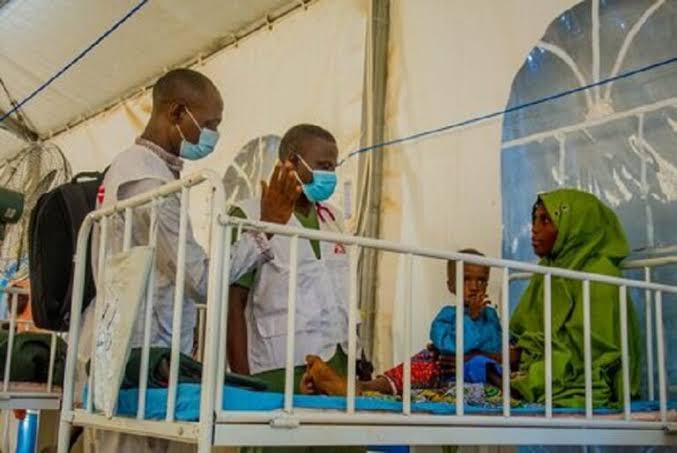
Plateau State, in north-central Nigeria, has recorded 31 deaths in a suspected diphtheria outbreak, with 469 suspected cases across 10 of its 17 local government areas, the state government said.
Only three of the 469 suspected cases have been confirmed by laboratory testing. Diphtheria can be fatal in around 30 per cent of unvaccinated people who do not receive proper treatment, according to the World Health Organization (WHO).
Jos North has recorded 370 of the 469 suspected cases, or about 79 per cent, according to a breakdown published by Channels Television, a Nigerian television news network.
Plateau Commissioner for Health Nicholas Ba’amlong gave the figures at a press briefing in Jos on September 24.
Ba’amlong said sporadic suspected cases had been recorded since the beginning of the year and that the situation became a major public health concern in August, Vanguard, a Nigerian national newspaper, reported.
The disease behind the deaths
Diphtheria is a bacterial disease that mainly affects the upper respiratory tract. Its toxin can damage the heart and nerves.
WHO says routine immunisation is the most effective way to prevent the disease and that protection requires multiple doses and boosters.
The disease can spread through respiratory droplets, including when an infected person coughs or sneezes, according to WHO's Eastern Mediterranean office.
Deaths counted, few cases confirmed
Ba’amlong said on September 1 that the state was struggling to confirm cases because it lacked specialised containers needed to collect and transport samples to laboratories.
He also cited late arrival at hospitals and difficulty obtaining diphtheria antitoxin as challenges, The ICIR, a Nigerian investigative journalism organisation, reported.
Only three of the 469 suspected cases have been laboratory-confirmed.
The state has not published a breakdown showing how the remaining suspected cases have been classified.
How the count has climbed
On September 1, Ba’amlong put the number of suspected cases at 143 and deaths at 23, according to The ICIR.
On September 9, The Frontier, a Nigerian news outlet, citing Daily Trust, reported that the state epidemiologist had put suspected cases at 303, up from 149, while deaths had risen from 23 to 27.
By September 24, the state was reporting 469 suspected cases and 31 deaths.
The 303 cases reported on September 9 were more than double the 143 reported on September 1.
Cases then increased by 166 between September 9 and September 24, while reported deaths rose by four.
Channels Television reported that the state had intensified active case searches and contact tracing, which can identify additional cases that had previously gone undetected.
The other nine areas
On September 9, the state epidemiologist said 99 per cent of the cases were in Jos North and identified the Rikkos community as one of the worst affected areas.
By September 24, the official breakdown showed 99 suspected cases across the other nine affected local government areas.
Wase had 29, Jos South 22, Barkin Ladi 16, Mangu 16, Pankshin five, Kanam four, Mikang four, Shendam two and Bassa one.
Ba’amlong said children aged two to 14 were the most affected and more likely to develop severe forms of the disease, Vanguard reported.