The United States has told its citizens to reconsider travel to Kenya, moving the country up one step on its warning scale because of health risks as Ebola cases rise in Nairobi.
The change, issued by the U.S. Department of State on 19 October 2026, comes with a long list of advice for Americans who still go, and with rules for passengers arriving in Kenya from affected countries.
A step up the scale
The State Department rates every country on four levels: exercise normal precautions, exercise increased caution, reconsider travel, and do not travel.
Kenya was at Level 2 when the department last updated the advisory, on 28 July.
On 19 October it moved to Level 3, and the department's record of the change says the level rose because of health risks.
The advisory's wording covers more than Ebola.
It asks Americans to reconsider travel to Kenya because of health, crime, kidnapping, terrorism, unrest and traffic safety.
All six labels were already on the page in July, so what changed on 19 October was the level, not the list.
The advisory's health summary points to the Ebola outbreak that began in the Democratic Republic of Congo (DRC), and it links to a separate travel health notice from the Centers for Disease Control and Prevention (CDC), America's public health agency.
The cases behind the decision
Kenya's cases begin with a Kenyan man who had been living in the DRC.
Kenya's health ministry said he was 40 years old and travelled from Buta, a city in the north-west of the DRC, through Kampala, Uganda's capital, to Nairobi, Kenya's capital.
He died in a Nairobi hospital on 5 October, and Kenya confirmed on 6 October that he had Ebola caused by the Bundibugyo virus, a rare form of the disease.
The United States Embassy in Nairobi issued a health alert the next day.
Seven more cases followed among people close to him.
On 17 October the ministry confirmed four new cases, among them three health workers who had treated him and another relative.
By 18 October the count reached eight, after a hospital attendant who cleaned utensils and linens for the patient tested positive.
Patrick Amoth, Kenya's Director General for Health, said the attendant was likely exposed to the first patient.
All eight cases trace back to that first patient, and the ministry has said there is no evidence of spread in the wider community.
Officials identified 130 contacts of the first patient, and 128 of them have been traced and placed in quarantine, with two still being sought.
What the advisory says about care
Much of the health language is about what happens if an American falls ill in Kenya, from any cause.
The advisory says medical services are limited and often unavailable in rural areas, and that many facilities lack enough medicine and equipment.
Only a few private hospitals in large cities have stronger capability, it says, so many health problems may require evacuation at the patient's own expense.
Its health guidance gives a fuller picture of the capital.
It says medical services in Nairobi are adequate for most conditions and emergencies, and that appropriate treatment is typically available only in or near the major cities of Nairobi, Mombasa and Kisumu, because first responders generally cannot reach areas outside them.
It also warns about money.
Hospitals usually ask for payment up front and may refuse service until it is made, the advisory says, and the U.S. government does not pay medical bills.
It strongly recommends insurance that covers medical evacuation.
What Americans who still go are asked to do
Level 3 is guidance to American citizens, not a ban.
For those who decide to travel anyway, the advisory lists steps that include enrolling in the Smart Traveler Enrollment Program, which sends alerts and lets the government contact travellers in an emergency, monitoring local media, and having a plan to leave that does not depend on U.S. government help.
New rules for arriving passengers
The advisory also describes what Kenya requires of people arriving from affected countries.
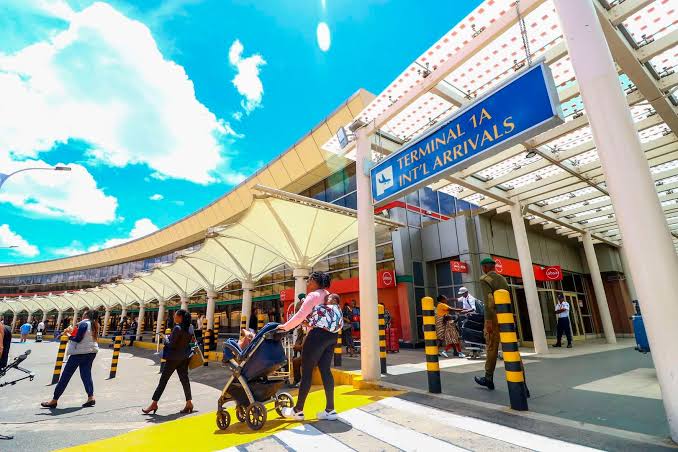
It says travellers from the DRC, South Sudan or Uganda should contact their airlines or the U.S. Embassy in Nairobi about possible requirements or entry restrictions.
Travellers from those three countries, and from seven others it lists as elevated risk, which are Angola, Burundi, Ethiopia, Rwanda, Somalia, Tanzania and Zambia, must complete an electronic health form before getting off the plane and may face temperature checks.
Before the first case was confirmed, Kenya's health ministry said it had screened more than 652,000 travellers since the regional outbreak began and tested 267 samples.
Warnings that have nothing to do with Ebola
Much of the advisory ties its caution to crime, kidnapping, terrorism and unrest, not to Ebola.
It says violent crime, including armed carjacking, mugging and home invasion, can occur at any time.
Demonstrations are common and can turn violent, it says, mostly in Nairobi and western Kenya, and road accidents are one of the main causes of injury and death of Americans in Kenya.
At the highest level, do not travel for any reason, the advisory lists the Nairobi neighbourhoods of Eastleigh and Kibera because of crime and kidnapping, and several northern and coastal counties, among them Garissa, Wajir, Mandera and Lamu, because of kidnapping and terrorism.
It also lists West Pokot County and western Turkana County because of crime, and parts of Marsabit and Turkana counties near the border with Ethiopia because of unrest.
The advisory reflects the position on 19 October, with eight confirmed Ebola cases linked to a single patient, and the State Department can change the level as the case count, the contact tracing and the wider regional outbreak develop.