.jpeg)
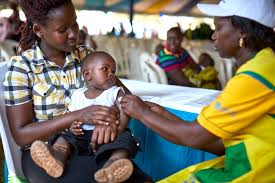
The World Health Organization (WHO) is rolling out a digital platform that is meant to help vaccination campaigns find the communities they miss, starting with seven pilot countries.
WHO's Regional Office for Africa, based in Brazzaville, the capital of the Republic of Congo, announced the three-year project in a news release on 25 September 2026.
The project is called the DIGIT Health Campaign Data Digitization Project. WHO said the DIGIT platform gives countries one shared system for planning, managing and monitoring vaccination campaigns, in place of fragmented tools that cannot share information with each other.
WHO described it as open, modular and interoperable, which in plain terms means it is built so that different parts can be added and so that it can work with other systems.
Maps to show who is being missed
WHO said a key feature of DIGIT is mapping.
The system will bring location information together with campaign data, which WHO said will help countries with microplanning, identify underserved populations and monitor implementation in real time.
Microplanning is the detailed local planning of where health workers go and whom they must reach.
Underserved populations are groups of people the health system is not serving well.
Monitoring in real time means seeing where a campaign is reaching communities and where gaps remain while the work is still going on, not weeks later.
WHO said the combination will let teams "better understand where interventions are reaching communities and where gaps remain."
The release describes these as aims. It did not say whether the mapping was used in the one pilot held so far, or what it found.
Why campaigns run on separate tracks
Dr Benido Impouma, Director of the Universal Health Coverage/Communicable and Noncommunicable Diseases Cluster at WHO's Regional Office for Africa, said in the release:
"Health campaigns are some of the most important approaches for delivering preventive interventions to populations not easily reached by routine services. Currently, they are still largely planned and delivered vertically across programmes.
This platform complements the WHO Regional Office for Africa's broader work to strengthen integrated health campaign planning and implementation across programmes."
In plain terms, "vertically" means each disease programme plans and runs its own campaign, with its own tools and its own data.
WHO said countries in the region have made important progress in digital health over the past decade, but that gaps remain in planning complex campaigns, especially when several health measures, partners and data systems have to be coordinated at once.
Who is behind it
The project is led jointly by two parts of WHO's Africa office, its Polio Eradication Programme and its Health Promotion, Disease Prevention and Control Cluster.
They work with the eGov Foundation, the key implementing partner, and have support from the Gates Foundation.