.jpeg&w=3840&q=75)
The World Moves Closer to Deciding Who Gets Vaccines First in the Next Pandemic
PABS could help countries avoid the mistakes of COVID-19 by setting rules to ensure vaccines and treatments are shared faster and more fairly when the next pandemic strikes
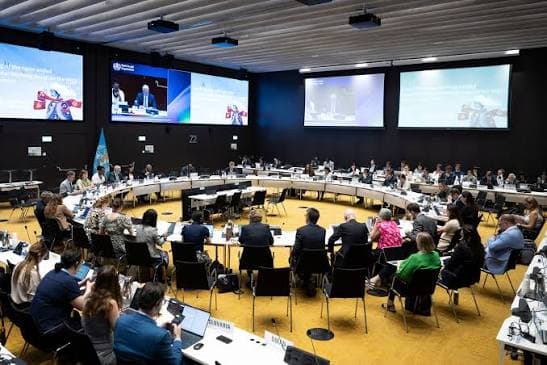
Photo Credit:WHO / Christopher Black
World Health Organization (WHO)member states wrapped up a week of talks in Geneva, Switzerland, where the WHO is headquartered, aimed at settling one of the most contentious questions left over from COVID-19: when the next dangerous new virus appears, who gets the vaccines and treatments made from it, and how fast.
The talks, which ran for five days and concluded on 18 September 2026, focused on a system called pathogen access and benefit-sharing, known as PABS.
It is the piece still being finalized inside the WHO Pandemic Agreement, the treaty world governments adopted in 2025 in direct response to the failures of the COVID-19 response.
What PABS Actually Does
PABS works on a trade-off.
When a country identifies a pathogen with the potential to cause a pandemic, it shares samples and genetic sequence information about it quickly, so scientists everywhere can start studying it.
In exchange, the vaccines, treatments and tests eventually developed using that shared information are supposed to flow back out fairly, including to the countries that supplied the original samples.
That second half is the part that broke down during COVID-19.
Many lower-income countries shared outbreak data early, then waited months or years longer than wealthier nations to receive vaccines built from research that data helped make possible.
PABS is meant to stop that gap from repeating.
A Deadline Set by New York
The Geneva meeting was the eighth round of negotiations by the Intergovernmental Working Group, the body member states set up to work out the PABS details.
It was timed deliberately.
Help keep health journalism independent
I report and explain important health and medical stories independently, with accuracy, context and African relevance. Your support helps me continue this work.
On 25 September 2026, heads of state and government will gather in New York, home to United Nations headquarters, for the second UN General Assembly high-level meeting on pandemic prevention, preparedness and response.
According to the World Health Organization, the political declaration leaders are expected to adopt at that meeting explicitly calls for finishing the PABS annex.
Completing PABS is also the trigger point for something bigger: once the annex is done, countries can begin formally signing and ratifying the wider Pandemic Agreement, which would put the new global rules into force.
Dr Tedros Adhanom Ghebreyesus, the WHO Director-General, tied the week's progress directly to that unfinished promise, saying it brings the world "closer to keeping that promise" made after COVID-19.
Ambassador Tovar da Silva Nunes of Brazil, who co-chairs the working group's bureau, described the week's outcome as giving negotiators "a strong direction for the weeks ahead."
Still Unfinished
The Geneva meeting advanced the negotiations rather than concluding them.
The World Health Organization's own account describes PABS as still being finalized, not settled this week.
Whether the annex is completed before or shortly after the New York summit remains an open question the coming weeks will answer.
New Leadership at the Table
One concrete outcome came out of this week's meeting: Dr Ahmed Al Mandhari, Undersecretary for Planning and Health Regulation at Oman's Ministry of Health, was elected as a new Vice-Chair of the working group.
He joins two existing Vice-Chairs, Ambassador Vuyile Dlamini of Eswatini and Dr Viroj Tangcharoensathien of Thailand, in guiding the talks forward.
For now, PABS remains unfinished, with one final round of negotiations left before it becomes the rule that decides, in the next global outbreak, whether fast information-sharing is finally matched by fast and fair access to the tools that information makes possible.
Originally reported by World Health Organization — News Release. View original source

Comments
Be the first to comment.
Related Stories
Papua New Guinea Launches HPV Vaccination to Protect Girls from Cervical Cancer
Australia to End Free COVID-19 Vaccines for Most People From October 1
WHO Approves New RSV Vaccine Vial to Protect More Babies Globally
Measles Eradication Impossible Due to Vaccine Hesitancy in Wealthy Nations, Bill Gates Says
Newsletter
The MMWA Briefing
Stay ahead of the health news shaping Kenya, Africa and the world. Get the week's most important developments, research and public-health stories — explained clearly and delivered to your inbox.