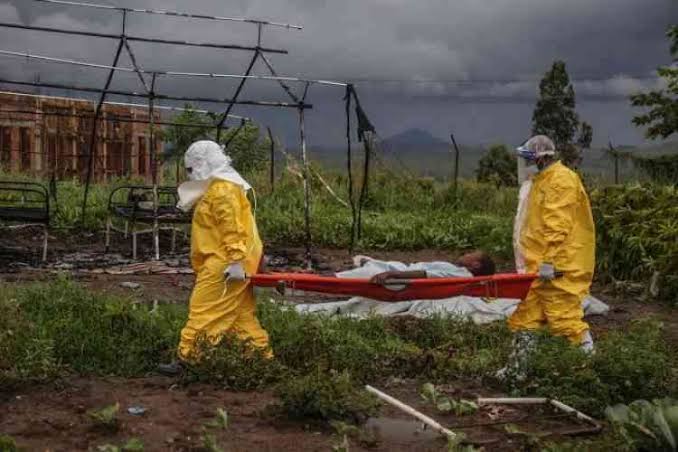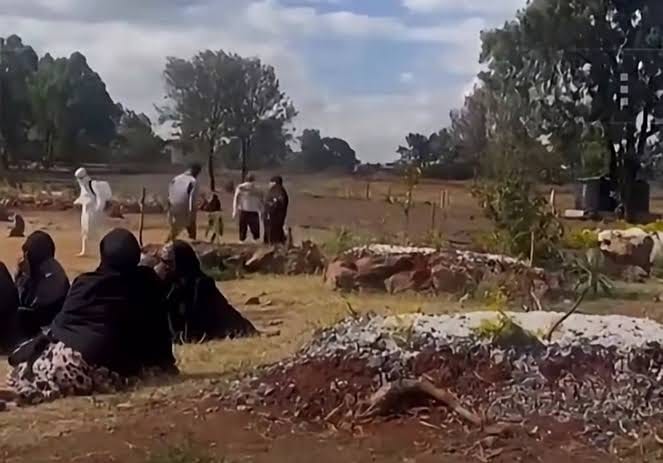
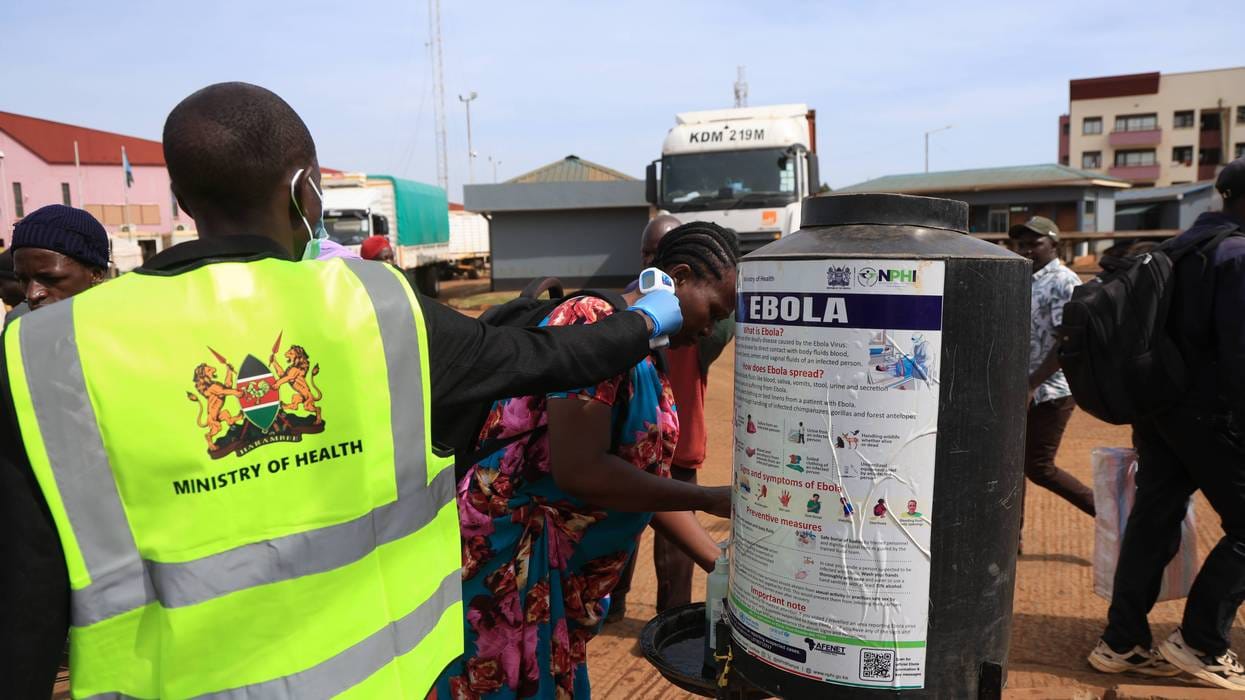
Ebola is now in Kenya.
As of 18 October, the Ministry of Health had confirmed eight cases of the Bundibugyo virus, Reuters reported.
One person has died.
Three of those infected are health workers who treated the first patient, a Kenyan man who had travelled from the Democratic Republic of Congo (DRC) through Uganda, on 3 and 4 October.
In the DRC, the virus had caused 4,478 deaths among 9,277 confirmed cases since May, as of 15 October, according to the European Centre for Disease Prevention and Control (ECDC).
Kenya prepared.
It tightened screening at airports and borders and opened an emergency hotline. It trained 4,971 health workers and named five hospitals holding 244 beds.
By 17 October, 128 of 130 listed contacts were in quarantine.
These measures answer the Ebola question.
But when Ebola passes, will Kenya be left with a specialised hospital, or still with a plan, for the next infectious disease?
Five months of preparation
Kenya has been on high alert since May, when outbreaks were declared in the DRC and Uganda, according to the World Health Organization (WHO).
By 6 October, the ministry said, 652,584 travellers had been screened at entry points and 267 suspected samples tested across five laboratories.
Isolation units in 27 high-risk counties had been identified and assessed, WHO said, and Kenya's Ebola preparedness score, which tracks surveillance, laboratory testing, isolation and treatment facilities and trained response teams, rose from 66% in May to 82% in July.
A toll-free hotline runs on 719.
In July, Mombasa County, with Médecins Sans Frontières, opened an Ebola training centre at Port Reitz Hospital, which can also serve as an emergency isolation unit, the Nation reported.
Testing is where the record is strongest.
A sample taken from the first patient on 5 October tested positive at both the National Virology Reference Laboratory and the Kenya Medical Research Institute (KEMRI) laboratory the same day, WHO reported.
The Kenya National Public Health Institute hosts four national reference laboratories, a high-containment laboratory and two mobile laboratories, the ministry said on 4 August.
Kenya's first case was announced on 6 October and its second on 14 October.
Every case confirmed since has been someone already in quarantine, meaning kept apart and checked daily: relatives of the first patient, the three health workers who treated him and, on 18 October, a 49-year-old patient attendant who cleaned the first patient's utensils and linens.
Dr Patrick Amoth, the ministry's Director-General for Health, said the man is not a health worker and was probably exposed to the first patient, Reuters reported. He developed symptoms on 17 October and tested positive the next day.
"This is the response working as designed," the ministry said of the second case.
Of about 130 contacts of the first patient, 128 were in quarantine, which is above the global benchmark of 85% for breaking chains of transmission.
WHO's regional director for Africa, Dr Mohamed Janabi, said Kenya had put important outbreak control measures in place.
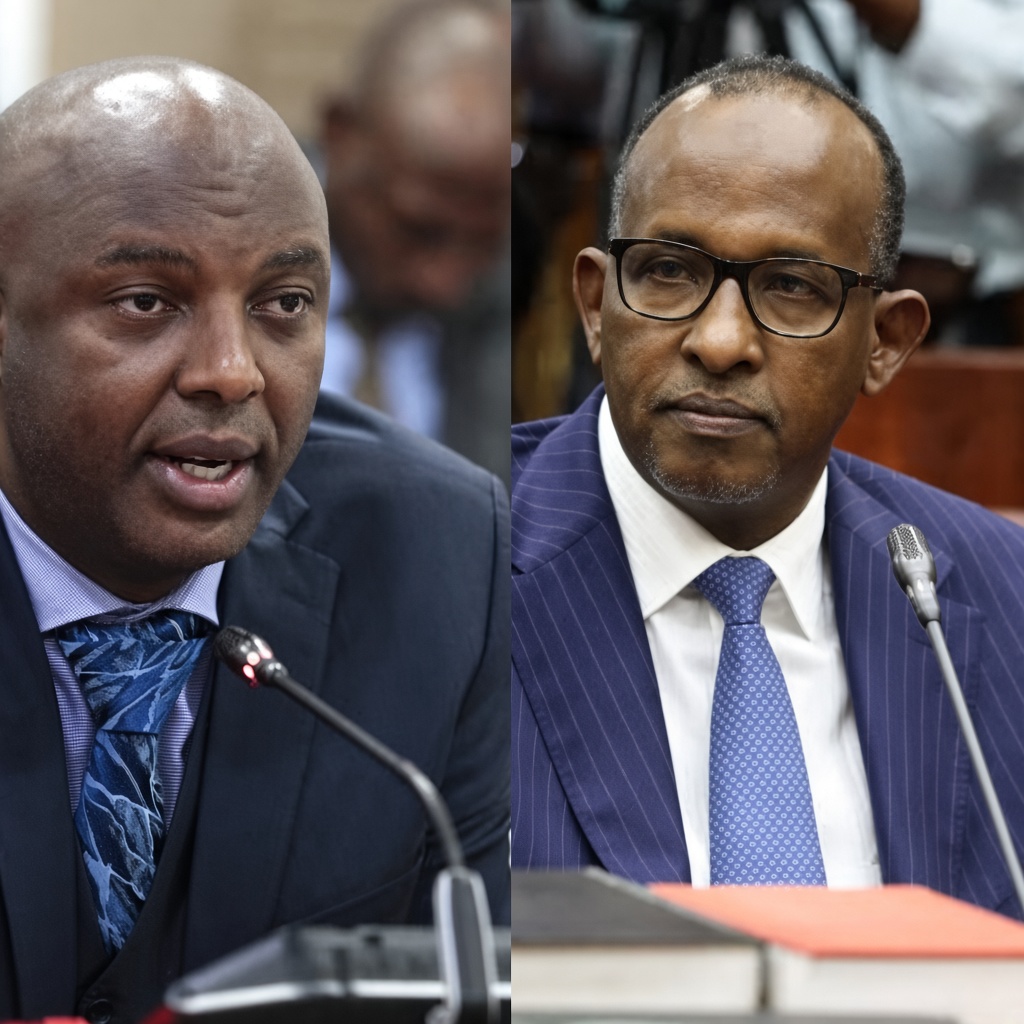
On 7 October, Health Cabinet Secretary Aden Duale named five hospitals for Ebola patients: Nairobi Hospital; Moi Teaching and Referral Hospital in Eldoret, in the Rift Valley; the National Police Service Hospital in Nairobi; Kenyatta National Hospital, the largest public referral hospital, also in Nairobi; and Port Reitz Hospital in Mombasa.
How the first patient passed airport screening has drawn questions from observers, Al Jazeera reported.
WHO said he arrived on 3 October and was taken by a relative directly to Nairobi Hospital, where he was isolated. He died on 5 October.
That is detection and containment, and the evidence for both is good. The harder test is the ward.
A bed is not a team
The 244 beds are the ministry's own count: 133 at Nairobi Hospital, 50 at Moi, 49 at the National Police Service Hospital, eight at Kenyatta and four at Port Reitz.
A designated bed is one that has been set aside, and the list mixes different kinds. Moi's 50 are 20 isolation beds plus 30 surge beds, the Nation reported.
The National Police Service Hospital's 49 are beds available for activation as surge capacity. About 45 of Nairobi Hospital's 133 are high-dependency and intensive care beds.
Consider the national unit at Kenyatta.
It has eight beds, five of them intensive care.
It was set up in 2014 and also handles tuberculosis, measles and chickenpox, and the Nation reported in June that if it fills with other infectious patients it cannot admit Ebola cases.
On 4 August the ministry said the unit had managed 58 suspected Ebola cases, all negative, with 38 health workers specially trained in highly infectious diseases.
Prof Shem Otoi, an infectious disease modelling expert, told the Nation that only four doctors and about 20 nurses could handle critically ill Ebola patients there.
He added that training is different from protecting frontline workers.
The ministry has not said how many staff across all five hospitals are trained and ready to care for critically ill patients, or how county hospitals, where most patients first walk in, recognise, isolate and refer a suspected case.
The Nation reported in July that a response report listed unresolved gaps in holding, temporary and permanent isolation facilities, and that the analysis of the full shortfall was still under way more than seven weeks into the response.
Where Ebola infects the people who treat it
That matters because of where infections have happened before.
When Ebola reached Lagos in 2014 in a traveller from Liberia, he was taken to a private hospital and initially treated for presumed malaria.
Twelve of Nigeria's 20 cases were exposed in two health facilities, the US Centers for Disease Control and Prevention (CDC) reported.
It also said the first isolation ward there was delayed because too few health workers were willing to staff it, for lack of information and training.
By mid-August 2015, WHO had counted 880 confirmed health-worker infections in Guinea, Liberia and Sierra Leone, and 512 deaths.
Kenya's first patient fits the pattern. He had been ill for about a month, and WHO said he probably caught the virus in a health facility or in the community while seeking care for another ailment.
WHO also notes that transmission is amplified in health facilities when infection control is inadequate.
The three Kenyan health workers attended him on 3 and 4 October, before the case was announced on 6 October, and the ministry says they were in quarantine from 9 October. Their exposure came before the diagnosis.
The ministry has not said how they were infected, and an infected health worker is not proof of a careless one.
The eighth case, the patient attendant, is not a health worker, the ministry says, but he was also probably exposed to the first patient.
A ward for confirmed patients alone would have come too late for them.
Whatever Kenya builds has to reach the hospital where the next feverish patient walks in.
What a permanent team changes
Once a patient is confirmed, the quality of care matters.
WHO says no vaccine or specific treatment is approved for Bundibugyo, which leaves supportive care.
Of 27 Ebola patients treated at 15 hospitals in nine countries in the United States and Europe in 2014 and 2015, five died, or 18.5%.
Mortality in West African treatment units ranged from 37% to 74%, according to the New England Journal of Medicine report led by Dr Timothy Uyeki.
The authors said their experience suggests early supportive care may reduce deaths.
The authors' patients were a different group from West Africa's, mostly evacuated from or infected there, and the study had no comparison group, so it shows what is possible rather than proving a cause.
WHO said on 8 October that rapid recognition, testing and optimised supportive care can reduce deaths.
A permanent team also has work between outbreaks. As of 6 September, Kenya had recorded 1,298 confirmed mpox cases and 19 deaths across 40 counties, the ministry said.
That is infectious disease work in a year without Ebola, and a hospital with a standing team would have it to do. One that waits for the next Ebola case would stand idle.
What the United States built after Dallas
In September 2014, a man back from Liberia went to a Dallas hospital with a fever and was sent home. He returned days later and died on 8 October.
Two nurses who cared for him at the hospital were infected, though both wore protective gear. They were moved to specialist units at the National Institutes of Health and Emory University, and both recovered.
Washington's answer was a network.
In 2015 the US government funded 10 regional Ebola treatment centres.
In 2019 the network widened to every high-consequence infectious disease, and it now has 13.
They are paid to stay ready, much like Level 1 trauma centres, and to train the hospitals in their region.
A national coordinating centre, run by Emory, Nebraska Medicine and NYC Health + Hospitals/Bellevue, supports them.
A leader of that centre recalled that in June 2014 the annual budget to keep his hospital's biocontainment unit ready was about US$17,000.
The network is not large.
A Contagion Live analysis put US capacity for suspected or confirmed haemorrhagic fever in such units at fewer than 30 beds, excluding the National Institutes of Health's own unit.
The American lesson is funded readiness inside a network, not a very big building.
A model closer to home
Nigeria has one.
Irrua Specialist Teaching Hospital in Edo State runs an Institute of Lassa Fever Research and Control inside the hospital.
Lassa fever is a haemorrhagic fever common in West Africa.
The institute combines a laboratory, an isolation ward, training and research.
WHO reported in 2018 that the ward normally takes up to 24 patients and sometimes as many as 45.
By the institute's own account, it was set up in 2007, and deaths among admitted patients fell from 60% to 80% at the start to 10% to 15% in 2024 and 2025.
The institute says it trained laboratory staff from seven countries, including the DRC, in 2019.
In March 2018, during Nigeria's worst Lassa outbreak, WHO said the institute had had no staff infections, while 16 health workers elsewhere in Nigeria were infected and four died.
WHO also reported that Irrua's staff were working long hours and that the heavy workload had strained its infection-control protocol.
These are the institute's own figures, and treatment improved over the same years, so the fall cannot be credited to the institute alone.
Both examples point the same way.
Neither is a very large standalone building.
Each is a standing team and a laboratory inside an existing teaching hospital, paid to be ready and charged with training others.
That is the standard Kenya's plan should be held to.
One sick man, three countries
The first patient lived in the DRC, travelled by road to Kampala and flew to Nairobi, WHO said.
By 15 October, ECDC said, the DRC had reported 9,277 confirmed cases and 4,478 deaths, and WHO calls it the largest Ebola outbreak ever recorded in that country.
Uganda ended its latest outbreak in August.
WHO said most of its cases were imported from the DRC, and the few locally acquired ones were among contacts and health workers linked to imported cases.
Kenya is the fourth country to confirm a case of Bundibugyo, after the DRC, Uganda and France.
The point is not that neighbours are dangerous.
One sick man passed through three countries' health systems before a laboratory named the disease, so shared laboratory standards and training matter as much as any one ward.
The plan on paper
On 4 August, the Ministry of Health said the government was progressing plans for a 200-bed National Infectious Diseases Centre, bringing diagnosis, treatment, isolation, surveillance, research and training under one roof.
On 7 October, TV47 reported Duale telling NTV that the government could turn the Laikipia quarantine facility, designed with 50 beds at Level 6, into the first regional infectious disease hospital, working with American partners, if the courts allow. ,
Level 6 is the top grade in Kenya's hospital system, and he compared it to Kenyatta.
Reuters reported in May that Kenya had approved a US request for a 50-bed quarantine facility at Laikipia Air Base for Americans exposed to Ebola.
The government told the High Court it is one of 23 treatment and isolation units under a Sh2.68 billion preparedness programme, the Nation reported.
The High Court froze it in May on petitions by Katiba Institute and the Law Society of Kenya.
The order barred establishing any Ebola quarantine, isolation or treatment facility under an arrangement with the United States or another foreign government until the petitions are heard.
In June the court found Duale in contempt for letting work continue, then accepted his apology after he ordered all work stopped.
Duale said on 7 October that the matter was before the courts.
The Court of Appeal has since set aside High Court orders from December 2025 that blocked the wider Kenya–US health cooperation framework, pending an appeal, because stopping it threatened HIV, tuberculosis and malaria treatment.
That ruling did not decide the framework's legality and did not address the Laikipia facility, which is the subject of separate petitions in the High Court.
The ministry has not announced an approved budget, a confirmed site, a construction start, an opening date or a staffing plan for the centre, and it has not said whether the August centre and the Laikipia idea are one project.
The Ministry of Health was contacted for comment on 18 October 2026 and had not responded by the time of publication.
On 6 October, the doctors' union asked the government to confirm that isolation units at regional referral hospitals were working, equipped and staffed.
Its secretary-general, Dr Davji Atellah, said health workers "must not be the weakest link in our response," The Standard reported.
The strongest objection
A new hospital is not the only answer, and the ministry has not shown it is the best one.
The American and Nigerian examples are hubs built into existing hospitals with funded, standing teams. Neither is a 200-bed building on its own.
Duale dismissed small units in counties such as Machakos and Garissa, saying Kenya "must have a Level 6 with 200, 300 beds," dedicated to outbreaks and infectious diseases like Ebola. That is a policy position.
The ministry has not shown that 200 beds is the right size, what the centre would cost to run, or whether the same money would protect more people if spent on staffing Kenyatta's unit and on training and infection control in county hospitals.
The risk is a large building, quiet in most years, short of specialists and competing with county hospitals for funds.
The centre earns its cost on conditions. It needs a defined mandate, a paid clinical team kept between outbreaks, and a year-round caseload across several infections.
It needs a duty to train every hospital, and a running budget that outlives this outbreak.
What Kenya must now answer
Ebola may pass, as it did in Uganda.
The next outbreak will meet some health worker at a bedside before any laboratory has spoken, and what that worker knows will have been settled long before.
Kenya has said it wants a permanent home for that knowledge.
What will the centre cost to build and to run, and which budget pays? Where will it stand, and does the court case touch the site? Who owns it, how many specialists will it employ, and what will it treat in a year with no outbreak?
How will it support county hospitals, and how will the public know it is working?
Until those answers exist, it still remains a plan.