.jpeg)
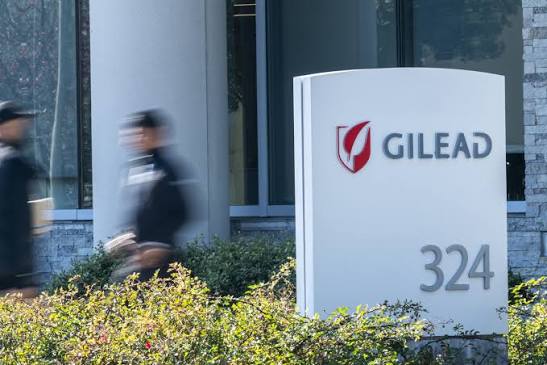
Gilead Sciences, the company behind lenacapavir, the HIV prevention injection that the journal Science named its 2024 Breakthrough of the Year, has expanded six royalty-free licensing agreements to include an investigational once-yearly version.
Gilead said the option, if approved, could be especially important in high-incidence, resource-limited settings.
Announced on 16 September 2026, the agreements are intended to help six generic drug manufacturers prepare to produce the annual injection, transfer the technology needed to manufacture it and plan future supplies while clinical trials continue.
Gilead has not named the individual countries covered by the expanded agreements or stated how many are in Africa.
The six licensing partners are Dr. Reddy’s Laboratories, based in Hyderabad, India; Emcure Pharmaceuticals, headquartered in Pune, India; EVA Pharma, based in Cairo, Egypt; Ferozsons Laboratories, headquartered in Lahore, Pakistan; Hetero, based in Hyderabad, India; and Mylan Laboratories Limited, a subsidiary of Viatris with a registered office in Hyderabad, India.
All six companies already manufacture the twice-yearly formulation of lenacapavir for HIV prevention.
Gilead said it selected them for their experience producing complex sterile injectable medicines and their existing relationships as licensing partners.
The agreements allow the manufacturers to prepare for potential production and supply in the 120 covered countries.
They do not mean the once-yearly injection is already available there, or that every country will receive it as soon as it is approved.
Gilead’s chief commercial and corporate affairs officer, Johanna Mercier, said establishing the agreements during clinical development could give manufacturers, healthcare systems and communities more time to prepare for potential introduction of the medicine.
What researchers are testing
The once-yearly injection is being studied in PURPOSE 365, an ongoing Phase 3 clinical trial designed to assess whether a single injection of lenacapavir can maintain drug concentrations associated with HIV prevention for 52 weeks.
Researchers are also evaluating its safety and tolerability.
The study is testing whether people could eventually receive HIV prevention through one injection a year instead of needing more frequent medication or injections.
If the formulation proves safe and effective and receives regulatory approval, it could provide another option for people who find regular medication schedules or frequent healthcare visits difficult.
The annual formulation remains investigational.
No regulatory authority has approved it, and its safety and efficacy have not been established.
Earlier research into the twice-yearly formulation included PURPOSE 1 and PURPOSE 2, two Phase 3 trials that compared lenacapavir with existing prevention approaches in different populations.
Those studies found that the twice-yearly injection was superior to a daily oral pre-exposure prophylaxis (PrEP) comparator.