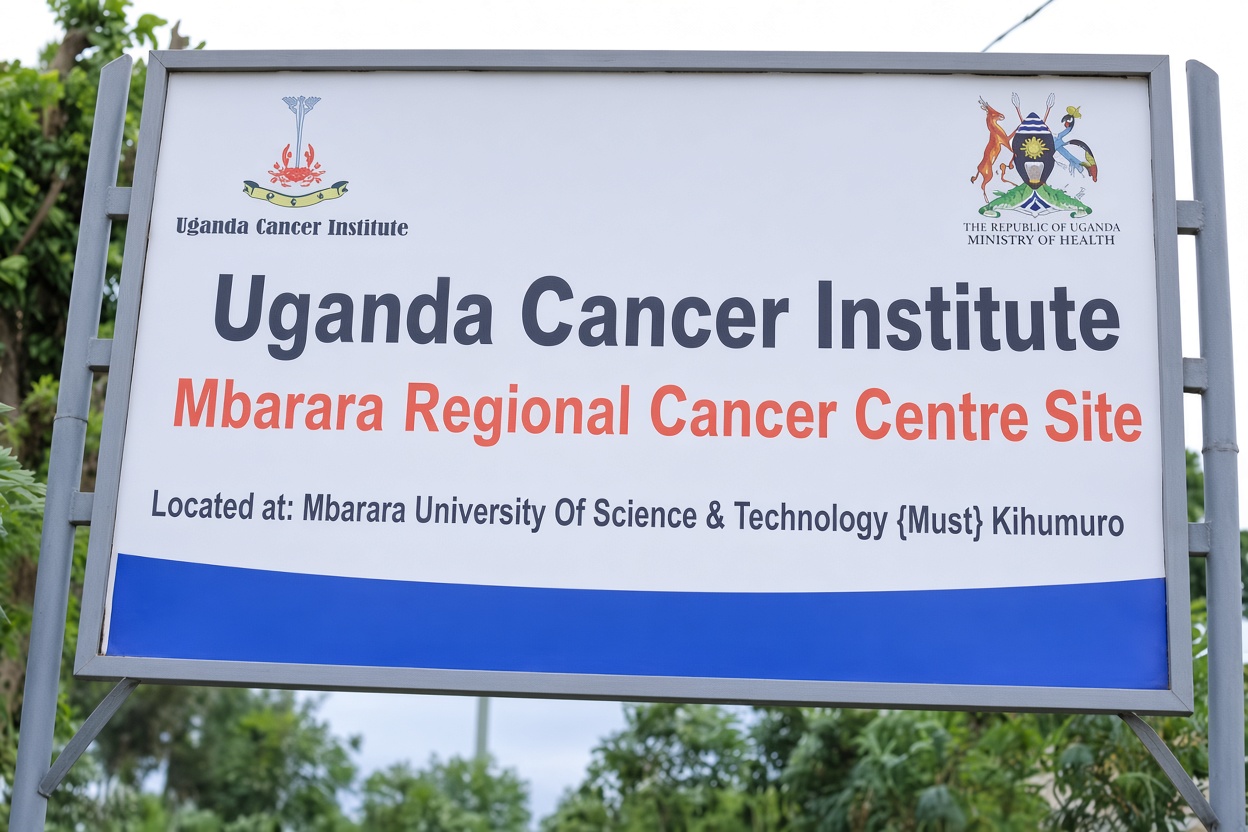
Many cancer patients in Uganda still have to travel to Kampala, the capital, for specialist care.
Parliament has now approved borrowing up to €31.98 million, about US$36.9 million, from France to build a cancer centre with 138 beds in Mbarara district, in the west, so that more of them can be treated closer to home.
The first phase will offer chemotherapy, cancer surgery and diagnostic services.
Radiotherapy, which uses radiation to destroy cancer cells, is left for a later phase that the loan cannot pay for.
The loan, the site and the price tag
According to the Parliament of Uganda statement released on 5 November, Parliament approved a request to borrow up to €31.98 million from the Republic of France to build and equip a cancer centre with 138 beds in Mbarara district.
The Uganda Cancer Institute's Mbarara Regional Oncology Centre will be built on 8.5 acres at the Kihumuro campus of Mbarara University of Science and Technology.
The statement said the loan will cover about 95 per cent of the €33.58 million project cost, with Uganda contributing €1.6 million. {US$36.9 million, US$38.8 million and US$1.85 million}.
The statement also said the project provides for two ambulances and specialist training with the Gustave Roussy Institute in France.
The Committee on National Economy, which examined the request, presented its report to Parliament on Wednesday, 4 November 2026.
A long road to Kampala
Before any treatment can start, you have to reach it, and for many patients that is the hardest part.
Henry Musasizi, Uganda's Minister of Finance, Planning and Economic Development, presented the loan request to Parliament.
The Observer reported that he first tabled the request on 29 September 2026.
According to the Parliament of Uganda statement , Musasizi cited 35,968 new cancer cases and 24,629 cancer related deaths reported each year.
He said limited specialist cancer services outside Kampala make it difficult for many patients to get treatment.
Committee chairperson Jane Avur Pacuto, who leads Parliament's Committee on National Economy, said patients face a higher risk of early death mainly because early detection programmes and adequate treatment are lacking, and that the poor and children with treatable cancers are affected most.
The committee said the centre would help detect cancer earlier, reduce the cost of travel and ease congestion at the Uganda Cancer Institute in Mulago, Kampala.
Dr Charles Ayume, the Minister of State for Primary Health Care, told Parliament's health committee in October that a patient travelling from Kisoro or Kaabong districts must bring a caretaker and faces heavy costs, The Observer reported, in a story carried by the Uganda Radio Network.
Inside the first phase
Pacuto said the first phase will provide chemotherapy, cancer surgery and diagnostic services. ,
The building will have three operating theatres, intensive care and high dependency beds for the sickest patients, and an imaging department with CT and MRI scanners, which take detailed pictures inside the body, as well as mammography for the breast, ultrasound and X-ray machines.
Dr Ayume named chemotherapy, surgical oncology and pathology.
Chemotherapy treats cancer with medicines, surgical oncology means operations to remove cancerous tissue, and pathology means examining tissue to confirm what disease a patient has.
Radiotherapy waits for phase two
This is the gap many patients will notice first.
Pacuto said leaving radiotherapy out of the designs and civil works in phase one will limit the centre's immediate clinical impact, because 60 per cent of cancer patients require radiation therapy.
Dr Ayume told the committee that the concern about an omission was not true.