.jpeg&w=3840&q=75)
WHO Seals New Deal to Fight Cholera Across Five African Countries
These five countries share the Lake Chad Basin, a region in central and west Africa where years of armed conflict have pushed millions of people from their homes and left many without clean water or working hospitals
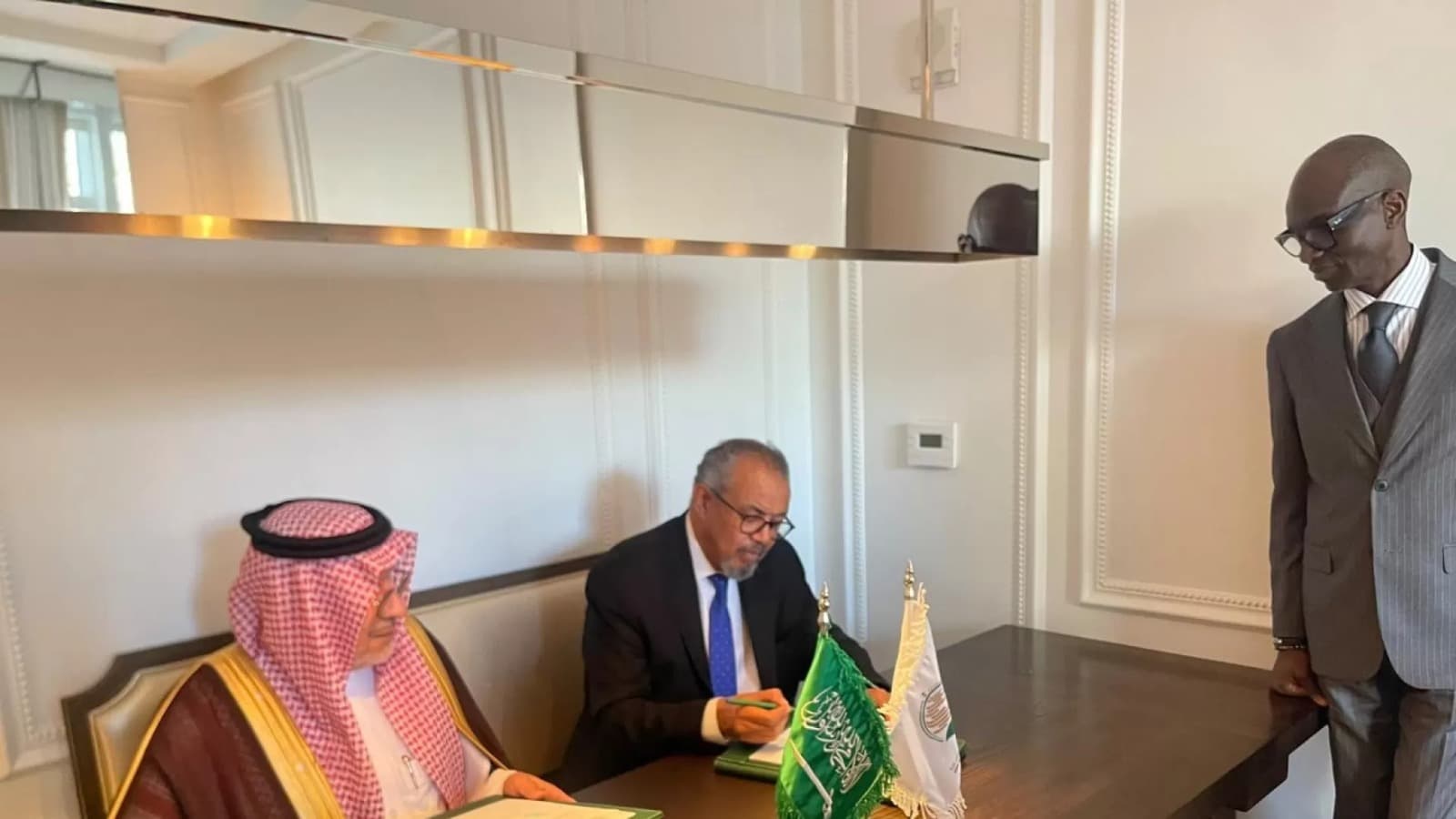
Photo:The World Health Organization
The World Health Organization has signed a new agreement worth $5,327,244.97 with Saudi Arabia's humanitarian arm to fight cholera outbreaks tearing through five African countries around Lake Chad.
The deal was signed on the sidelines of the United Nations General Assembly's 81st session in New York this week.
WHO Director-General Dr Tedros Adhanom Ghebreyesus signed the agreement alongside Dr Abdullah bin Abdulaziz Al Rabeeah, an advisor to Saudi Arabia's Royal Court and Supervisor General of the King Salman Humanitarian Aid and Relief Centre, known as KSrelief.
It is the Saudi government's main channel for funding humanitarian projects abroad.
Five Countries, One Shared Water Basin
The money will go toward fighting cholera in Cameroon, Chad, Mali, Niger and Nigeria.
These five countries share the Lake Chad Basin, a region in central and west Africa where years of armed conflict have pushed millions of people from their homes and left many without clean water or working hospitals.
Those are exactly the conditions cholera spreads fastest in.
The project pairs two kinds of work.
Teams will drill new wells and rebuild public latrines, giving people cleaner water and safer toilets, the basic defenses against a disease spread through contaminated water.
Alongside that, health workers will track new cases as they appear, restock hospitals with medicine, and repair medical facilities, including x-ray rooms, sterilization units, operating theatres, and emergency and intensive care wards for children and adults.
The Numbers Behind the Emergency
WHO's Africa Regional Office, which oversees the continent's outbreak response, reported more than 61,000 cholera cases across Africa in the first five months of 2026.
Help keep health journalism independent
I report and explain important health and medical stories independently, with accuracy, context and African relevance. Your support helps me continue this work.
Nigeria had the region's worst single outbreak, with over 50,000 cases and 338 deaths since January. In Chad, nearly two out of every three people infected were children under 15.
Across the wider Lake Chad Basin, WHO said 8.2 million people currently need humanitarian assistance.
As of April 2026, the most recent public tracking available, only 22 percent of the money needed had come in.
WHO's own new release still points to that same figure five months later, underscoring how far behind funding for the region continues to run.
"Cholera is Preventable and Treatable"
"Cholera is preventable and treatable, yet it continues to claim lives in communities already facing severe humanitarian pressures," Dr Tedros said in WHO's statement announcing the deal on 22 September 2026.
He said sustained support like this would let the five countries detect outbreaks sooner, respond faster, and get life-saving care to people who need it most.
Dr Al Rabeeah, in the same statement, called the agreement "an important step" toward addressing cholera's growing threat in the Lake Chad Basin.
He said that despite the funding gap, KSrelief and WHO could still save lives and improve outcomes by working together on water, sanitation and medical support.
A Long Partnership, Still Growing
KSrelief was established in May 2015 under King Salman bin Abdulaziz Al Saud, Custodian of the Two Holy Mosques, as Saudi Arabia's main humanitarian aid organization.
WHO said that by the end of August 2026, KSrelief had carried out 4,457 humanitarian and relief projects worth a combined $8.57 billion across 113 countries.
This cholera agreement adds one more project to that record, in a region where the scale of need still outpaces the money on the table.
Originally reported by The World Health Organization — Departmental News. View original source

Comments
Be the first to comment.
Related Stories
Cholera Sickens More than 40,000 in DR Congo as the World's Attention Focuses on Ebola
Florida Confirms First Dengue Death in Nearly 100 Years
Specialists push to expand access to life-changing reconstructive surgery beyond Nairobi
SHA launches new HAKIKA system to verify healthcare providers for 2026–2029 cycle
Newsletter
The MMWA Briefing
Stay ahead of the health news shaping Kenya, Africa and the world. Get the week's most important developments, research and public-health stories — explained clearly and delivered to your inbox.