.jpeg&w=3840&q=75)
Cholera Sickens More than 40,000 in DR Congo as the World's Attention Focuses on Ebola
At a hospital in eastern Congo, nurses say cholera patients are arriving around the clock, even as national and international attention stays fixed on the country's deadlier, faster-moving Ebola outbreak
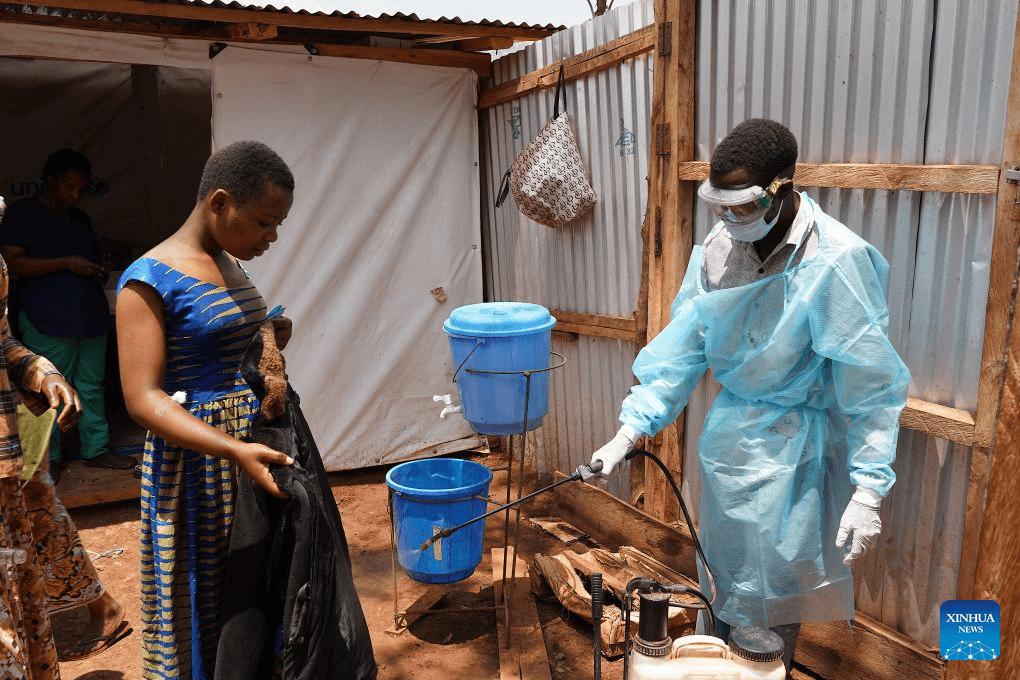
A health worker disinfects items at a cholera treatment center in Bukavu, the Democratic Republic of the Congo, Sept. 15, 2026 — Credit:Xinhua
At Saint Mathieu Hospital in Bukavu, the capital of South Kivu province in eastern Democratic Republic of Congo, cholera patients keep arriving day and night, many already critically ill by the time they reach a bed, Xinhua, China's state news agency, reported this week after visiting the facility.
"We cannot go 10 or 20 minutes without a new patient coming in," John Muka, the hospital's head nurse for cholera treatment, told Xinhua.
The scene in Bukavu reflects a national picture that has drawn far less attention than it once might have.
Between January and August this year, the Democratic Republic of Congo recorded more than 39,400 suspected cholera cases and 1,173 deaths, the UN Office for the Coordination of Humanitarian Affairs said, in figures Xinhua cited in its report; the UN agency has described the country as Africa's largest cholera hotspot.
That works out to a case-fatality ratio of about 3 percent, meaning roughly 3 out of every 100 people counted as suspected cases did not survive.
North Kivu and South Kivu, both in the country's east, remain the outbreak's center, together accounting for more than half of the country's new cholera cases each week, per the same Xinhua report.
Why cholera is losing the spotlight
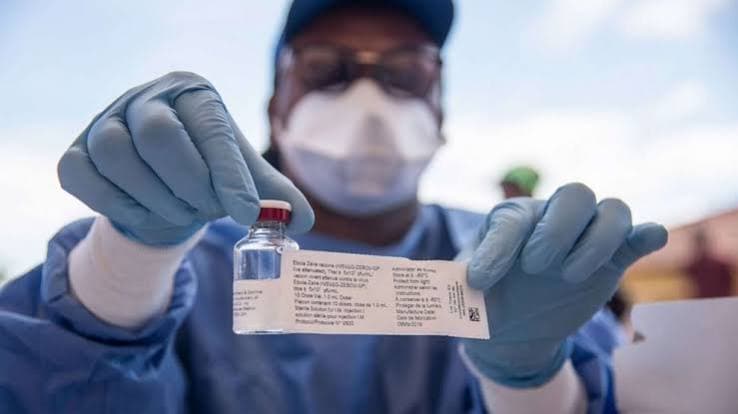
The reason cholera is drawing less notice is not a mystery. Since May, the Democratic Republic of Congo has also been fighting Ebola disease caused by the Bundibugyo virus, a rarer and more dangerous relative of Ebola that most existing vaccines and treatments are not built for.
The Congolese Ministry of Health declared the outbreak on 15 May 2026, after a cluster of unexplained deaths, including several health workers, in Ituri province in the country's northeast.
The World Health Organization declared it a global health emergency two days later.As of 16 September, the outbreak had infected 7,475 people and killed 3,605, according to the European Centre for Disease Prevention and Control's tracking of DRC's reported figures, making it the deadliest Ebola outbreak in the country's history.
It has drawn a large-scale response involving the Congolese government, the World Health Organization and the Africa Centres for Disease Control and Prevention.
Two outbreaks, the same roads
The two diseases are also converging geographically. Several of the same provinces fighting Ebola, including North Kivu, South Kivu, Ituri, Tshopo and Haut-Uélé, are also battling cholera.
Speaking at a high-level meeting on the Ebola outbreak in August, World Health Organization Director-General Tedros Adhanom Ghebreyesus pointed to the overlap directly, Xinhua reported.
Help keep health journalism independent
I report and explain important health and medical stories independently, with accuracy, context and African relevance. Your support helps me continue this work.
"Along the same rivers, roads and border communities, cholera is also moving," he said, adding, in Xinhua's account, that while the two diseases are different, the same weaknesses in surveillance, healthcare access, water and sanitation, and cross-border coordination leave communities exposed to both.
Health workers in Bukavu see that overlap up close.
One woman told Xinhua her mother's symptoms escalated within hours, from a headache and body aches to vomiting and diarrhea, before she was referred to the cholera treatment center.
Not every case ends badly.
Another patient, who told Xinhua she arrived at the same center struggling to see or walk, said staff there nursed her back to health within days.
Cholera is caused by Vibrio cholerae, a bacterium picked up from contaminated food or water, and it can kill through rapid dehydration within hours if untreated.
It is also highly treatable: most patients recover fully with prompt rehydration, and antibiotics are used for some severe cases.
A country that has been here before
Cholera returns to the Democratic Republic of Congo almost every year, but 2025 was especially severe.
By early December, the UN children's agency, UNICEF, reported 64,427 cases and 1,888 deaths since the start of that year, with children accounting for close to one in four cases nationwide, and said the outbreak had reached 17 of the country's 26 provinces, including the capital, Kinshasa.
By the time the year ended, the toll had climbed further, to 71,147 cases and 2,071 deaths, according to national health data, a figure the World Health Organization said made it the country's largest cholera outbreak since 1994, when 58,057 cases and 4,181 deaths were recorded.
UNICEF called it the country's worst cholera crisis in 25 years, pointing to a national survey showing only 43 percent of the population uses even basic water services and just 15 percent has basic sanitation, among the lowest rates on the continent.
Health officials involved in the Ebola response have said fighting one outbreak cannot come at the expense of other health needs.
At a meeting organized by the World Health Organization and the Africa CDC in Kampala in May, DRC Health Minister Roger Kamba said, as Xinhua reported, that the country hopes to use its epidemic responses to leave behind a stronger health system rather than a depleted one.
Originally reported by Xinhua. View original source

Comments
Be the first to comment.
Related Stories
Newsletter
The MMWA Briefing
Stay ahead of the health news shaping Kenya, Africa and the world. Get the week's most important developments, research and public-health stories — explained clearly and delivered to your inbox.