.jpeg&w=3840&q=75)
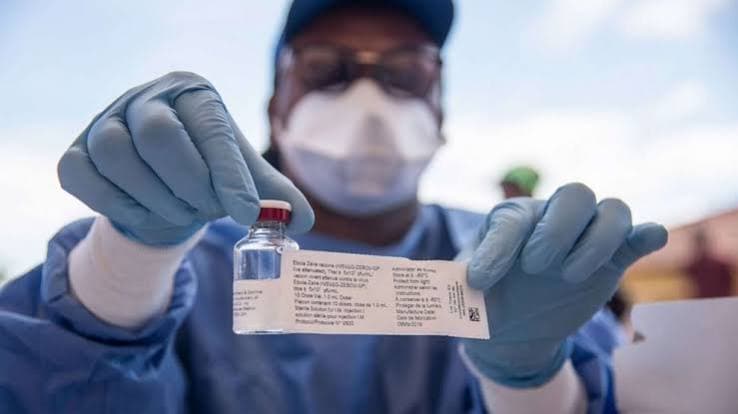
Photo:File/ABC News
Egyptian biopharmaceutical company Minapharm Group is moving toward human trials of a new vaccine targeting Bundibugyo ebolavirus, the rare Ebola species driving the largest and deadliest outbreak the Democratic Republic of the Congo (DRC) has ever recorded.
The Cairo-headquartered company, which also has subsidiaries in Berlin, will receive up to $16.5 million from the Coalition for Epidemic Preparedness Innovations (CEPI) to push the candidate through preclinical development and into an early-stage clinical trial assessing its safety and ability to trigger an immune response.
Minapharm says it expects to run that Phase 1 trial somewhere in Africa, though it has not yet named a specific country or start date.
The vaccine was designed by ProBioGen, Minapharm's Berlin-based subsidiary, using the company's proprietary MVA-CR19 platform, a modified vaccinia Ankara (MVA) technology that also underlies an approved smallpox and mpox vaccine.
A related MVA-based vaccine has shown long-lasting immunity against the more common Zaire ebolavirus species, and early preclinical data on MVA vaccines targeting Sudan ebolavirus has also been encouraging.
ProBioGen's candidate is notable for being designed to trigger both antibody and T-cell immune responses, aiming for broader, longer-lasting protection.
Minapharm plans to manufacture the drug substance in Berlin before shipping it to its Cairo facility, where it will be formulated into the finished vaccine.
The company says it eventually intends to shift drug-substance production to Cairo as well, enabling fully local manufacturing from end to end.
Create a free account
Join Joseph Mmwa and be the first to know the world's biggest health and medical stories as they happen
Africa CDC Director General Jean Kaseya and Minapharm's Wafik Bardissi both framed the project as a step toward African "health sovereignty," building the continent's own capacity to develop and manufacture vaccines rather than relying on the tools currently available.
CEPI CEO Richard Hatchett said the outbreak's rapid three-month spread across the DRC has made it the country's largest and deadliest to date, underscoring the urgency behind the funding.
The organization's stated goal is to bring at least two Bundibugyo-specific vaccines to Emergency Use Authorization and WHO Prequalification, while also building longer-term readiness for future outbreaks of the species.
Minapharm's is the fifth Bundibugyo vaccine candidate CEPI has funded to date. If the Phase 1 trial succeeds, CEPI says it plans to work with Minapharm and ProBioGen on the later-stage trials needed to generate efficacy data for eventual licensure.
Currently, no vaccine is approved specifically for Bundibugyo ebolavirus.
Separately, the World Health Organization has led design of a Phase 3 trial in the DRC's Ituri province, the outbreak's epicenter, testing Ervebo, an existing vaccine approved for Zaire ebolavirus, after laboratory and animal data suggested it may offer some cross-protection against the Bundibugyo strain.
Of an initial 70,000-dose allocation released to the DRC in August, 20,000 doses are earmarked for that trial, with the remaining 50,000 going to frontline and health workers.
As of 9 September 2026 data (European Centre for Disease Prevention and Control, updated 10 September), the outbreak had reached 6,942 confirmed cases and 3,349 deaths in the DRC, spread across six provinces; Ituri remains the most affected, with 5,508 cases and 2,501 deaths.

Related Stories
7 in 10 People on South Africa's New HIV Prevention Injection Lenacapavir Are Women
More Than 55,000 South Africans Start New HIV Prevention Injection Lenacapavir In Just Over 3 Months
Namibia inaugurates first public-sector MRI machine since independence
New TB Vaccines Could Save 7.3 Million Lives by 2050, Gavi Says
Comments
Be the first to comment.